Valentine’s Day: why a tomato beats a red heart

People who know me well will tell you I don’t like being told what to do; I’ll decide what I do and, as I say, “YOU don’t tell me”.

So, naturally, I don’t like these days in which we are all told en masse that we WILL and HAVE TO celebrate something by spending up big, and that if we don’t, it shows we don’t care.

Today is Valentine’s Day in Australia, when we are all supposed to be romantic. There’s something creepy about being told by commercial enterprises that this is the day we will do something romantic with our partner: like a nasty voyeur watching through a peephole, or a dastardly puppeteer surveying her handiwork.

I’m NOT going to be shamed into buying roses, chocolate hearts or a $9 card.

I might, however, make my beloved a special dinner: so instead of shopping for a card with a big red heart, I’ll more likely be buying a big red tomato today! I like that better.

My preferred Valentine's Day symbol.  Picture: Caron Eastgate Dann 2014

My preferred Valentine’s Day symbol.
Picture: Caron Eastgate Dann 2014

I’m not averse to receiving a dozen red roses, and my husband has often had them delivered to me on special occasions, such as our wedding anniversary. But they are outrageously expensive, and—truthfully—on Valentine’s Day, I’d rather have the money!

The Valentine’s Day supporters would say that makes me unromantic, but why? Because I don’t want to join the party with everyone else? Well I say, two’s company and anything more is just a crowd.
In addition, I don’t like the way a commercialised enterprise makes a significant proportion of the population feel sad, inadequate or lonely.

A good friend remarked to me today that although he appreciated exactly what commercial rubbish Valentine’s Day was, because reminders of it were everywhere you looked, it still had the power to make people feel sad if they were single but would prefer not to be.
I come from New Zealand, though I now live in Australia. Growing up, I can’t remember ever celebrating Valentine’s Day there. I knew about it, because I lived in the US for a few years when I was aged 10-12, and it was big even then, in the 1970s.
Back then, the done thing was to give a Valentine’s Day card to every student in your class, which I did in the first year. Only trouble was, I inadvertently missed out one girl: Erin was her name. She was a nice girl, though quiet, and I always felt bad that I’d forgotten her. I hope she isn’t now writing a post somewhere about how she was forever traumatised because at school she was the only person left out of Caron’s Valentine’s Day card delivery. Sorry, Erin!

Over the last few years particularly, the pressure to celebrate days such as Valentine’s has become much greater than it used to be. Weeks, and sometimes even months before the day, shops are full of reminders. You feel like a heel if you don’t participate. Now don’t get me started on the commercialisation of Mother’s Day, Father’s Day, Christmas and Easter…

The secrets of great cooking

Timing is the most essential element of successful cooking, according to my husband, Gordon, and I agree with him. But there’s another: ingredients. What to cook, what to combine, how to make something of seemingly nothing, what is best cooked fresh and when you can make do with frozen or canned ingredients are some of the necessary decisions.

I notice that famous TV chefs such as Jamie Oliver and that competitors in TV cooking competitions such as My Kitchen Rules all use packets of frozen peas in recipes, for example. Not that this would affect me, since frozen peas are one of the few foods I detest, and have done since, as a toddler, I stole a packet from the freezer and ate the lot.

I was reminded of how important ingredients are to cooking by today’s topic for the Daily Post At WordPress.com’s Daily Prompt, which is “Ingredients” (you can access the many interesting posts on this topic here). I’m fascinated by this subject, and since I took up painting three years ago, ingredients for recipes have featured in a number of my paintings. Some of them you’ve seen before, but I thought I’d gather my ingredients-based paintings together and present them on this one page.

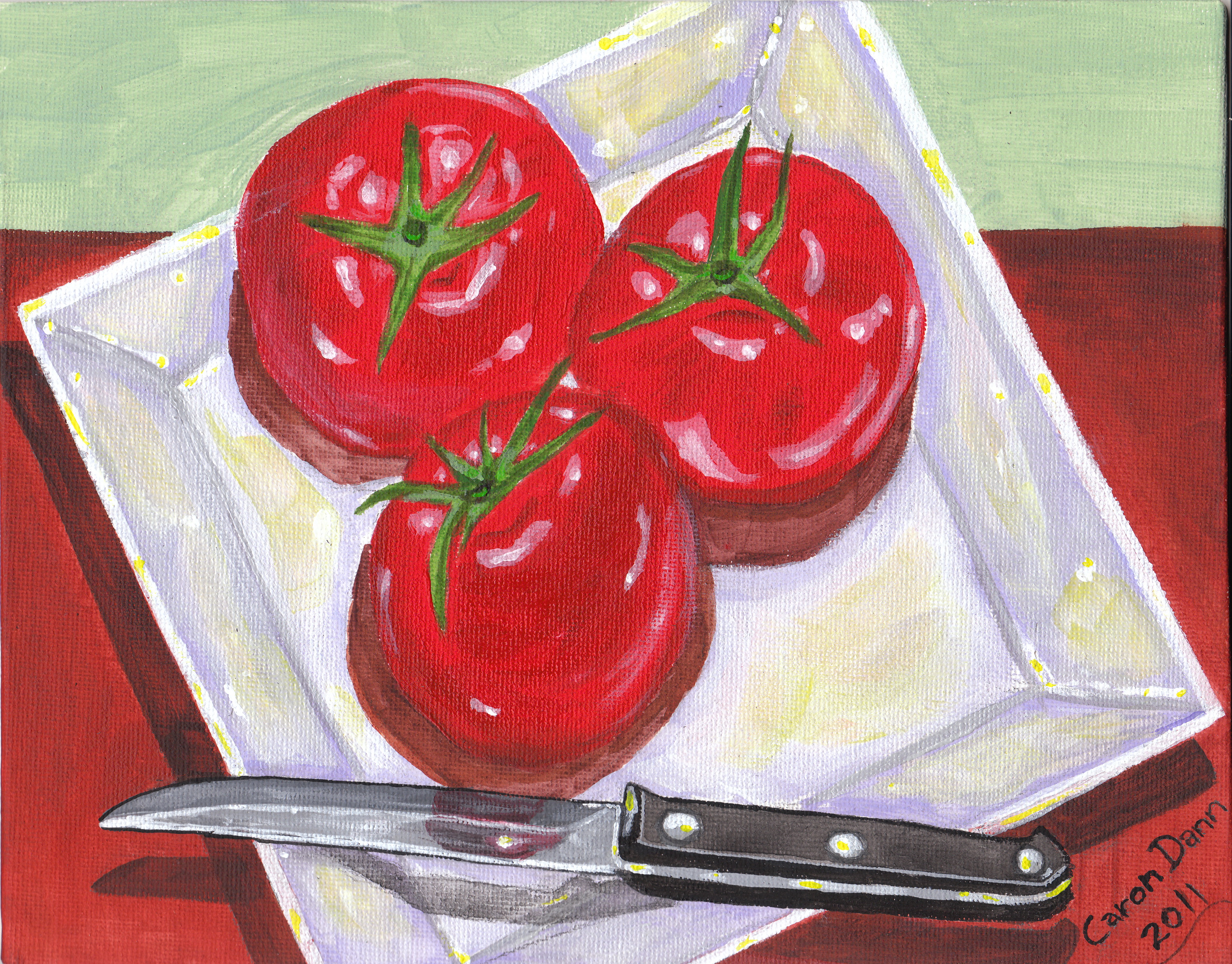
My first painting, acrylics on treated board, in which I had to be brave, load the brush with paint and go! © Caron Eastgate Dann 2011

My first painting, acrylics on treated board, in which I had to be brave, load the brush with paint and go!
© Caron Eastgate Dann 2011

A quick pastel sketch on coloured paper. I don't have a fascination with knives, truly: they are just great subjects to try out new-found painting techniques. © Caron Eastgate Dann 2011

A quick pastel sketch on coloured paper. I don’t have a fascination with knives, truly: they are just great subjects to try out new-found painting techniques. This one has special sentimental value (explained in the last painting, below).                              © Caron Eastgate Dann 2011

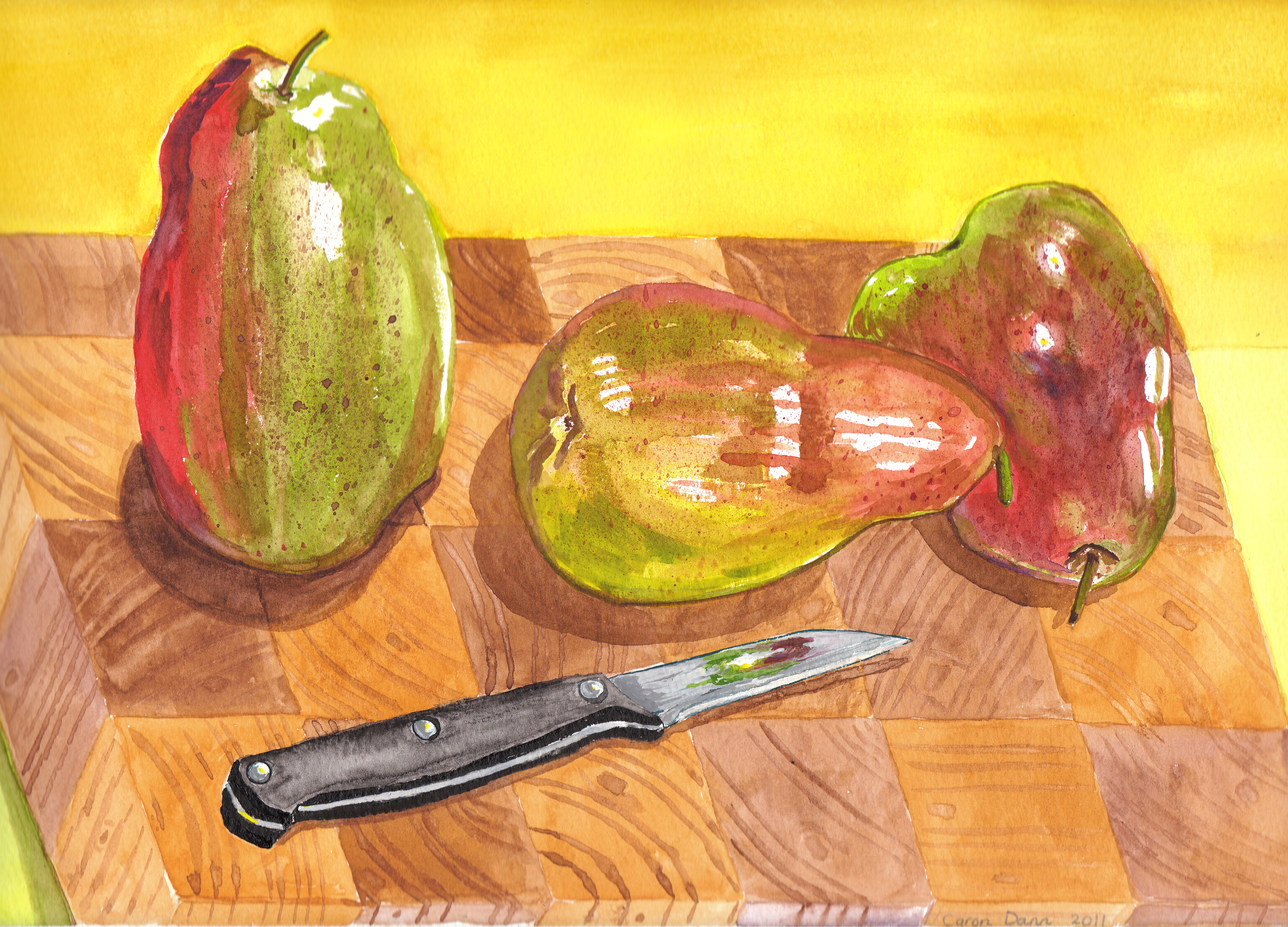
"Pear-Shaped", watercolour. I bought these beautiful pears in season and couldn't resist painting them. This was my first attempt at a watercolour painting. © Caron Eastgate Dann 2011

“Pear-Shaped”, watercolour. I bought these beautiful pears in season and couldn’t resist painting them. This was my first attempt at a watercolour painting. © Caron Eastgate Dann 2011

"Only On His Day Off", acrylics on canvas board. © Caron Eastgate Dann 2011

“Only On His Day Off”, only the second painting I did, acrylics on canvas board. © Caron Eastgate Dann 2011

"Waiting For Thai Tonight", acrylics on canvas board  © Caron Eastgate Dann 2011

“Waiting For Thai Tonight”, acrylics on canvas board
© Caron Eastgate Dann 2011

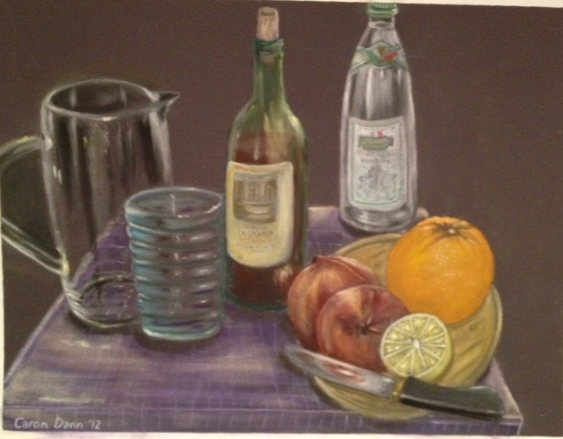
"Making Sangria", Pan Pastels on treated paper © Caron Eastgate Dann 2012

“Making Sangria”, PanPastels on treated paper. For this painting, I sourced all the ingredients, including a bottle of Spanish wine that we went to a specialist shop to buy. The great thing: I got to drink it after, so it was an incentive to finish the painting!
© Caron Eastgate Dann 2012

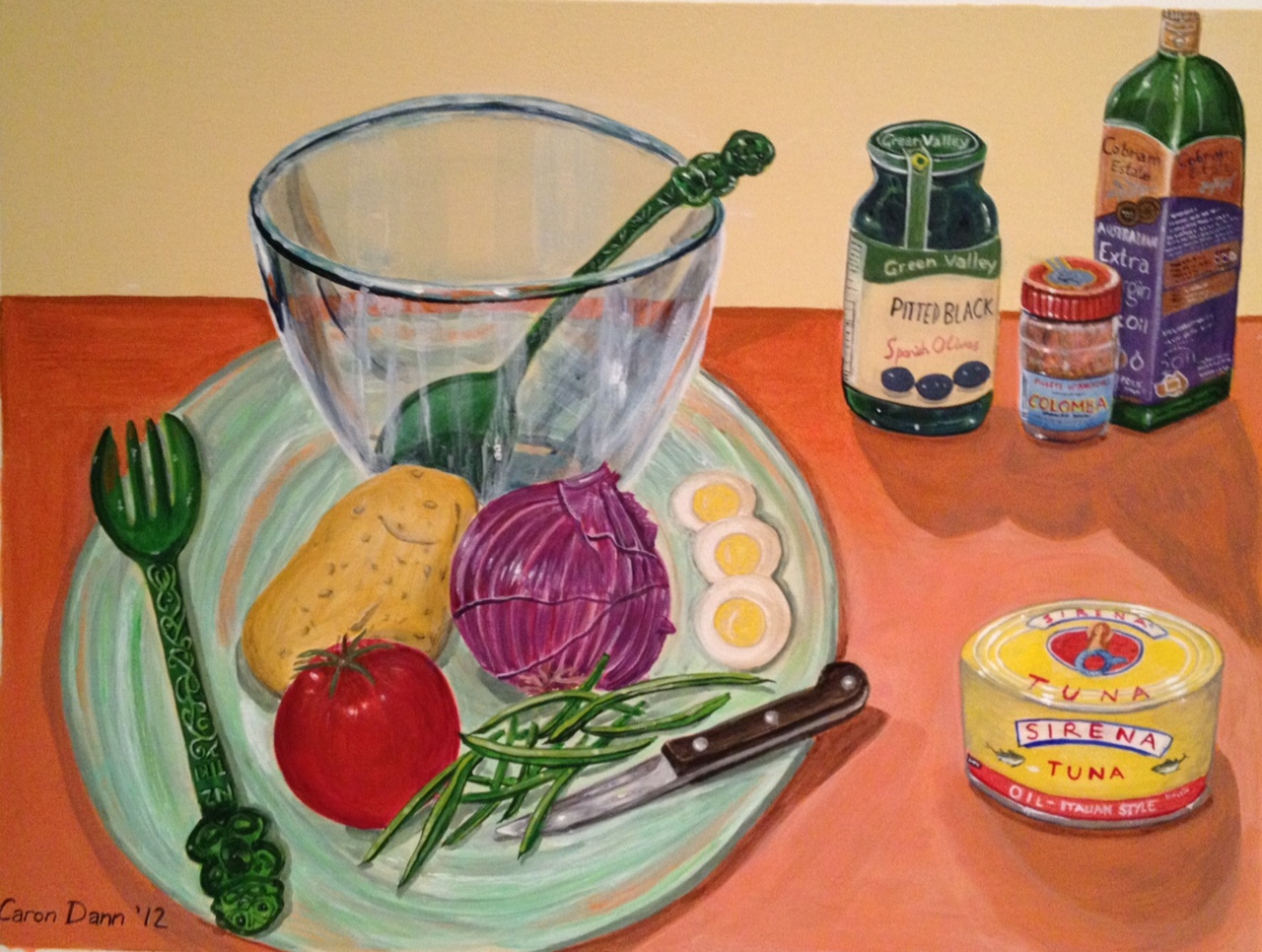
"Making Salad Niçoise", acrylics on treated board. This picture includes my favourite salad servers, plastic tiki-decorated souvenirs from New Zealand.  ©Caron Eastgate Dann, 2012 ©Caron Eastgate Dann, 2012

“Making Salad Niçoise”, acrylics on treated board. This picture includes my favourite salad servers, plastic tiki-decorated souvenirs from New Zealand.
©Caron Eastgate Dann, 2012

"Fruity Still Life", watercolours on paper. This was just a quick sketch, and I'm not very experienced in watercolours, so it's rather wonky: but I don't mind that! ©Caron Eastgate Dann, 2012

“Fruity Still Life”, watercolours on paper. This was just a quick sketch, and I’m not very experienced in watercolours, so it’s rather wonky: but I don’t mind that! ©Caron Eastgate Dann, 2012

"Apple Day", PanPastels on treated paper. The apples were three different varieties I bought for this picture. The willow-pattern china was given to me by my late grandmother.  ©Caron Eastgate Dann, 2013

“Apple Day”, PanPastels on treated paper. The apples were three different varieties I bought for this picture. The willow-pattern china was given to me by my late grandmother. The knife in this picture is very special, as it was given to me decades ago by my late father. It has a permanent place in my kitchen.
©Caron Eastgate Dann, 2013

Long-Ago Interviews: Lord Jeffrey Archer, author

In a previous career, I was a journalist who specialised in writing about the entertainment industry, celebrities, books and authors. I did this from the 1980s until 2008, when I became a university lecturer in media studies and journalism. In this series, “Long Ago Interviews”, I want to share some anecdotes from some of my more memorable interview subjects.

In the mid-to-late 1980s, I was books editor at the Sunday Star newspaper in New Zealand (now the Sunday Star Times). I had moved back to the big city, where I was brought up, after paying my dues from the age of 17 working at rural newspapers at Waipukurau in Hawke’s Bay and Warkworth, north of Auckland. I was still only in my early 20s when I became books editor of this major newspaper, but in those days, because we started so young, we were quite accomplished by age 23 or 24.

An example of my Sunday Star books page from 1986. Unfortunately, I no longer have a clipping of my Jeffrey Archer interview.

An example of my Sunday Star books page from 1986. Unfortunately, I no longer have a clipping of my Jeffrey Archer interview

Books editor

When I say I was books editor, this was an extra duty. I was primarily employed as the TV-page writer/editor, and before that the arts writer/editor of the Auckland Star Monday to Saturday. When the new Sunday edition was being planned, I sent the Editor—the big man upstairs who we lowly reporters barely ever saw—a proposal for a books page in the Sunday Star, because management had asked for ideas from staff and were prepared to give everyone a go. My proposal for a weekly books page was accepted, but it was additional to my role as arts editor then, later, TV editor. They paid me an extra $50 a week, but as all book lovers would know, it wasn’t about the money. I would be thrilled with anticipation every day as boxes of new books were delivered from publishers hoping to get a mention on the page.

Each week, as well as reviews by myself and other journalists happy to grab a free book (they got paid for reviews too, by the way), I wrote a news story about the book industry and did an interview with an author. It was a broadsheet newspaper, so there was lots of room.

As you can imagine, I was very busy, basically doing two jobs. As TV editor, every day I had to write a page of interviews and stories about local TV, and I also had to type out the program guide with witty comments! On Saturdays, I produced a TV lift-out. Then Sunday was thrown into the mix, though I’m not sure now if it was a dedicated TV page or just a news story or two.

“Mr Archer doesn’t go to interviews; you go to him”

Jeffrey Archer in 1998. Picture courtesy London School of Economics.

Jeffrey Archer in 1998. Picture courtesy London School of Economics.

One of the interviews I remember vividly from this time was with the British author, Jeffrey Archer (now Lord Archer, but back then, plain old “Mr”). Before I write further, let me say I do not agree with his politics at all, and I wouldn’t comment on his private life, of which there are many versions (for an interesting article on truth versus fiction in his life, click here). Nevertheless, I have to say he was a most charming interviewee, humorous and talkative. In addition, he is one of only a very few among hundreds of authors I have interviewed who sent me a personally signed letter  after the interview, thanking me for my time. I still have that letter.

Jeffrey Archer was extremely famous in the 1980s, and few authors could match his sales. He is perhaps best known for Kane And Abel, of which a 30th anniversary edition was released last year, and which alone has sold 37 million copies, according to Archer himself on his blog. I’ve read several of his books and enjoyed them immensely.

Anyway, Archer’s publishing company’s publicist had called me to set up an interview time, assuming I would go to his hotel. When I said that I was actually too busy to go out to an interview that day and that Mr Archer would have to come to the Star building to see me, the publicist was aghast:
“Mr Archer doesn’t go to interviews; you go to him,” she said.

I said that unfortunately, then, I would have to pass on the interview. She then got back to me with the exciting news that the author would indeed go to the journalist.

He duly arrived. I met him in the foyer, and up the rickety elevator we went in the ancient but quaint Auckland Star building, to an interview room on the editorial floor. He was with a young male assistant, who I prefer to think of as a sort of manservant (and I’ll tell you why in a moment).

Now, when I say interview room, think monk’s cellar. These rooms were just cubbyholes, really, with only a small table and a couple of chairs inside. Nothing on the drab grey walls, rather musty smelling, no windows. They were like interview rooms you see in those old hard-boiled cop movies. Nevertheless, I got him a bad cup of instant coffee in a paper cup and away we went.

Ask a rude question…

In the 1980s, young people still mostly lived by a lot of rules about how to behave in company and, especially, to have respect for their elders. You did not talk about money, religion or politics, as a rule, and you never asked a woman over 30 her age. But as journalists, we had to forget these rules, and we used to have to ask what I saw as tough questions, which you always kept until last. For Jeffrey Archer, the tough question I had to ask was, “How much money do you earn from your writing?”

He laughed and told me he had no idea. I don’t believe that for a moment, but he qualified it with some good material for my story. This is not the exact quotation, as unfortunately, I no longer have the clipping, but he answered something like this: “Let’s just put it this way. I have enough money to go anywhere I want to and to buy anything I want without having to check if there is enough money in my bank account.” He told me he had Louis Vuitton luggage, which was very impressive. He also told me that the sole reason he had started writing his first novel, Not A Penny More, Not A Penny Less, was because he desperately needed money to stop himself going bankrupt.

One’s manservant has the pen

Archer signs books in Bangalore, India, 2009. Picture: Mike Lynch.

Archer signs books in Bangalore, India, 2009. Picture: Mike Lynch

Another thing that has changed in journalism is that, in those days, you would never ask a celebrity for their autograph if you were a professional reporter. You would never show that you were “star struck”. This is the one time I broke the rules: I asked Jeffrey Archer if he would sign my paperback review copy of his book First Among Equals, which was what he was in New Zealand to publicise. He agreed, then held up his right arm with palm outstretched. Immediately, the “manservant” took a pen from his pocket and placed it in Archer’s hand. Archer signed the book, and handed the pen back to the assistant. I still have that signed paperback: you can see Archer’s signature and find out what happened to my copy of the book here.

I say “manservant”, because in New Zealand, we had nowhere like as rigid or apparent a class system as existed in England. No one else I knew or had interviewed had ever had someone else to carry their pen for them, including the then-Prime Minister, David Lange, who I met at the Beehive (as the Parliament Buildings executive area is known) in Wellington in the 1980s. Well, whatever the real reason the assistant had the pen, it makes a good story and is something that has stuck in my memory all these years.

You still have to fix the fence or, Dear Architects: Let’s Drag Houses Into the 21st Century

Technology can't fix a broken fence

Technology can’t fix a broken fence

As I was having breakfast one morning, I heard someone next door hammering nails into the fence. This was a good thing, I thought, since our fence was about to fall down and the landlord was not interested in fixing it. Unfortunately, they weren’t working on the fence between us and them, but between them and the next dwelling. Oh well.

It got me thinking, though, about the fact that fences still need to be fixed and painted, in the same way they’ve always needed to be.

This, despite the amazing technological advances of the 20th and 21st centuries; despite the fact that I can write an email and send it to someone in Iceland and have an answer from them in a few moments; despite smart phones with apps for everything from spirit levels to measuring your heartbeat to doing your shopping; despite reports of 3D printers being touted as the next great thing that will be able to grow body parts and print cars; despite all this, you still have to fix the fence. And when you do it, you still usually need a hammer and nails, pretty much the same gadgets our forebears were using thousands of years ago. There’s not an app to do that, now, is there!

There must be a better way.

All around me, I see in our house and in the houses of everyone else I know, design from a bygone era of servitude. This was the era when rich households all had servants to work full-time on cleaning and maintaining a property, while not-so-rich households had women to work in this role, even when they took paying work as well.

Out with grouting, tiny tiles and difficult shower doors

Out with grouting, tiny tiles and difficult shower doors

Today, few people have servants; few women accept that their entire role in life is to clean up after others, acknowledging that, even if they work at home full-time, they should still be able to have some time off, the same as any other worker. In such a time, we should be making houses that need a minimum of maintenance. Architects, engineers, designers, and builders, please take note!

*I don’t want shower cubicles with nooks and crannies that collect soap and mould. I don’t want tiles with grouting that collects dirt, then discolours and cracks.

*I don’t want fancy “period style” doors that collect dust. For example, each of the doors inside my rented townhouse has 91 separate surfaces to clean. The front door is the same, and there is also a decorative screen door (see picture). Ditto cornices and skirting boards. I blame the penchant for Victorian style in all its fussiness. Although mine is a late 20th-century house, it was built in Victorian style, which has been very fashionable for a few decades.

Our Victorian-style front-of-house security door: a dust collector.

Our Victorian-style front-of-house security door: a dust collector

*I don’t want wooden fences that warp and spring out of their nails. I don’t want to have to paint a fence every few years.

I have seen pictures of amazing houses designed by top architects that have all smooth surfaces that need little maintenance—but they have multi-million-dollar price tags. That’s well and good, but I’m talking about houses for the ordinary person.

My idea of the perfect house would be the lowest maintenance place possible: no fancy edges round the walls or light fittings, no tiles with grouting. The decorative touches could then be added via soft furnishings, beautiful artwork and sculptures…which would all need cleaning, I know.

Don’t get mad…

Ever heard the missive “Don’t get mad, get even”? I agree with the first half of this statement, because getting mad serves no positive purpose at all. When you get angry, your stress levels go way up, you do and say things you haven’t properly thought out and that you’re usually sorry for later. Also, you make the place unpleasant for those around you.

I’m not talking about a situation in which your safety is threatened—getting angry for survival is different. I’m talking about everyday life: the times we thump the table at a pathetic or biased story on the TV news; that we grimace or gesture at a driver on the road who’s done something stupid; or that we yell at our partner for something trivial.

There was a mega-selling book that came out in 1997 called “Don’t Sweat the Small Stuff”. I never actually read this book, but I loved its title. This is because, much of the time, I DO sweat the small stuff, and know I shouldn’t. My brother once made the comment a few years ago, “Oh, Caron will worry enough for all of us”. Ever since then, I’ve tried to stop worrying so much, because worry can so easily lead to anger. I don’t always succeed, of course.

Think of all that energy we expend on being angry, and how much better placed it would be directed to constructive things. Instead of yelling at poorly constructed stories on trashy current affairs shows, for example, I should paint a picture or go for a walk.

The Crayon Files

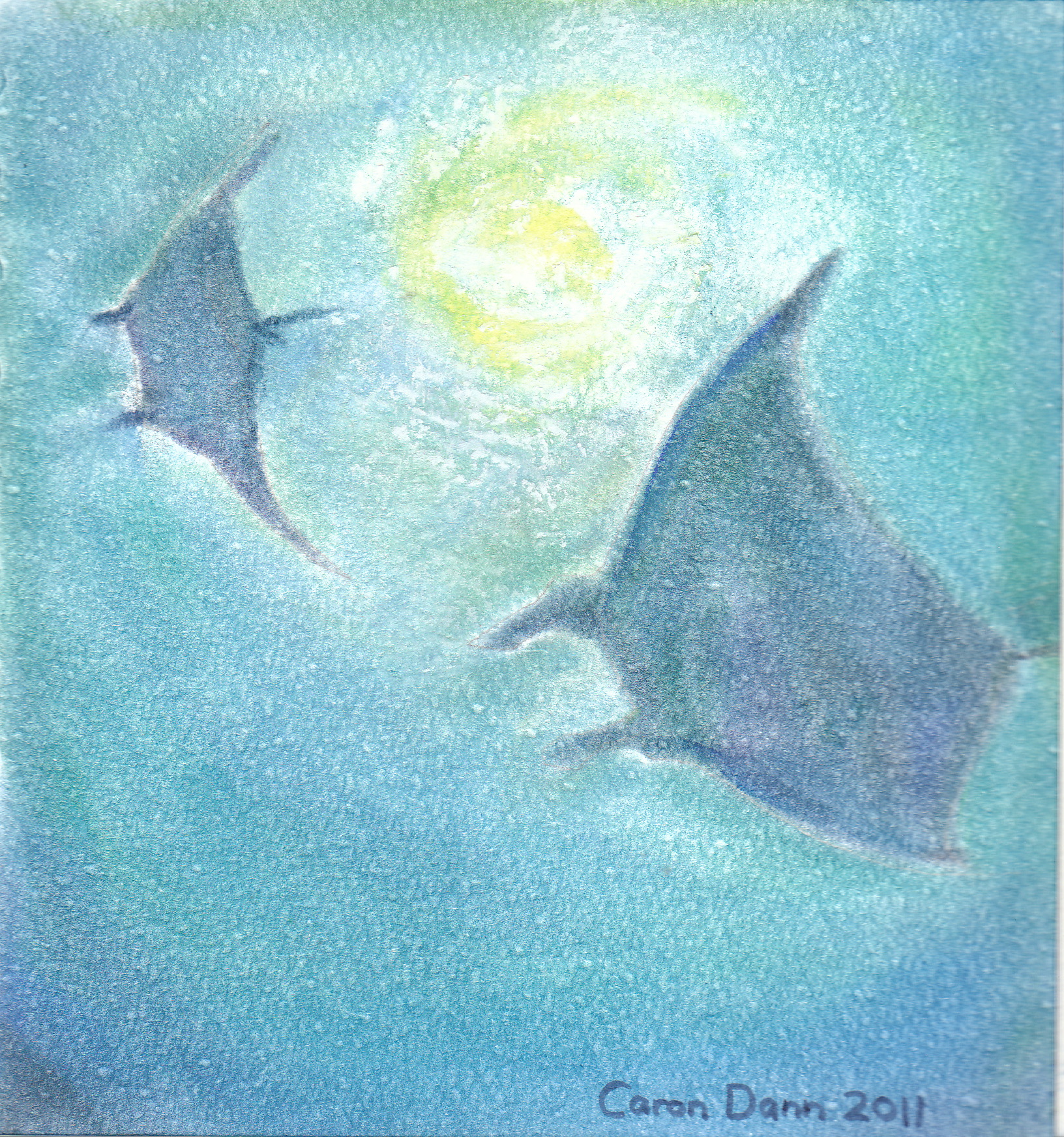
“Rays’ Ways”, pastels,  ©Caron Eastgate Dann, 2011

Speaking of pictures, surrounding yourself with beautiful art is a great way to help you feel less angry and more peaceful. You can even make your own art using inexpensive materials. Give it a go—you’ll be surprised what you can do, even if you haven’t tried since childhood. The picture on this page of rays under the sea was one of the first I did when I took up art three years ago, and it always makes me feel peaceful.

I’ve written this post in response to Kozo’s monthly challenge over at Bloggers for Peace. The challenge is to write about the one thought you will focus on this year to bring more peace. So, instead of “Don’t get mad, get even”, I would like to change that saying to, “Don’t get mad—get happy”. I think the world would be a much better place if everyone kept this in mind during their everyday lives (with the aforementioned exception, of course). Over at her blog Delightfully Different Life, the writer D. S. Walker also answered this challenge, and explains how happiness can be found in simple ways.

Cauliflower is the new rice!

My rogan josh, complete with cauliflower rice.

My rogan josh, complete with cauliflower rice

I love pasta, rice and, to a lesser extent, mashed potato, but in our household I am trying to reduce our carbohydrate intake.

We both love to cook and can happily spend hours in the kitchen preparing meals. We’ve been using cauliflower mash to substitute for potato mash for a few years now, and it works beautifully, particularly when done in the snazzy mini-food processor we bought for $30.

Recently, I found that cauliflower could double for another of our staples, and that was white rice. Surprisingly, it was on a Jamie Oliver cooking show that I first heard about cauliflower rice. Here is my version:

Take about a third of a medium cauli for two people. Make sure it is super white and firm. Take off as much of the stalk as you can. Put it in a food processor and whiz until it becomes like grains of rice. Make sure there are no big bits left, and if there are, take them out. But don’t process so much that it congeals. The grains should be separated.

Tip the grains into a microwave-safe dish with a ventilated lid. Very important: do not add water.

Microwave on high for about five minutes. Oliver says seven minutes, and other recipes I’ve seen say four, but it will depend on how much you are cooking, the power of your microwave oven, and what your taste is. For two people, I cook it for four minutes, then test it.

Now use as you would rice: this is a lovely base for a curry, for example, and you can see in the picture above my cauliflower rice with rogan josh, made for dinner last night.

You can also make cauli rice into a sort of pilau. Fry some diced vegetables, such as chopped onion, capsicum, mushroom, garlic, herbs and spices, in a little oil of your choice until golden, then add cooked cauli-rice, stir to heat and serve.

Briefly, here are the other substitutes I use for high-carbohydrate foods:

cauliCauliflower mash

As cauli absorbs a lot of moisture when it cooks, it’s better to microwave or steam it, but you can simply boil it if you want to. Make sure the cooked cauli is very tender, but not waterlogged. The food processor on pulse does the best job, and adding a little cream cheese to the mix does wonders. Half a teaspoon or so of powdered chicken stock can also be good.

If you’ve boiled the cauli, it will make quite a sloppy mash, but this can be delightful served on the dinner plate in a little ramekin with a knob of butter for the naughty.

Zucchini pasta

For a fettuccini substitute, use zucchini (courgette). Take a vegetable peeler and shave long strips from the zucchini, avoiding the inner seeds. You’ll probably need one medium zucchini per person. Then blanche quickly in boiling water—it will take only about one minute, or maybe even less. The trick is that it must be al dente but not raw, so experiment with a few pieces first. If overcooked, the strips will break up.

Drain the strips and treat as you would regular pasta, that is add some seasoning and a few drops of olive oil if you like.

Serve topped with your favourite sauce. A light tomato-based sauce works well, with parmesan and parsley on top. Or, fry in olive oil a few tablespoons of breadcrumbs, a garlic clove, some dried or fresh chilli slices, and an optional anchovy fillet or two. Dribble the sauce liberally over the zucchini pasta and serve with a wedge of lemon on the side.  Season to taste, of course, but remember, anchovy is very salty.

Egg wraps

Bread has such a central place in the western diet, it’s hard to get away from it. This is particularly so at lunchtime, when it seems so easy to grab a couple of pieces of lovely sourdough or a crunchy roll and fill with ham, cheese, tuna, or whatever else is on hand.

For a brilliant alternative, I take one egg per person, break and mix well together in a small bowl. Season and add a little water, no more than a teaspoon for every two eggs, and mix again.

Take a small non-stick fry pan—mine is 14cm across at the base—and spray lightly with oil, turning to medium heat. You should need to use the oil only once during the cooking time.

You fry the egg wraps exactly as if you were cooking crepes: spoon in a small amount of egg and then quickly tilt the pan so the egg covers the entire base. If you’ve overestimated, tip the excess back into the bowl. If you’ve underestimated, add a little more. But this must be done within a few seconds! The wrap will take 30 seconds or less: it’s ready when the edges start to peel away from the pan. You should easily be able to nudge the wrap from the pan and on to a waiting plate.

Continue until all the egg is left. You will probably have three wraps per person, depending on the size of the eggs.

The wraps can be served with hot or cold fillings. Simply treat the way you would a bread wrap, and fill with whatever you want. We like smoked salmon, cream cheese and capers, for example. These can be easily transported to work or school for a portable lunch.

Happy eating, and I’d love to know your suggestions for other substitutes.

Love Letters in the Attic

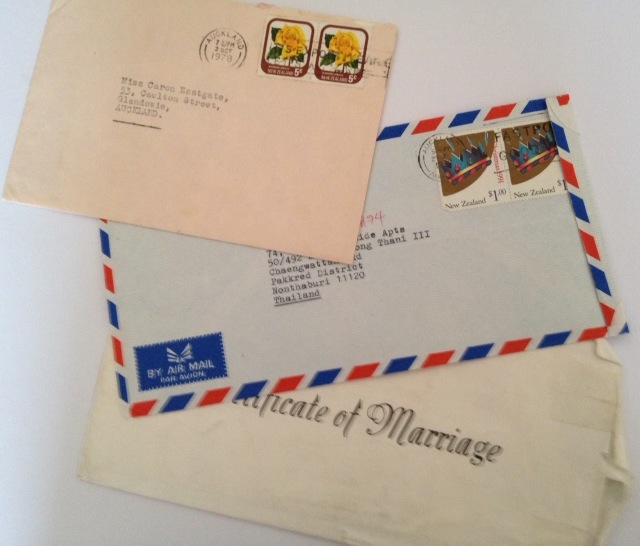
LettersHistorical literature and film are full of sentimentality, of, for example, images of love letters tied with pink ribbon that are kept forever, to be found decades or generations later.

But how often did this happen in real life? For people who had big houses with attics for storage, and who never moved, a lot of things probably did get saved, if only because they were placed in the storage area and then forgotten. But for the ordinary person before the late 19th century and even beyond to the first half of the 20th century, it wasn’t the norm to keep things forever. It just wasn’t practical or affordable if you were moving house, for example, to lug along all the letters you’d received for the last 20 years.

In the 1950s, my nana moved from the South Island of New Zealand to the North Island. She burnt everything that wasn’t needed, including family letters going back decades. My mother doesn’t know why, but can only guess that it was because it just wasn’t practical to move it all. Nana could see no purpose in keeping old letters, clippings, souvenirs or family documents no longer current, nor in spending money to have them transported.

I’ve been thinking about the idea that things must be saved for posterity since I was reminded recently of how much TV footage the BBC taped over or destroyed, including most of the British coverage of Apollo 11’s moon landing in 1969, which was the first time it had broadcast all night, for a start.

Today, it seems incomprehensible that the BBC also destroyed 97 early episodes of Dr Who in the 1960s and 1970s to save space.

The powers that be in those days, however, still harkened back to a different age. Though they were part of the 20th century, they still had a 19th-century mentality. Before the age of, progressively, mass photography, film, TV and, ultimately, video,  there were of course no actual images of anything. Before photography, you had to be rich enough to have your portrait painted, and then the likeness depended on the painter’s interpretation and skills.

Before recorded music, you bought sheet music and played it yourself, or went to a live concert. There was no one authoritative version of a piece of performed music.

Long, long before that, before Gutenberg’s press became operational in the mid-15th century, most knowledge that ordinary people used was based on memory, not stored in books. Until the 20th century, it was mostly only the well-off who had home libraries of books.

The rise of sentimentality in regard to objects and the cult of keeping things almost to the point of hoarding them seems to me to be a modern thing.

We now have more memories of ourselves than in any other time in history: social media records our thoughts, photos, what we had for dinner, and other minutiae, as an everlasting record.

When I was growing up in the 1970s, we took photos only on special occasions and vacations, and then sparely, because developing and printing were expensive and took a week or more.

Today, we take photos of anything and everything, every day if we want, and post them to Facebook or Instagram or Twitter where they remain indefinitely. We have access to all our favourite songs, thousands at the touch of a button wherever we are, thanks to portable devices.

While these sorts of archives are digital, so don’t actually take up any space in the home, they encourage a mentality that everything must be kept.

I keep reading articles about our modern houses that are stuffed with way too much stuff. We only get rid of stuff when we need to bring in more stuff.

I am no exception, from ridiculous trinkets bought on trips overseas to piles of books I will never read again and clothes I’ll never wear again but that remind me of an earlier time. I used to save all my books because they were a talking point. When visitors came, one of the first things they would do is peruse your book collection.

I have got better at weeding out what I don’t need and I am gradually whittling down my possessions to those I use and appreciate. I would, however, keep old letters if I had them. I have only a few left, as almost all my childhood and early adulthood letters went missing during an international move. Now, of course, it’s not a problem since almost all the letters I send are emails.

Meanwhile, anything that is chipped, broken or not used goes out. Well, almost anything…

Agatha Christie and “the quiet moments of everyday life”

In her enormously entertaining self-titled autobiography, the 20th-century mystery writer Agatha Christie discusses a letter she rediscovered in old age that had been written to her by her father about Queen Victoria’s Diamond Jubilee in 1897.

Forgotten by Christie: Queen Victoria's Diamond Jubilee, 1897. Picture courtesy National Maritime Museum from Greenwich, UK, via Wikimedia Commons

Forgotten by Christie: Queen Victoria’s Diamond Jubilee, 1897. Picture courtesy National Maritime Museum from Greenwich, UK, via Wikimedia Commons

Young Agatha’s grandmother had arranged to take the six-year-old girl to the jubilee procession on June 22, celebrating 60 years of the Queen’s reign. Agatha’s father, who was away in the US at the time, remarks in the letter how lucky his daughter is to see “this wonderful show”, as he refers to it. “I know you will never forget it,” he adds.

Christie comments wryly: “My father lacked the gift of prophecy, because I have forgotten it. How maddening children are! When I look back to the past, what do I remember? Silly little things about local sewing-women, the bread twists I made in the kitchen, the smell of Colonel F.’s breath—and what do I forget? A spectacle that somebody paid a great deal of money for me to see and remember. I feel very angry with myself. What a horrible, ungrateful child!”

Mary_Cassatt_Young_Mother_Sewing

Remembered by Christie: sewing women. This painting, “Young Mother Sewing” (1900), is by the impressionist painter Mary Cassatt (1844-1926)

She goes on to write much about memories from childhood that stuck most in her mind: a field of buttercups, the smell of lime trees and grass. The happiest memories, she says, “are almost always the quiet moments of everyday life”.

I agree with her: my most vivid memories are tiny snapshots, seemingly randomly selected from the millions that make up a life. I remember, for example, aged about 8 and going through what was then called a “tomboy” stage, running inside, highly excited, after playing “cowboys and Indians” (in our ignorant way then and meaning no disrespect, but emulating the movies of the day). My nana, who was visiting, exclaimed, “Gosh, you look exactly like a cowgirl!” I beamed with pride: it seemed like the most wonderful thing anyone had ever said to me.

Years before that, I remember the live televised coverage of the lunar landing in 1969, when the astronaut Neil Armstrong became the first man to walk on the moon. It was extraordinary not just for the event itself, but for the amazing feat of broadcasting, which British broadcaster and science historian James Burke has called “the greatest media event of all time”.

In fact, I don’t actually remember the coverage itself very much because of something else that happened. My father must have got us all to sit in the living room and watch the event, but I didn’t understand why we had to sit so still or why it was important, even though it had been explained to me.

Suddenly, I thought of something more interesting to tell Dad, and, at what must have been a crucial part of the broadcast, I started yabbering on.

Uncharacteristically, he spoke very sharply to me, told me to keep quiet, and saying didn’t I realise this would be one of the most important events in history? I was so upset, I couldn’t speak for hours—upset and mystified as to why my lovely daddy had cut me off when he was usually so interested in what I had to say, why he would rather watch something on TV than listen to me. I was so upset, I didn’t really see or hear the event itself. I can still feel my hurt today, all these decades later. Funnily enough, when I mentioned it to my dad many years later, he didn’t remember me interrupting, but he vividly remembered watching the exciting telecast (grainy and in black and white as it was).

With thanks to the novelist Angela Savage, not only for urging me to read Agatha Christie’s autobiography, but for acquiring a copy of it for me. I’m 110 pages into the 551-page tome, and enjoying it immensely. Thanks again, Angela!

Writer’s Diary #7: how many drafts does it take to write a novel?

I am currently immersed in writing my second novel, trying to write most days. It’s quite a while since I wrote my first (The Occidentals, published as Caron Eastgate James by Asia Books in 1999 and later in German editions), because a PhD and a non-fiction book, not to mention employment, got in the way.
So I’m getting into the swing of writing again, aiming for 1000-2000 words a day, but currently doing 300-500 words most days. Still, anything is better than nothing. If you wrote only one page a day, every day, for a year, you’d have a novel-sized manuscript at the end of it. The main thing is, just keep going, no matter how small the input seems. Regular writing is the key to success.

The other important thing is the number of drafts you will write before you deem the novel finished, or at “final draft” stage ready for submission. The other day, I came across a writing journal I’d kept in 1992, when I was starting work on The Occidentals. In it, I had written a blueprint for drafts. I’ve done a lot of writing since then, but I think this brief piece of advice from myself more than 21 years ago is still relevant, and I’m going to keep it in mind this time, too. Here it is, unedited and exactly as I wrote it back then:

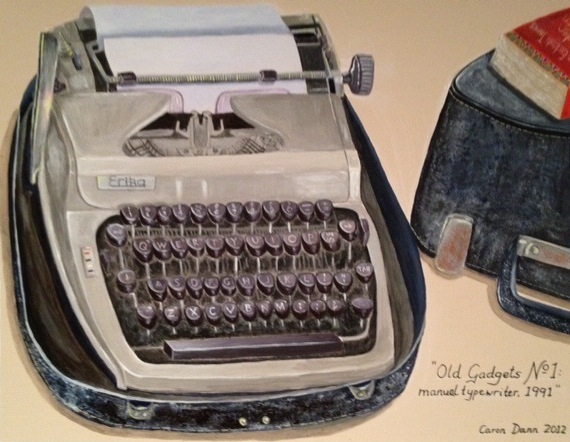
My painting of my old manual typewriter, bought in Bangkok in 1991, on which I wrote part of my first novel. I bought it so I could continue working on the novel during the frequent power cuts we had in those days.

My painting of my old manual typewriter, bought in Bangkok in 1991, on which I wrote part of my first novel. I bought it so I could continue working during the frequent power cuts we had in those days.
Image ©Caron Eastgate Dann, 2012.


1. First draft—tell the story;

2. Second draft—check out the facts; continuity; fill in any gaps in research; rewrite;

3. Third draft—polish the writing;

4. Fourth draft—Complete the polishing; small adjustments etc.


As a journalist, I’m used to writing quickly, but of course, journalism usually requires short pieces, most less than 500 words each and rarely more than 2500, even for features. But I still believe step one on that list is paramount: get your story down, no matter how badly you think you’ve written it. Then you have something to work with.

The top 10 things cool guys do on the trains of Japan

From the odd but always hilarious RocketNews24 blog comes a report of train behaviour in Japan. I wish the coolest thing to do in Australia was to give up your seat to someone who needed it. I constantly see young, able people slouching in seats while old people stand. The seated people often give their bag its own seat, too, and look disgruntled when asked to move it.