Love Letters in the Attic

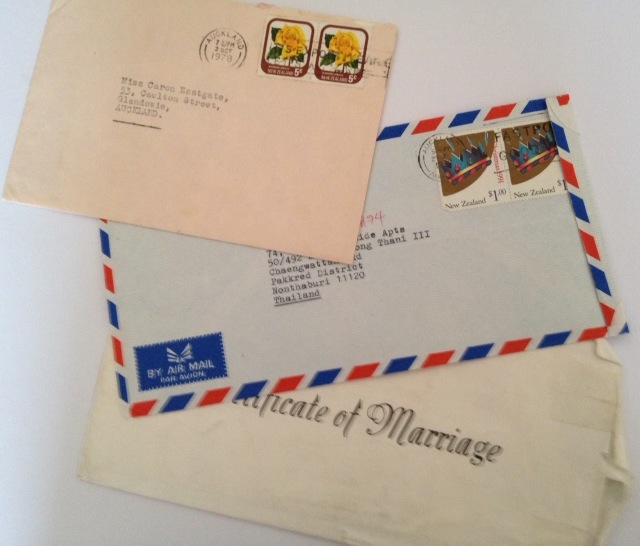
LettersHistorical literature and film are full of sentimentality, of, for example, images of love letters tied with pink ribbon that are kept forever, to be found decades or generations later.

But how often did this happen in real life? For people who had big houses with attics for storage, and who never moved, a lot of things probably did get saved, if only because they were placed in the storage area and then forgotten. But for the ordinary person before the late 19th century and even beyond to the first half of the 20th century, it wasn’t the norm to keep things forever. It just wasn’t practical or affordable if you were moving house, for example, to lug along all the letters you’d received for the last 20 years.

In the 1950s, my nana moved from the South Island of New Zealand to the North Island. She burnt everything that wasn’t needed, including family letters going back decades. My mother doesn’t know why, but can only guess that it was because it just wasn’t practical to move it all. Nana could see no purpose in keeping old letters, clippings, souvenirs or family documents no longer current, nor in spending money to have them transported.

I’ve been thinking about the idea that things must be saved for posterity since I was reminded recently of how much TV footage the BBC taped over or destroyed, including most of the British coverage of Apollo 11’s moon landing in 1969, which was the first time it had broadcast all night, for a start.

Today, it seems incomprehensible that the BBC also destroyed 97 early episodes of Dr Who in the 1960s and 1970s to save space.

The powers that be in those days, however, still harkened back to a different age. Though they were part of the 20th century, they still had a 19th-century mentality. Before the age of, progressively, mass photography, film, TV and, ultimately, video,  there were of course no actual images of anything. Before photography, you had to be rich enough to have your portrait painted, and then the likeness depended on the painter’s interpretation and skills.

Before recorded music, you bought sheet music and played it yourself, or went to a live concert. There was no one authoritative version of a piece of performed music.

Long, long before that, before Gutenberg’s press became operational in the mid-15th century, most knowledge that ordinary people used was based on memory, not stored in books. Until the 20th century, it was mostly only the well-off who had home libraries of books.

The rise of sentimentality in regard to objects and the cult of keeping things almost to the point of hoarding them seems to me to be a modern thing.

We now have more memories of ourselves than in any other time in history: social media records our thoughts, photos, what we had for dinner, and other minutiae, as an everlasting record.

When I was growing up in the 1970s, we took photos only on special occasions and vacations, and then sparely, because developing and printing were expensive and took a week or more.

Today, we take photos of anything and everything, every day if we want, and post them to Facebook or Instagram or Twitter where they remain indefinitely. We have access to all our favourite songs, thousands at the touch of a button wherever we are, thanks to portable devices.

While these sorts of archives are digital, so don’t actually take up any space in the home, they encourage a mentality that everything must be kept.

I keep reading articles about our modern houses that are stuffed with way too much stuff. We only get rid of stuff when we need to bring in more stuff.

I am no exception, from ridiculous trinkets bought on trips overseas to piles of books I will never read again and clothes I’ll never wear again but that remind me of an earlier time. I used to save all my books because they were a talking point. When visitors came, one of the first things they would do is peruse your book collection.

I have got better at weeding out what I don’t need and I am gradually whittling down my possessions to those I use and appreciate. I would, however, keep old letters if I had them. I have only a few left, as almost all my childhood and early adulthood letters went missing during an international move. Now, of course, it’s not a problem since almost all the letters I send are emails.

Meanwhile, anything that is chipped, broken or not used goes out. Well, almost anything…

Agatha Christie and “the quiet moments of everyday life”

In her enormously entertaining self-titled autobiography, the 20th-century mystery writer Agatha Christie discusses a letter she rediscovered in old age that had been written to her by her father about Queen Victoria’s Diamond Jubilee in 1897.

Forgotten by Christie: Queen Victoria's Diamond Jubilee, 1897. Picture courtesy National Maritime Museum from Greenwich, UK, via Wikimedia Commons

Forgotten by Christie: Queen Victoria’s Diamond Jubilee, 1897. Picture courtesy National Maritime Museum from Greenwich, UK, via Wikimedia Commons

Young Agatha’s grandmother had arranged to take the six-year-old girl to the jubilee procession on June 22, celebrating 60 years of the Queen’s reign. Agatha’s father, who was away in the US at the time, remarks in the letter how lucky his daughter is to see “this wonderful show”, as he refers to it. “I know you will never forget it,” he adds.

Christie comments wryly: “My father lacked the gift of prophecy, because I have forgotten it. How maddening children are! When I look back to the past, what do I remember? Silly little things about local sewing-women, the bread twists I made in the kitchen, the smell of Colonel F.’s breath—and what do I forget? A spectacle that somebody paid a great deal of money for me to see and remember. I feel very angry with myself. What a horrible, ungrateful child!”

Mary_Cassatt_Young_Mother_Sewing

Remembered by Christie: sewing women. This painting, “Young Mother Sewing” (1900), is by the impressionist painter Mary Cassatt (1844-1926)

She goes on to write much about memories from childhood that stuck most in her mind: a field of buttercups, the smell of lime trees and grass. The happiest memories, she says, “are almost always the quiet moments of everyday life”.

I agree with her: my most vivid memories are tiny snapshots, seemingly randomly selected from the millions that make up a life. I remember, for example, aged about 8 and going through what was then called a “tomboy” stage, running inside, highly excited, after playing “cowboys and Indians” (in our ignorant way then and meaning no disrespect, but emulating the movies of the day). My nana, who was visiting, exclaimed, “Gosh, you look exactly like a cowgirl!” I beamed with pride: it seemed like the most wonderful thing anyone had ever said to me.

Years before that, I remember the live televised coverage of the lunar landing in 1969, when the astronaut Neil Armstrong became the first man to walk on the moon. It was extraordinary not just for the event itself, but for the amazing feat of broadcasting, which British broadcaster and science historian James Burke has called “the greatest media event of all time”.

In fact, I don’t actually remember the coverage itself very much because of something else that happened. My father must have got us all to sit in the living room and watch the event, but I didn’t understand why we had to sit so still or why it was important, even though it had been explained to me.

Suddenly, I thought of something more interesting to tell Dad, and, at what must have been a crucial part of the broadcast, I started yabbering on.

Uncharacteristically, he spoke very sharply to me, told me to keep quiet, and saying didn’t I realise this would be one of the most important events in history? I was so upset, I couldn’t speak for hours—upset and mystified as to why my lovely daddy had cut me off when he was usually so interested in what I had to say, why he would rather watch something on TV than listen to me. I was so upset, I didn’t really see or hear the event itself. I can still feel my hurt today, all these decades later. Funnily enough, when I mentioned it to my dad many years later, he didn’t remember me interrupting, but he vividly remembered watching the exciting telecast (grainy and in black and white as it was).

With thanks to the novelist Angela Savage, not only for urging me to read Agatha Christie’s autobiography, but for acquiring a copy of it for me. I’m 110 pages into the 551-page tome, and enjoying it immensely. Thanks again, Angela!

Writer’s Diary #7: how many drafts does it take to write a novel?

I am currently immersed in writing my second novel, trying to write most days. It’s quite a while since I wrote my first (The Occidentals, published as Caron Eastgate James by Asia Books in 1999 and later in German editions), because a PhD and a non-fiction book, not to mention employment, got in the way.
So I’m getting into the swing of writing again, aiming for 1000-2000 words a day, but currently doing 300-500 words most days. Still, anything is better than nothing. If you wrote only one page a day, every day, for a year, you’d have a novel-sized manuscript at the end of it. The main thing is, just keep going, no matter how small the input seems. Regular writing is the key to success.

The other important thing is the number of drafts you will write before you deem the novel finished, or at “final draft” stage ready for submission. The other day, I came across a writing journal I’d kept in 1992, when I was starting work on The Occidentals. In it, I had written a blueprint for drafts. I’ve done a lot of writing since then, but I think this brief piece of advice from myself more than 21 years ago is still relevant, and I’m going to keep it in mind this time, too. Here it is, unedited and exactly as I wrote it back then:

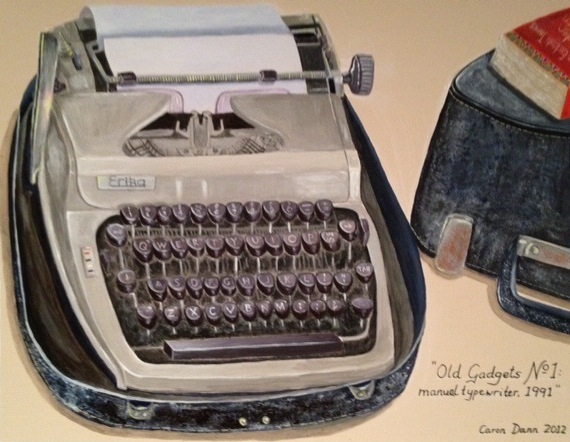
My painting of my old manual typewriter, bought in Bangkok in 1991, on which I wrote part of my first novel. I bought it so I could continue working on the novel during the frequent power cuts we had in those days.

My painting of my old manual typewriter, bought in Bangkok in 1991, on which I wrote part of my first novel. I bought it so I could continue working during the frequent power cuts we had in those days.
Image ©Caron Eastgate Dann, 2012.


1. First draft—tell the story;

2. Second draft—check out the facts; continuity; fill in any gaps in research; rewrite;

3. Third draft—polish the writing;

4. Fourth draft—Complete the polishing; small adjustments etc.


As a journalist, I’m used to writing quickly, but of course, journalism usually requires short pieces, most less than 500 words each and rarely more than 2500, even for features. But I still believe step one on that list is paramount: get your story down, no matter how badly you think you’ve written it. Then you have something to work with.

The top 10 things cool guys do on the trains of Japan

From the odd but always hilarious RocketNews24 blog comes a report of train behaviour in Japan. I wish the coolest thing to do in Australia was to give up your seat to someone who needed it. I constantly see young, able people slouching in seats while old people stand. The seated people often give their bag its own seat, too, and look disgruntled when asked to move it.

Finally: 2013 in review

It’s a little later than everyone else’s annual report, but I finally received mine this morning. I was one of the unlucky ones, originally left out of the annual report round and feeling very much like the kid no one picked for their sports team. However, I sent a query to WordPress, et voilà! They sent me a note back within a couple of days to tell me my annual report was now available. Squeaky wheel and all that…
It’s funny how blogging changes your perceptions of being published. When I was a journalist, I worked for several publications that sold more than 500,000 copies each time they were published. Potentially, that was around 1.25 million people who might read each article I wrote (in those days, for print editions in mass media, statistics apparently showed that you multiplied sales by 2.5 to get numbers of readers).
Now as a blogger, I’m ecstatic if I get 100 views in a day. I know the blog will keep growing, and I actually don’t mind that it’s not followed by, say, 5000 people. I quite like this little club, as I’ve come to think of it.
So thanks to everyone for reading, for your kind and informative comments, and for your own amazingly interesting posts.

Here’s an excerpt:

A New York City subway train holds 1,200 people. This blog was viewed about 6,500 times in 2013. If it were a NYC subway train, it would take about 5 trips to carry that many people.

Click here to see the complete report.

The Books That Were: my 2013 top reads

I’m what you’d call an eclectic reader: I’m just as happy reading a literary tome that’s won the Man Booker Prize as I am reading a “chick-lit” novel.

I want different things from different books. Sometimes, I want to read beautiful writing for its own sake; sometimes, I want to read classics because I should; sometimes, the location interests me (this is why I liked Twilight—I thought the location of Forks was a great choice, no matter what criticism could be levelled at the writing); sometimes, I’m interested in what on earth a mega-selling author could write next; and sometimes, I just want to have a laugh and a “good read” that doesn’t tax me too much.

There are some authors whose works I will read whatever they publish. There are some subjects I will read no matter who they are by.

Anyway, here are my top five novels of 2013 in no particular order. To note: four of them are historical novels set in the 19th century, and the fifth, The Dying Beach, is set in the 1990s. Two are set during 19th-century gold rushes, one in Australia, the other in New Zealand. Three are murder mysteries, though I don’t set out to read crime fiction: it just kind-of happens. Four are by New Zealand or Australian writers. I read three of them on my Kindle, and the other two as trade paperbacks (the bigger format paperback).

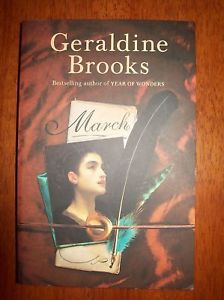
Books-MarchMarch, by Geraldine Brooks (Fourth Estate, 2005, 346pp)

This is set in the 1860s during the American Civil War. The protagonist, Mr March, is the father from Louisa May Alcott’s children’s classic Little Women, who barely appears in the original book. But Brooks has cleverly modeled the character more on Alcott’s real father, an abolitionist, educator and writer.

The book is compelling and, although violent in parts, it also has moments of joy and sensuality. It taught me much more about the complicated issues surrounding the American Civil War—and their legacy—than history books I studied at university.  The novel is something of an antidote to the overly moralistic Little Women, which I re-read in preparation for March.

Interestingly, Brooks is an Australian journalist who now lives in the US, and this book won the Pulitzer Prize in 2006. It is a superb work of art that is among the best books I’ve read. I’ll definitely be reading more Brooks novels, and her Year of Wonders is sitting in my bookcase, waiting its turn.

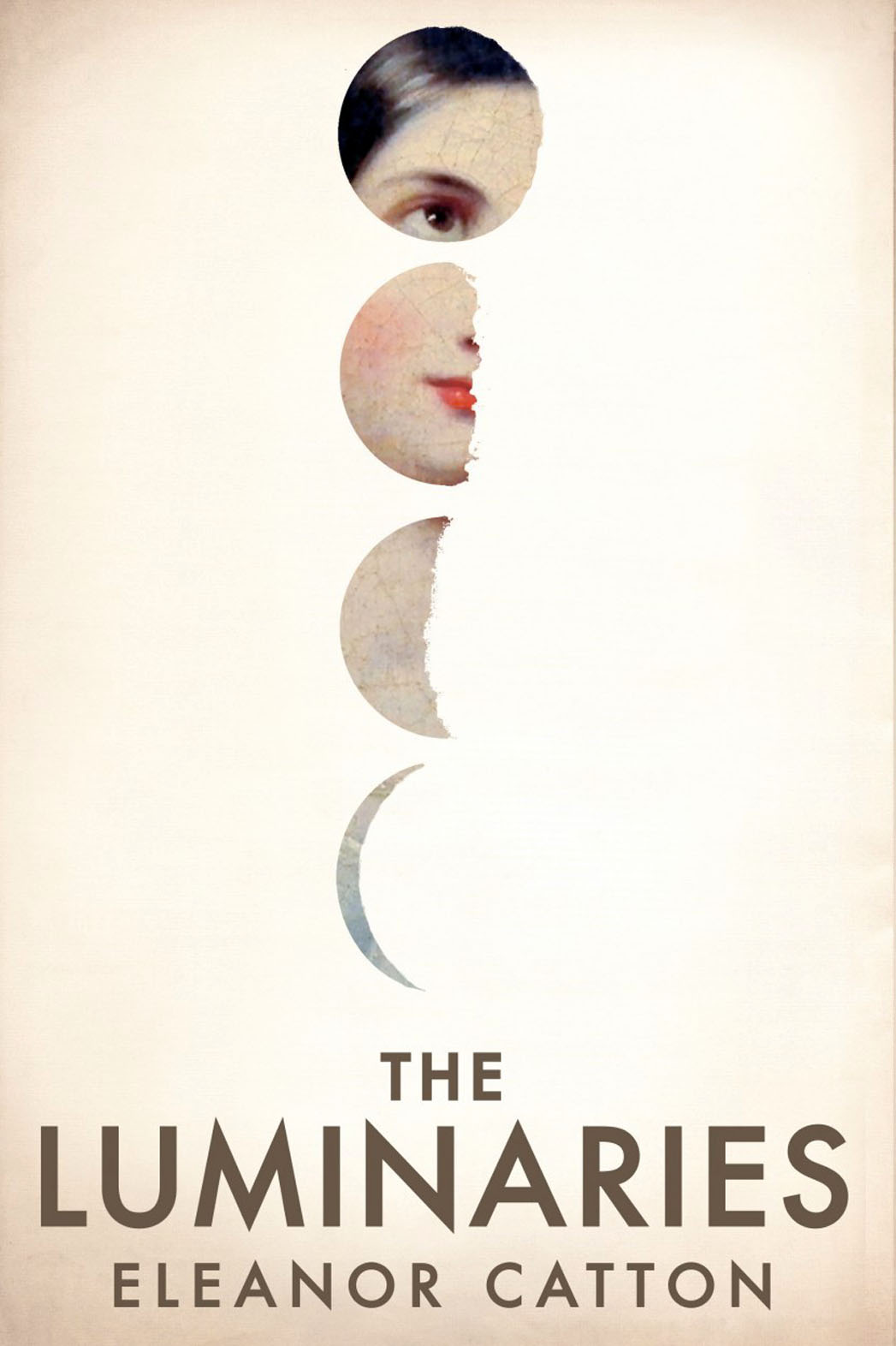
The Luminaries, by Eleanor Catton (Granta, 2013, 834pp)books-luminaries

This historical murder mystery, the 2013 Man Booker Prize winner, is set in New Zealand in the Otago goldfields, mainly in and around Hokitika, in the mid-1860s. Its brilliance lies in its clever structure and its exquisite use of language. The plot is actually quite simple—a man is found dead and another disappears, and a woman collapses in the street after what is thought to be a suicide attempt. The rest of the book considers what might have happened to them and why, but it is far from a simple book. The complexity of characterisation is a triumph for Catton, as is her ability to speak believably and primarily in the book from a male point-of-view.

The author, Eleanor Catton, 28, is the youngest recipient of the Booker, and only the second New Zealand writer to win it. I was literary editor of the Sunday Star newspaper in Auckland when Keri Hulme won the Booker for The Bone People in 1985. The Bone People had been published by a small feminist publisher, Spiral Collective, but was later released by Hodder & Stoughton. I wish I had one of the original small-print-run copies!

Much against her liking, Hulme became a celebrity overnight, everyone wanting to interview her, quote her, find out how she ticked. Hulme avoided the limelight as much as possible, and lives a quiet life in Okarito on the West Coast of the South Island. She has written and published short stories and poetry since winning the Booker, but has not published another novel, although she currently has two in progress.

I emailed Hulme in 2007 and asked her if I could interview her for a story I was writing for Good Reading magazine on the state of New Zealand publishing. She declined, graciously, saying a 2000-word article wouldn’t do NZ literature justice and that, anyway, she didn’t want to be “quote fodder”. Fair enough.

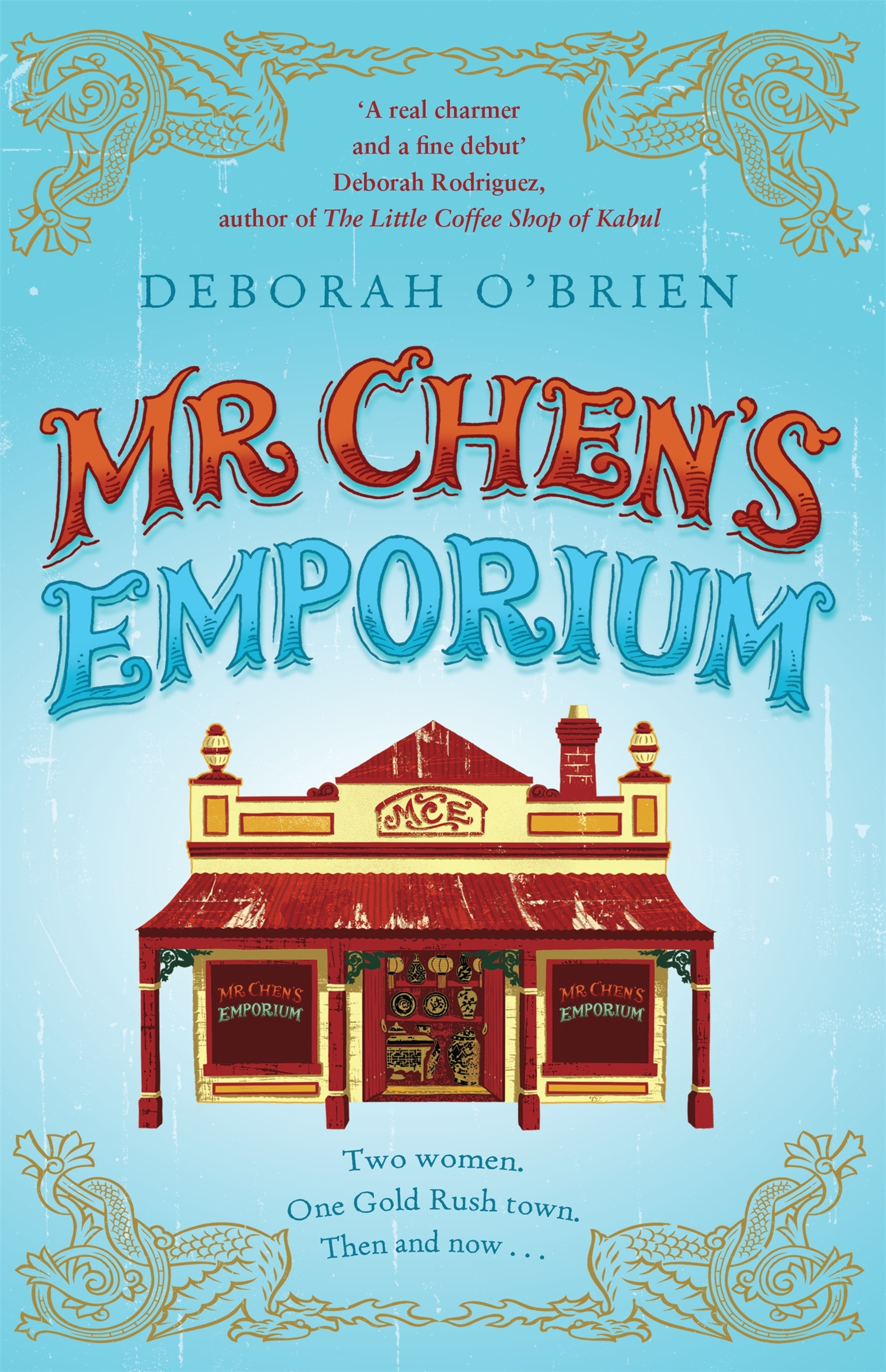
Books-1Mr Chen’s Emporium, by Deborah O’Brien (Bantam, 2012, 352pp)

Set in the fictional Australian gold rush town of  Millbrooke, New South Wales, in the 1870s, this is the riveting story of Amy, a young woman who falls in love with a Chinese man. Their tragic story is interspersed with another set in the present, concerning a middle-aged woman, Angie, who comes to live in the manse where Amy once lived, and who is given a trunk containing clues to Amy’s life.
This was a thoroughly enjoyable read—one of those books you can feel lurking on your bedside table, begging you to pick it up again.
I’ve always been attracted by stories that take place in two different times. Two of my favourites from long ago are The Lady of Hay (1986) by Barbara Erskine, and, when I was a child, The Sunbird (1972), by Wilbur Smith (not a child’s book, but, nevertheless, cadged from my dad’s bookcase).


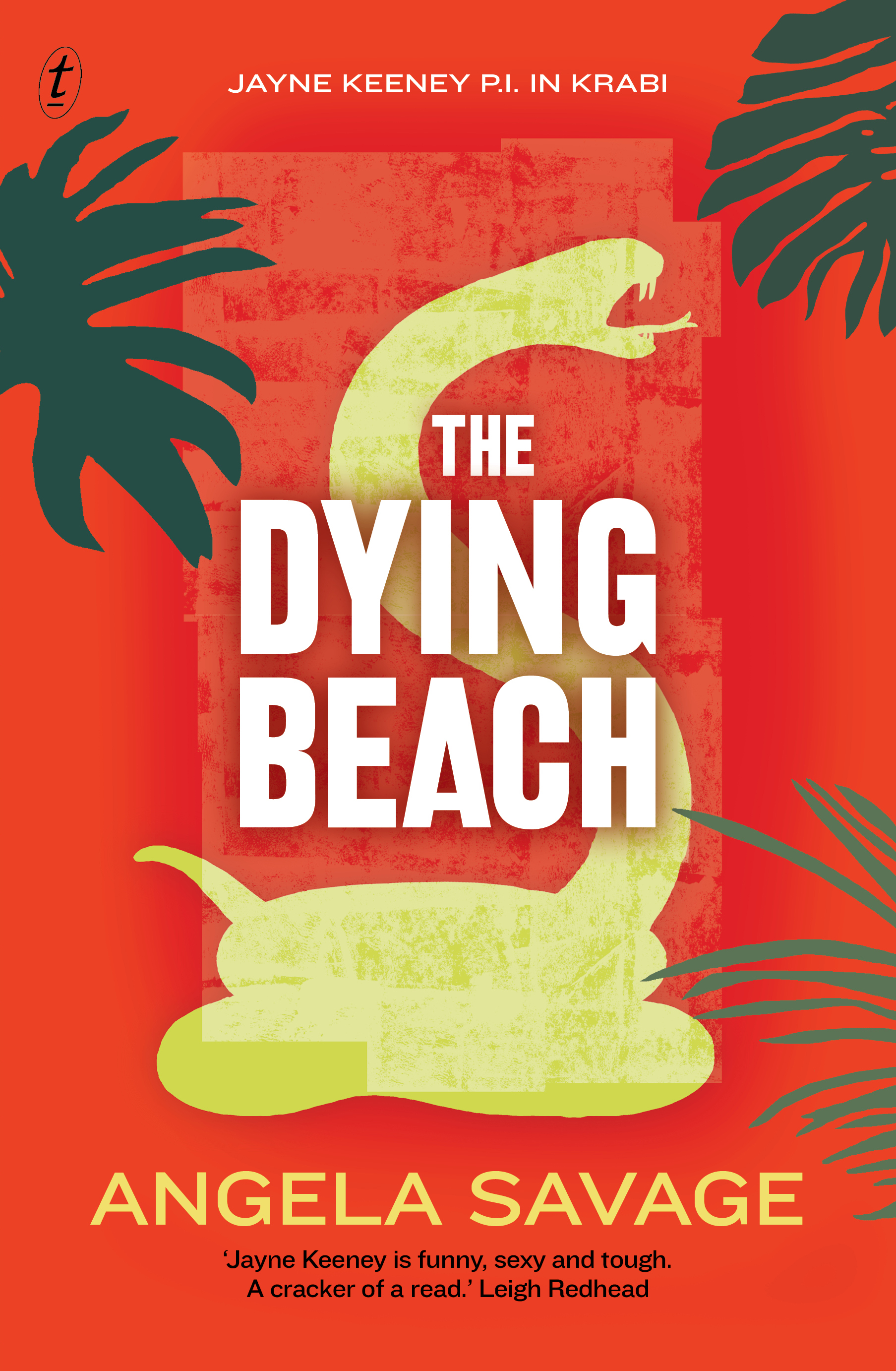
The Dying Beach, by Angela Savage (Text, 2013, 334pp)Dyingbeach

This is the third in Savage’s series about Jayne Keeney, P.I., an Australian detective based in Thailand. This time, Jayne has a mystery to solve at Krabi. She is accompanied by her partner, Rajiv, a wonderfully drawn character who is turning out to be a star of the show. Rajiv appeared in the second book, The Half-Child, when he was working in a second-hand bookshop, and he has now become her partner in business and in love.
The book tackles some serious issues, including environmental problems, corruption and the negative side of tourism. Savage has an adept style that brings in these issues almost by stealth, because all the time the reader is being carried along by the fast-paced story.

Savage knows her subject very well, having lived and worked in Southeast Asia for many years, though she is now based back in Melbourne. She is currently working on a fourth novel in the series. For more on Angela Savage, see my interview here.

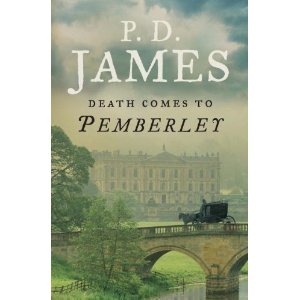
Death-comes-to-PemberleyDeath Comes to Pemberley, by P. D. James (Knopf, 2011, 304pp)

This is a brilliant sequel to Pride and Prejudice, written masterfully as a tribute to Austen’s style of writing but with satirical elements, with a wink to fans of Austen, who will get the in-jokes, and crossed with the crime thriller genre. James also further develops Austen’s characters in this page-turner that is hard to put down.

As the quotation on the UK cover says: “Dazzling…A book that combines the grace of Jane Austen with the pace of a thriller” (Sunday Express).

The novel was published in 2011 when Baroness James, as she is otherwise known, was 91. It’s interesting that P. D. James herself admits that writing the book was self-indulgence. You can read more about her reasons for and process of writing the book in a story she wrote herself for The Telegraph here.

The book is now a three-part BBC series screened last month in the UK, so let’s hope it comes to Australia soon! It has had mixed reviews—some scathing—as has the book, but I loved this novel, and I hope she does more sequels to Austen novels.

Honourable mentions: The Casual Vacancy, by J. K. Rowling; Possession, by A. S. Byatt; The Castlemaine Murders, by Kerry Greenwood (one of three Phryne Fisher books I read this year, as well as viewing the ABC series); The Girl You Left Behind, by JoJo Moyes; A Hundred Summers, by Beatriz Williams.


Writers on Writing #1: Angela Savage

I’ve always wondered why the most dreadful crime, murder, is attractive to audiences, whether readers or TV/film viewers. None of us would want to have to deal with a murder in our own family, yet so many of us love reading about it.

This carries over to real life stories as well. When I was at journalism school in New Zealand, I did some work experience at a radio station in Auckland. One morning, the news editor came in rubbing his hands in glee: “There’s nothing like a good homicide to start the day,” he said.

I love a good murder mystery on page and screen as much as anyone else, though I don’t like too much graphic description. I wouldn’t describe myself as a devotee of the murder mystery genre particularly: but when I looked at my book diary for last year, I discovered that 50% of the novels I read in 2013 were, in fact, murder mysteries.

One of the writers I follow is the Melbourne-based novelist Angela Savage, whose blog you can access here. I started reading her books when her first Jayne Keeney, P. I. novel, Behind the Night Bazaar, came out in 2006. Anyone who knows me also knows that reading books about Thailand is my passion (and I’ve also written two myself). When I heard that a novel set in Thailand had won the 2004 Victorian Premier’s Literary Award for an unpublished manuscript, I couldn’t wait for it to come out. It didn’t disappoint, and I have eagerly awaited each new book in the series since then. Now there are three, with the publication of The Half-Child (2010) and The Dying Beach (2013).

Last year, through the magic of social media, Angela and I became friends, and we’ve met several times to chat about reading, writing and publishing. We have also discovered that we have at least two other friends in common, and were even invited to the same New Year’s Eve party! Small world, indeed.
Angela kindly agreed to take time out from her extremely busy schedule to answer some questions for this blog. I think you’ll find her answers most interesting, even if you haven’t yet read her novels.

 Angela Savage.

Angela Savage.

1. Why are so many readers fascinated by the crime of murder?

Angela: “Agatha Christie suggests there is an instinctive human need that is satisfied by terror, and Stephen King calls fear the ‘finest emotion’. Murder has always been part of the great narratives, from the ancient Greek myths and Chinese ghost stories, to the Norse sagas and Shakespearean tragedies. In these forms as in crime fiction, we get to experience our fear of death—especially sudden and violent death—through the safety of stories.”


2. You are familiar with many parts of Asia, so why did you choose Thailand as the setting for your books?

“Of all the places I’ve lived in Asia, Bangkok is the only location I could feasibly base my expatriate private detective character. I needed a city large and liberal enough for a farang like Jayne Keeney to fly beneath the radar. This could never happen in communist countries like Laos or Vietnam, where I also lived; and Cambodia in the 1990s was simply too dangerous for a lone female PI of any nationality to hang out her shingle.”

Dyingbeach 3. Although Thailand is one of the world’s most popular tourist destinations, it is a more difficult location to use in novels—many more best sellers are set in other parts of Asia, such as China and Japan. Why is this?

“That’s a good question. It strikes me that both China and Japan were subjected at one time or another to occupation by Western powers, making them perhaps more ‘known’ to Western writers than Thailand, which has never been colonised by the West. But this is pure hypothesis on my part. I’d love to know others’ thoughts on this.”

4. This is one of the reasons I was so delighted when I heard an Australian novel set in Thailand had won the Victorian Premier’s Literary Award for an unpublished manuscript in 2004. What effect did this prize have on your life as a writer?

“The Victorian Premier’s Award proved to be my pathway to publication. A member of the judging panel was at the time a senior editor at Text Publishing and she made an offer on the manuscript following the awards night. It took 18 months and another four drafts, but the manuscript was eventually published as Behind the Night Bazaar in 2006. I’ve since published two more novels in the Jayne Keeney PI series, The Half-Child in 2010 and The Dying Beach in 2013.”

the-half-child5. Your books have a lot of integrity. You don’t buy into the usual stereotypes. There are no excuses for and no glamour in the drug or prostitution trades, for example, in your books.  Has your work for aid agencies been influential in the themes of your books?

“Thank you for those compliments, Caron. It means a lot to me as I my writing is motivated in large part by a desire to challenge the usual stereotypes. While mindful of debates about voice appropriation and writing about other cultures, I try through my writing to rise to the challenge Edward Said put forward in 1994’s Culture and Imperialism: ‘to think concretely sympathetically, contrapuntally, about others…not trying to classify them or put them in hierarchies, above all, not constantly reiterating how ‘our’ culture or country is number one (or not number one, for that matter).’

“To answer your question, yes, my work for aid agencies has been influential in the themes of my books. In Behind the Night Bazaar, for example, I gave Jayne’s Canadian friend Didier my previous job as a HIV/AIDS educator. The Half-Child drew on the experience of expatriate volunteers I met in Asia who’d worked in local orphanages. And the environmental themes in The Dying Beach rely heavily on my partner’s experience working for an environmental advocacy organisation based in Thailand.

“But my interest in Asia and the politics that underpin my novels predate my career as an aid worker. Indeed, I was drawn to international development as a way to nurture those passions. Nowadays I nurture them through my writing.”

btnbazaar6. What can we expect next from Jayne Keeney and Rajiv Patel? Please tell me they get married!

“As if I’d let slip a spoiler like that! That said, I do have long-term plans for Jayne and Rajiv—which is ironic, seeing as how before I wrote him into The Half-Child, I told someone in response to an interview question that Jayne would never have a partner.”

7. Is there any question you wish interviewers would ask you, but they never do? (If there is, please write an answer to it, too!)

“Having just read Stephen King’s On Writing, I’m tempted to quote Amy Tan and say, ‘No one ever asks about the language.’ But that’s not entirely true. I do get asked about my use of Thai language and idioms. I was also asked recently about my favourite thing I’d written. I’m still searching for the answer to that one.

“I have to say you’ve asked some great questions in this interview, Caron, enabling me to touch on topics that I rarely get to talk about. Thanks for that.

“Last year I was on a panel at the Brisbane Writers Festival called ‘Scene of the Crime’, one of several similar sessions I’ve been part of over the years in which crime writers talk about place and setting in their work. The session chair kicked off with an excellent question about why it is we seem to talk about location in crime fiction more than any other genre. My response was: ‘Because it prevents us from having to talk about the crimes.’ Everyone nodded, then went back to talking about place and setting.

“To paraphrase Amy Tan, no one ever asks about the crimes.

“I would love to talk more in interviews and on panels about the crimes in crime fiction. Why do authors choose to write about specific crimes? How do their theories or perceptions of crime and criminality underpin their work? To what extent does the author see crime in terms of individual morality/psychology versus system failure?

“I definitely fall into the latter camp. I studied criminology as an undergraduate and came to understand crime in terms of various systems failure: in economics, education, mental health, etc. But given the popularity of serial killers  and psychotics in crime fiction, I suspect I’m in the minority in this regard. Still, I’d jump at the chance to have the debate.”

A Perfect New Year’s Day

Today was pretty much a perfect day for me. Why? This is what I did:

—Reading (about 50 pages of Bridget Jones: Mad About the Boy, by Helen Fielding, the third instalment in the series);

—Writing (350 words on my new novel);

—A long walk, during which we got caught in the summer rain. But hey, it’s only water.

—Art (including a quick sketch of an imaginary cat I am calling Michael, pictured below);

—And a dinner cooked perfectly for me by my husband, Gordon, to end the day.

In the words of the famous Australian movie, The Castle, said in awe-struck voice: “How’s the serenity?”MichaelCat

What Not to Resolve on New Year’s Eve

OK, this was actually taken at the fireworks display for July 4 this year over Oahu, Hawaii, but fireworks are fireworks! Image by Gordon Dann, 2013.

OK, this was actually taken at the fireworks display for July 4 this year over Oahu, Hawaii, but fireworks are fireworks!
Image by Gordon Dann, 2013.

It’s New Year’s Eve in Australia, and all through the land, people are making grandiose declarations, commonly known as New Year’s Resolutions.

“I’ll go on a diet and lose 30kg. I’ll never drink calorie-laden fizzy drinks again”;

“I’ll read a book a day, every day”;

“I will never eat ice-cream or chocolate again”;

“Instead of coffee or tea, I will drink water only”;

“I will go to the gym five times a week”.

And on it goes. Sadly, we are just setting ourselves up to fail when we make such sweeping resolutions. (Very important note: I am not talking here about when people are addicted to a harmful substance and they need to give it up forever—that’s a whole different story).

So, instead of making ridiculously unattainable goals, make a tiny change or goal you can stick to. Mine are going to be:

1. Try to read more books than last year;

2. Try to cut out unnecessary foods/beverages and lose 5kg during the year;

3. Exercise more. Instead of a daily 15 minute walk, try to extend it to 30 minutes a couple of times a week.

Writing-wise, I have only one main goal, and that is:

1. Finish the draft of the novel I’m working on now.

Of course, I have other goals each week, month, year. But those are the main ones, the ones I want to concentrate on. I suffer from a lack of focus in that I’m often trying to do too many things at the same time, and I end up finishing none of them.

So happy New Year, everyone, and we’ll meet again in 2014.