Where are they now? Aussie stars of 1994

Through much of the 1990s, except for four years in Thailand, I worked for TV Week, which was then Australia’s biggest selling entertainment magazine (more than 500,000 copies a week). We also ran the TV Week Logie Awards (“the Logies”), which were, and still are, screened on Channel 9.

The Logies—named after the Scottish inventor of the TV set, John Logie Baird—were a big deal in those days, akin to the Emmys in the US. The televised live event was always one of the highest-rating shows of the year.

Of course, it is an invitation-only event, and in those days, we TV Week reporters received our own invitation and entered via the red carpet like anyone else. (Unlike the stars, however, we had to return to the office about midnight and write our stories. Later though, we were able to return to the all-night parties, and we got a hotel room each thrown in).

Logies

When I moved house recently, I found my invitation to the 1994 Logies, pictured above. It’s poster sized, came in a tube (which I still store it in) and featured illustrations of some of the top stars of the day.

It’s interesting, 20 years on, to see their younger selves and to reflect on the industry. Some of them are, sadly, no longer with us, including the irreplaceable actor Ruth Cracknell (left, next to my name), who I had the pleasure of interviewing about that time and who won the peer-voted award that year for Most Outstanding Actress. She died in 2002, aged 76.

The other who has gone is Graeme “Shirley” Strachan (bottom, third from right), lead singer of the 1970s group Skyhooks, who had become a lifestyle-show host. He was killed in 2001 at the aged of 49 when the helicopter he was flying crashed on Queensland’s Sunshine Coast.

There are many in this poster whose careers kicked on and who are still involved in the media or entertainment industries, I’m pleased to say: Garry McDonald, (Most Outstanding Actor), John Farnham, Georgie Parker, Wendy Harmer, Andrew Denton, Ian “Molly” Meldrum, Gary Sweet and Sonia Todd (Most Popular Actor and Actress, respectively, for Police Rescue), Red Symons, Melissa George (Most Popular New Talent), Libbi Gorr (as Elle McFeast), Ernie Dingo, Rob Sitch, Natalie Imbruglia. Cricketer Shane Warne, then aged 25, is there in his hey-day, too.

Ray Martin (centre right) not only hosted the show, he won statuettes for Most Popular Light Entertainment Personality and the big one, the Gold Logie for Most Popular Personality on Australian Television. He won many Logies, but he once told me every single one of them was precious to him and he loved winning them.

At centre left is Daryl Somers, host of the long-running show Hey Hey It’s Saturday, which ran for 27 years before being cancelled in 1999. Somers and the show made a short-lived comeback in 2010.

There are others there who we thought were big stars at the time but who perform only occasionally now or who have gone on to other things: Kimberley Davies, Dieter Brummer, Bruce Samazan, Scott Michaelson.

There are a few glaring omissions: It’s extraordinary that Bert Newton isn’t pictured. One of the best known Australian entertainers, then as now, he had hosted the show 18 times, including the year before.

The other omission is the great actor Bud Tingwall (1923-2009), who was inducted into the TV Week Logies Hall of Fame that year.

What I saw written on the bathroom wall

The women’s facilities near one of the classrooms where I teach have been annoying all year because of their leaky taps.
As we all know, a dripping tap wastes a huge amount of water, which is expensive for the institution, and environmentally irresponsible, particularly in a water-challenged country such as Australia.
Anyway, recently, two identical notices went up in this bathroom, one on each wall. This is what they said:
Tap1
One of them was directly above the worst tap, which now runs, rather than drips, and which is nearly impossible to turn completely off, even if you twist it as hard as you can. Here is a picture of how much it runs (a few weeks ago, it only dripped):

Tap2
A few days after these notices went up, some bright spark added in pen to the notice above that constantly running tap, “Or…you could fix the tap”.
Well maintenance would be a fine thing, but it seems to be at a minimum these days. The maintenance staff simply don’t have time to fix everything.

And it seems sarcastic comments are not appreciated, either (even when they tell the truth).
Yesterday, I found that the notice with the graffiti had been taken down, leaving the other unannotated notice, on the other side to the faulty tap. However, by mid-morning, this had happened to that remaining notice:
Tap3
Same message, worded slightly differently. I wonder if anyone will actually get the message, or will it too be removed?
By the way, at least three of the six taps in that washroom drip. I wonder how much water is wasted across the entire university because there are no longer enough maintenance staff. In some bathrooms, there is a notice with a number to ring to report faulty equipment, but not in this one.
I might add that in another building, there is a faulty toilet cubicle door that hasn’t closed properly for 10 years…

A hotch potch: pink frothy tea, stir-fried cucumber and an accidental recipe


Have a nice cup of (pink and white frothy) tea, why don’t you?

Here is what I tried this week: a “geisha green tea latte”… that was not green at all, but looked like a strawberry and vanilla milkshake, only hot.

latteI read a lot of inventive things on blogs such as RocketNews24, which has articles about the weird and wonderful flavours of food products in Japan, mainly (chocolate-covered squid, anyone?).

So, what did a geisha green tea latte taste like? It actually tasted like green tea…with rose-flavoured milk froth. It was pricy at $5.20.

Would I have it again? Probably. I like milk shakes, and I like rose-flavoured herbal tea, so a hot green tea milk shake tastes pretty good to me.

When I was a young adult in New Zealand in the 1980s, cafes offered coffee or tea, and that was it. If you ordered coffee, it was usually a spoon of Nescafe stirred into just-boiled water; if tea, you still usually got actual tea leaves in a tea pot. But there was no, “Will that be English Breakfast, Irish Breakfast, Earl Grey, Lady Grey, Orange Pekoe or decaf, with skinny or whole milk?” The only choices were black and white, sugar or none. My great-grandmother was disturbed when she discovered I didn’t take sugar. “A girl needs sugar in her tea – it’s good for you,” she maintained. (She also felt it highly disturbing that I washed my hair in the morning before heading off to uni. I would, she said, catch my death of cold, one of these days).

But back to choice. So great are the choices these days that what we finish up with often doesn’t resemble the original product at all. My husband recently ordered a “low-fat decaf latte, no sugar”. The waiter retorted, “Why bother?” and we all laughed.

When I first came back to Australia in 1993 from my first two-and-a-half-year stint in Thailand, I was appalled by the amount of choice in the supermarkets of Melbourne. Who needed 50 different types of breakfast cereals? I would stand in the aisles, just staring at the burgeoning shelves. I hate breakfast cereal anyway. My favourite breakfast is congee with chilli, fish sauce and chicken, the way they do it in Thailand. Or reheated left-over rice, with a raw egg stirred through. But toast and marmite or toast and tahine will do if I have to have a western breakfast.

In Thailand in the early 1990s, supermarkets were evolving but they were still not the most usual way Thais shopped, except for canned goods and other packaged products such as instant noodles. They mostly went to markets with fresh unpackaged and unprocessed produce.

Supermarkets had a limited choice (unless you wanted hair-care products), but always great were the lean chicken, truly free-range eggs with the yellowest yolks, delicate quail’s eggs, and luscious prawns ($1 worth was plenty for the two of us for dinner). In the vegetable aisle, we soon learnt to choose Thai vegetables, because such things as potatoes and carrots were pitiful, if available at all. Straw mushrooms, aubergines of all sizes down to the bitter pea-size ones for green curry, red capsicum, snake beans, snow peas, baby corn, spring onions. The best buys were the pre-packaged vegetables and herbs for recipes, just enough to add to your tom ka gai, tom yum or gaeng keow wan that night. A packet, which cost just a few baht, would contain, for example, kaffir lime leaves, a couple of sticks of lemon grass, garlic, chillies, a lime, and so on.

Now, of course, supermarkets in Bangkok are huge, swish and unrecognisable from what they used to be. I’m pleased to see, though, that they retain their “Thainess” among all the expensive imports, and that you can still buy those little packets of herbs and vegetables.

When I first went to Thailand in 1990, you couldn’t buy a cappuccino, really. Some restaurants had what they called cappuccino, but it was regular coffee with whipped cream on the top.

No matter – I used always to order nam manao (Thai lime-ade) when I was out, anyway: lime juice, soda water, salt and a little sugar syrup, the most thirst-quenching drink ever.

Sometimes, mistakes end up being the best recipes. I remember one time, we decided to have dinner with some friends who lived in the same apartment building in Mung Thong Thani (Nonthaburi province), which was then a small village but is now a satellite city. Here was what the village and its supermarket looked like in 1991:

Muang Thong Thani Village, Nonthaburi, Thailand, 1991. Picture © Caron Eastgate Dann

Muang Thong Thani Village, Nonthaburi, Thailand, 1991, about 1km from the apartment building where I lived.                                  Picture © Caron Eastgate Dann

You wouldn’t recognise it today.

Anyway, we were just to bring over to our friends’ place what we had planned to have for dinner, they would add theirs, and we would all share.

I had been planning to have prawns and stir-fried zucchini – wonder of wonders, since I hadn’t seen a zucchini before in a Thai supermarket and had found one that morning.

Or so I thought.

When I went to cut up the “zucchini”, I found that it was, in fact, a cucumber. There was nothing for it  but to put it in with the prawns, anyway. I cut it into long crunchy ribbons and added it just before serving over rice. I also used garlic, chilli, lime, thinly sliced capsicum, fish sauce and a touch of oyster sauce. It came out so clean and fresh-tasting, and I still make that recipe today.

Sometimes the combinations you make by accident are the best.


Australians: lazy and overpaid? I think not

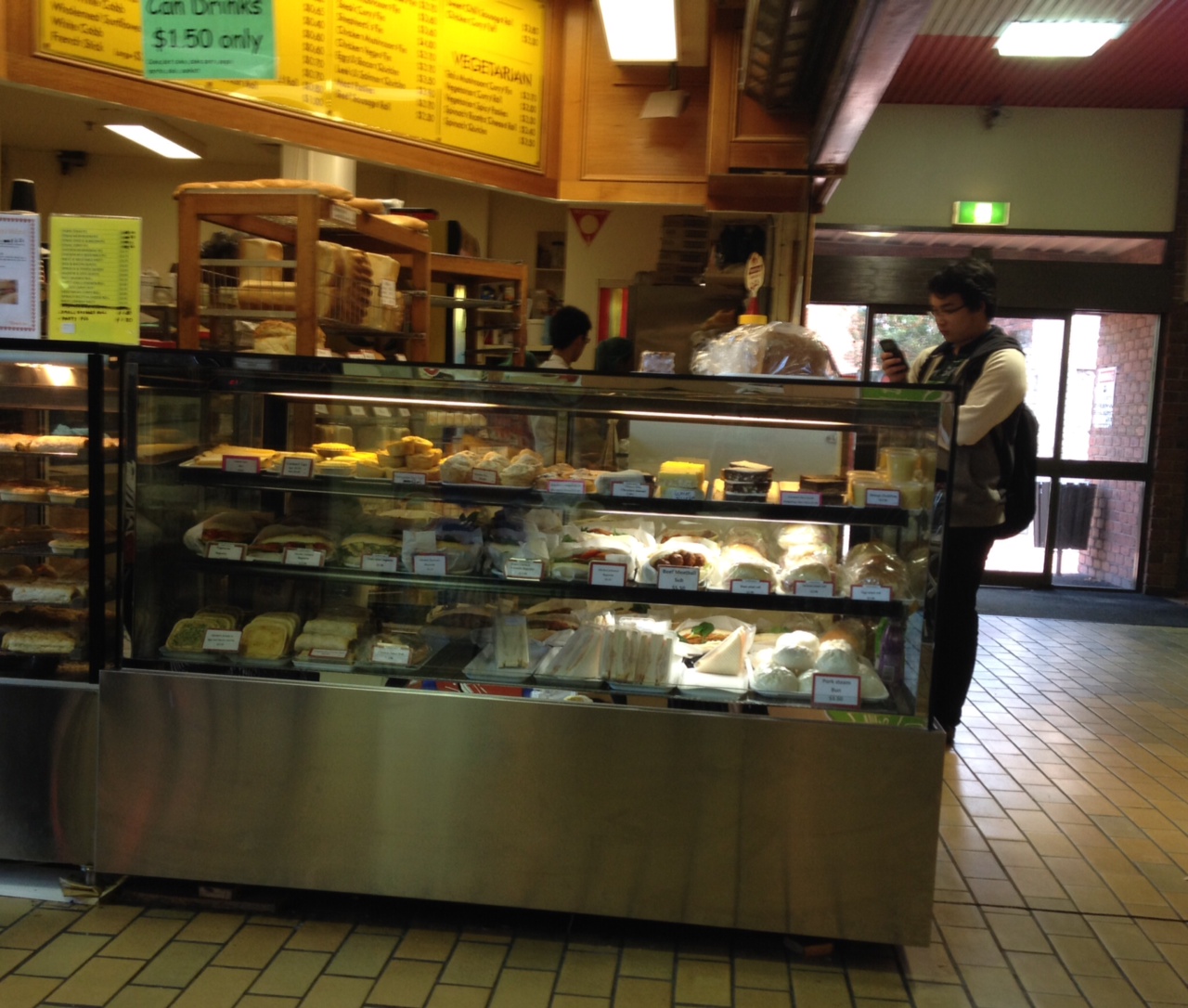
The bakery—good business but hard work. Picture ©Caron Eastgate Dann, 2014

All stocked for a busy day at the bakery—good business but hard work. Picture ©Caron Eastgate Dann, 2014

Everyone I know is working harder, in every industry—and I know a lot of people. Let me tell you about the manager of a bakery/lunch bar from which I buy a sandwich and a coffee three days a week. She commented to me on Tuesday that I had an early start that day, when I uncharacteristically bought a chai latte at 8.30am.

I said, “But you had a much earlier start.”

“Yes,” she said. “I start at 7am every day.”

“And what time do you finish?” I asked.

“7pm,” she said.

Turns out she works 7am-7pm from Monday to Friday, but she also starts at 7am on Saturdays and Sundays.

“And what time do you finish on weekends?’

“Oh, finish early – 5.30pm,” she said.

So she works 81 hours a week, and there’s travel time to and from work on top of that. I thought I was doing it hard at 65-70 hours, much of which I can do from the comfort of my own home.

“It’s a good business though, isn’t it?” I said. There are loads of customers at all hours at the bakery, because the food is ultra-fresh and tasty, the service fast and always with a smile.

“Yes, but we just keep afloat,” she said, adding that she should earn more money than she does.

Ironically—or perhaps just coincidentally—this conversation happened on Budget Day.

As I said, every Australian worker I know, including me, is toiling harder than ever before, many of them for less pay than they received previously. So I took it as a personal insult when Dr Sharman Stone, a Member of Parliament (Murray) in the current federal government, inferred on Monday on the ABC TV panel show Q and A, that Australian workers were lazy and overpaid.

Dr Stone did this by claiming that Australia had one of the lowest productivity rates of any workers in “developed” nations of the Organisation for Economic Cooperation and Development (OECD), and in the next breath noting that Australians had one of the highest minimum wage rates in the world (she said that like it’s a bad thing).

Dr Stone, a former Minister for Workplace Participation (2006-7),  has a PhD in economics and business, but it seems here that she’s letting her politics get in the way of her education; she’s manipulating statistics to frame her agenda.

This is what she said, from the transcript to the show on the ABC website: “Australia has some of the lowest productivity per worker in the developed world and it has been going down over the last 10 years. We have about the highest, I have to say, minimum wage as well in the developed world…

“If we have a very high minimum wage and we have very low productivity, when we have a highly regulated work force, so there’s very little flexibility…” (http://www.abc.net.au/tv/qanda/txt/s3985872.htm)

The Prime Minister of Australia, Tony Abbott, this year criticised the ABC for not supporting Australia. So how is it that one of the most long-standing MPs in his party felt it was OK on national television to put down every Australian worker?

For a start, her use of OECD productivity figures ( http://stats.oecd.org/index.aspx?queryid=32480#) is misleading. Our productivity as estimated by the OECD is above that of Japan, New Zealand, the UK, Canada, Finland, Italy and Spain, amongst others. But more importantly, her assertion that Australians are not pulling their weight is offensive.

If you read the OECD statistics, you realise they are not suitable for application to a judgement on whether individuals or groups work hard or not and whether they are thus overpaid. To use them as such is a logical fallacy. They are a macro-type guide for big business, exporters and so on. The OECD itself has a disclaimer on its website, saying that the statistics as “[e]stimates of productivity levels are more uncertain than estimates of productivity growth; therefore, some caution may be warranted when interpreting those measures.”

Meanwhile, Dr Stone seems to think that cutting people’s wages will result in them working harder. So, my message to Dr Stone is this: look around you and see that people are already working hard, many for so little that they can barely afford to put a roof over their heads, such are our exorbitant housing prices in Australia.

And, crucially, this: You don’t get more productivity by paying people less, including cutting the minimum wage, though in the (very) short-term, some statistics might make it appear so. In the medium and long term, you get better productivity by paying people fairly, by providing good working conditions, job security and ongoing training.

That would seem obvious but, apparently, it’s not.

Tree change

I haven’t been blogging as much as usual lately, because we’ve just moved house, and also, I’ve been really under the pump at work. In fact, I’ve been overwhelmed with the amount of work I have to do.
When you’re overwhelmed by work, it’s easy to forget you still have to live your life, that great things still happen, and that every day, you should be just glad to be alive.
I was reminded of that this morning as I walked to the train with my heavy briefcase, on my way to work.
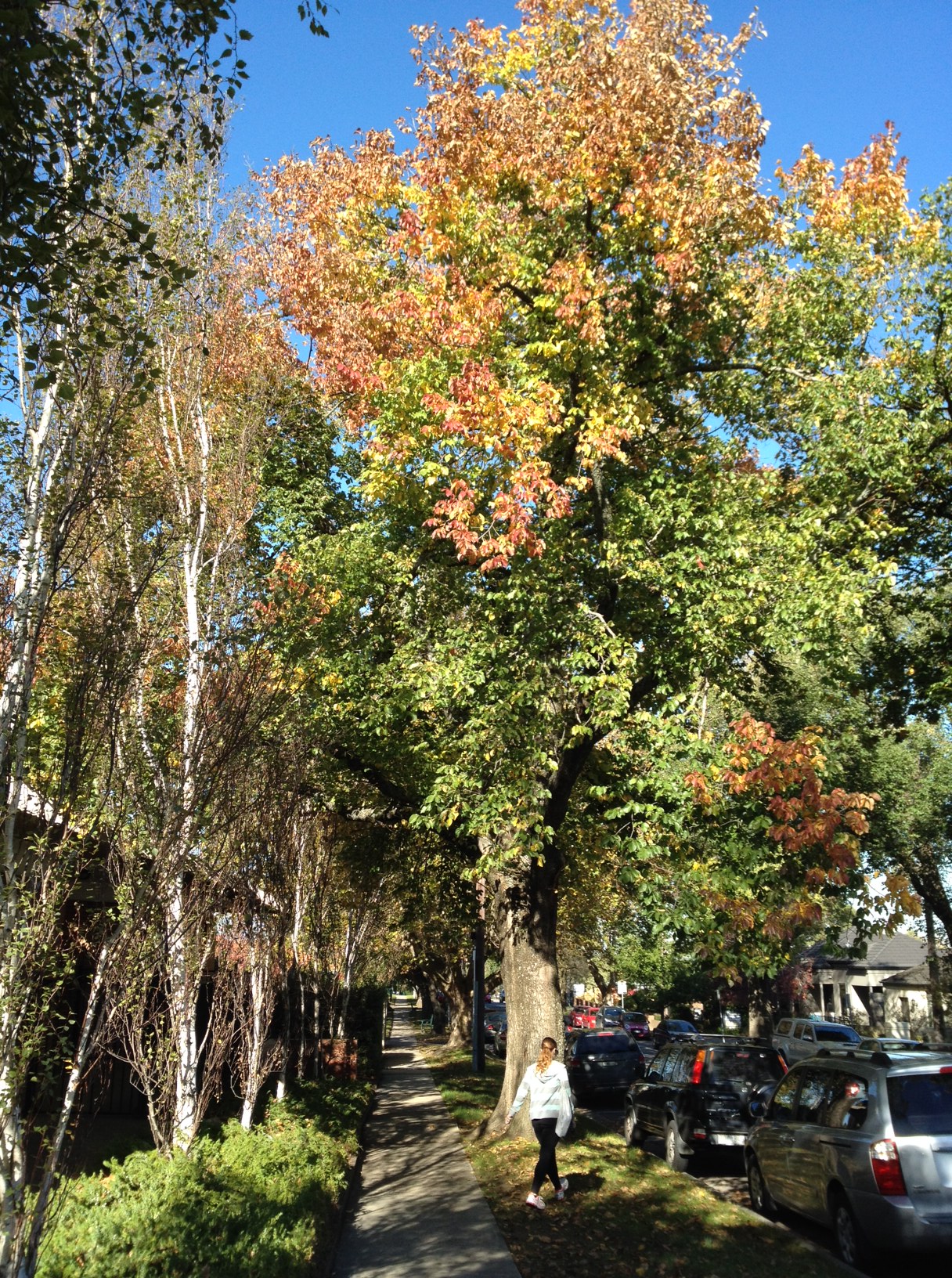
Suddenly, I looked around me and saw the trees. The outer suburb to which we moved two weeks ago is like a country town, and our street is full of well established trees.
Who wouldn’t be happy, walking to the train, with this vista?

Picture: Caron Eastgate Dann, 2014

Picture: Caron Eastgate Dann, 2014

It was a glorious autumn day – the best season in Melbourne. Blue skies, trees with multi-coloured leaves. Heavenly!
People say “hello” here. There are a lot of people much older than me, and no one passes me without us saying a hearty “good morning” to each other. The men even tip their hats! Lots of people are walking their dogs, whether it’s 7am or 10.30am (I start work at many different times).
So instead of worrying about work, I’m just going to look at the trees from now on, and think about how lucky I am – to live in such a nice street, to have a job (albeit one without any security whatsoever), and to be able to enjoy every day.

In the end, it’s the little things that count.

Beauty, when you least expect it

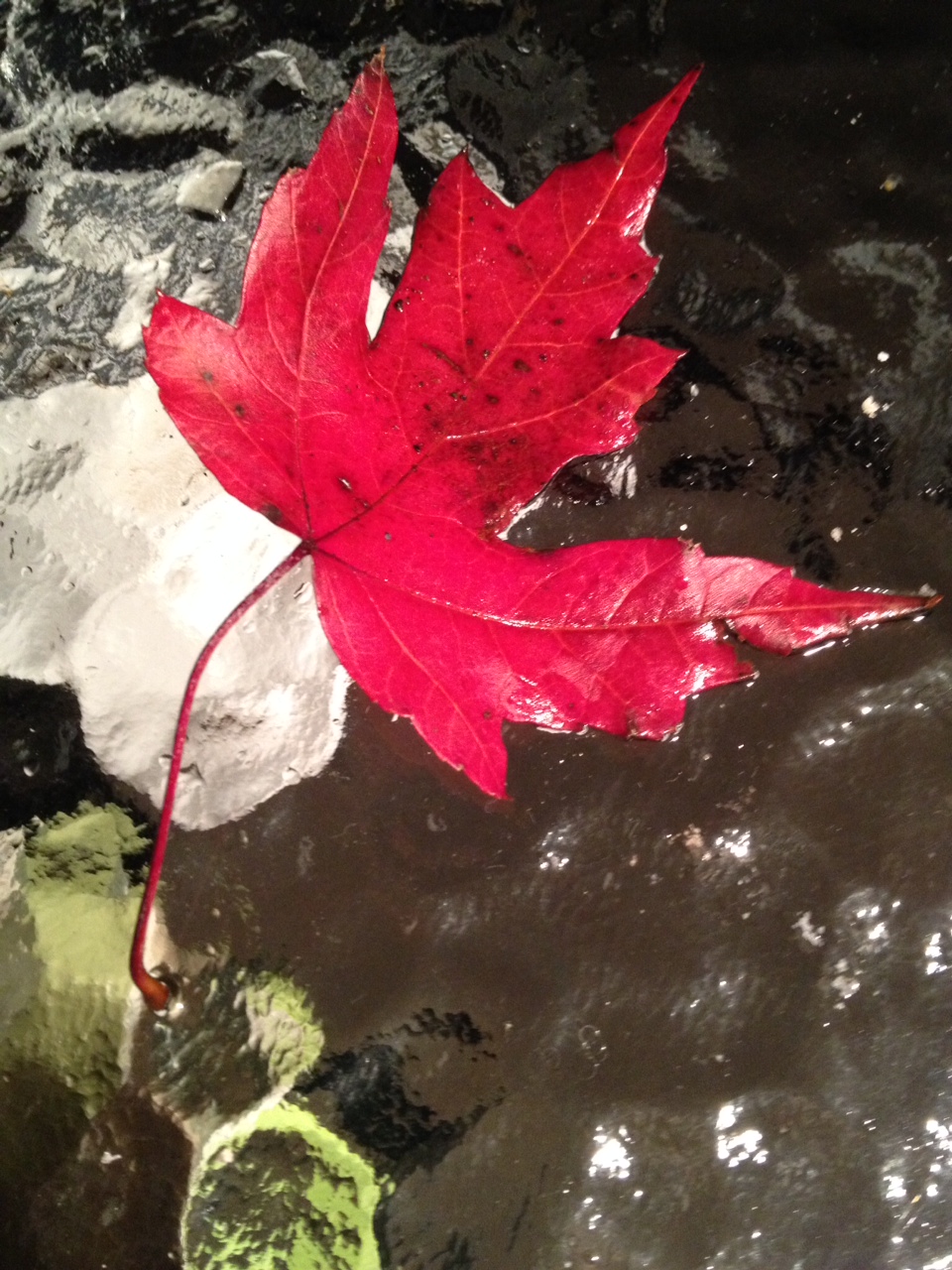
Picture © Caron Eastgate Dann 2014

Picture © Caron Eastgate Dann 2014

I had a very long working day yesterday. I left the house before 7am, and didn’t return until nearly 12 hours later. My day involved more than 100km of travel, hosting a field trip, and teaching classes. It rained all day.

As luck would have it when I was coming home after such a big day, transport across the city was affected by a fire at a major station, the weather and various other problems. Everything was running late, some trains had been cancelled, so my train was dreadfully overcrowded. To top it all off, in the crowded airless carriage in which I was travelling, the young woman standing beside me fainted, and we had to assist her and notify the driver (she was OK after a kind soul gave up his seat, and others gave her water and some candy).

When I got home, I was dead-dog tired. As I looked out the sliding doors into the courtyard and contemplated another early morning tomorrow, I felt exhausted just thinking about it. It was pitch black and still raining, and the world seemed a bit bleak to me.

Then the lamp-light in the courtyard caught the flash of something red. Something very red, like a child’s toy or a ball. I kept seeing this flash as I walked past the doors. I had to see what it was.

It was half-hidden under the basil and mint in our herb garden, and it turned out to be not something man-made, but a most beautiful autumn leaf dropped and blown in from our neighbour’s Japanese maple tree.

The red in this leaf was so astounding, I had to photograph it. The way the picture came out, it looks like it is floating in a pond, but it’s actually just sitting against the dappled glass of our outdoor table.

Today, as I went about my work, I kept thinking of that leaf, of the beauty that shone at me out of the night. I looked at the picture again on my phone as I rode the (uneventful) train home from work.

When I got home, my little red leaf had turned a more ruddy shade, as I knew it would. Tomorrow, it will be almost brown. But somehow, I still feel warmed by its vibrant red heyday, yesterday, and I know things aren’t so bad after all.

The cat’s verdict: unimpressed

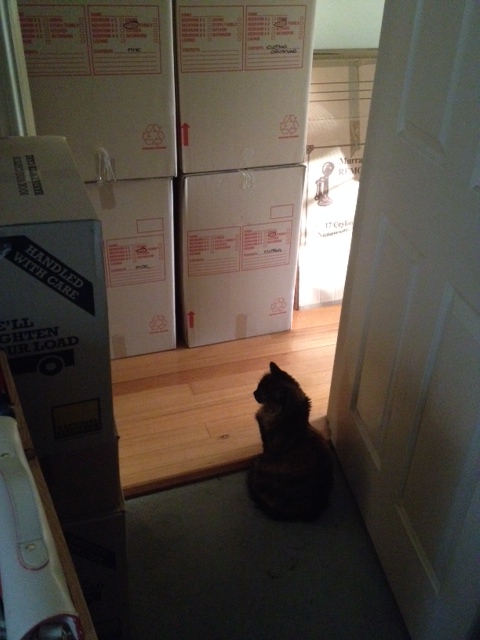
Little Girl Lost: Lucy Locket in her new house. Has decided she doesn't like it. Picture ©Caron Eastgate Dann 2014

Little Girl Lost: Lucy Locket in her new house. Has decided she doesn’t like it. Picture ©Caron Eastgate Dann 2014

While we humans are loving our new two-storey townhouse in the country, there is one member of the household who is not. Lucy Locket, our tortoiseshell cat, is not impressed one bit.

In the old house, she and I used to play a game I called “The Lost Girl”. She would go into a mini-courtyard at the side of the house between my office and bedroom. Then she would howl at the bedroom window, as if unable to find her way back to the door at the other end. I would take that as a cue to come and stand at the door and call her, and she would then make her way back through fully two metres of ‘jungle’ to find her way back to me.

Dopey, yes. Her, not me. Well, she’s an indoor cat—she’s amused by small things.

Anyway, from playing ‘The Lost Girl’, she has become the Little Girl Lost. The best she can do at the moment is sit on the middle of the bed, looking plaintively out, as if to say, “This is all I have left of my life, a shadow of its former self”.

If all your stuff was packed away, what would you miss most?

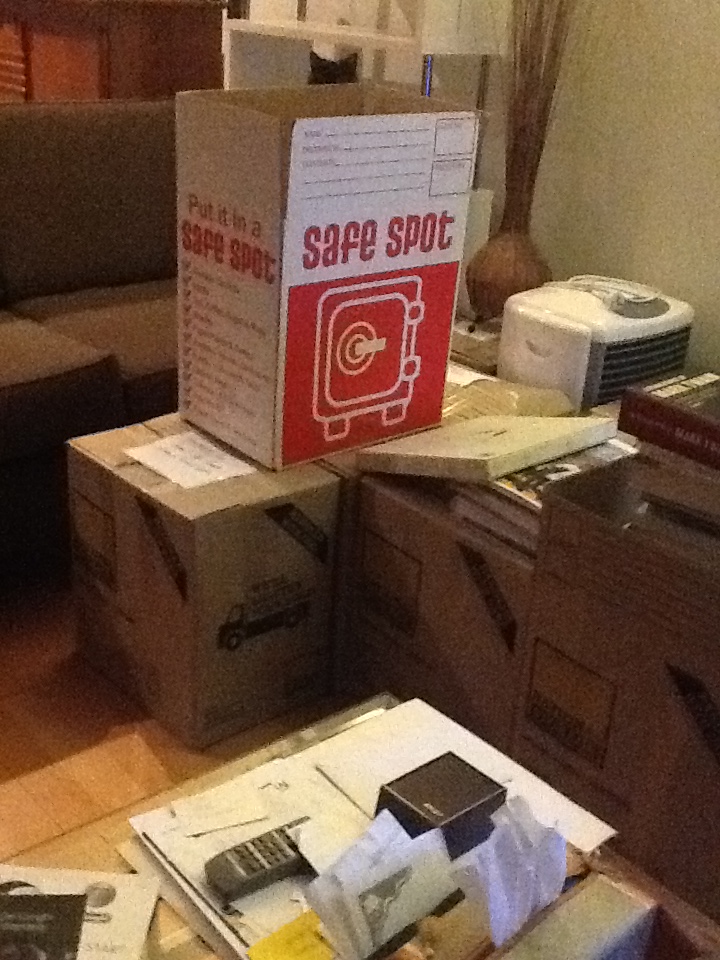
NeedleI have access to 5% or less of my stuff at the moment, because most of it is packed into boxes awaiting our big house move on Tuesday.

Do I miss that other stuff in the 60 boxes? Well, yes and no.

Books aside—because I still love mine (though I’ve given loads away) and I’m a specialist collector—do we need the ornaments, piles of kitchen gadgets, knick knacks, souvenirs, shoes, bags, bathroom paraphernalia, cushions, pictures, 25 wine glasses and 20 towels?

The answer? I think it’s no. We just kind-of acquire this stuff and then become attached to it, because we think it has something to do with identity.

I’m still me without the ceramic cats from Thailand that hang over my bookcase, without the enormous glass fish I bought cheap at auction when a favourite bar closed, without the three wise men statues I bought in Beijing, and without the coloured-light replica of The Space Needle building I bought in Seattle (pictured, above). But actually, I do want these things, because they’re sentimental.

But there are some things I could happily divest myself of.

Ninety percent of my clothes are sealed in a box now, but I don’t care, because I wear only a small proportion of my clothes regularly.

I think about it this way: last year, I went to the US for about four weeks and I took a small bag the size of carry-on luggage (though I always check mine so I don’t have to carry it). That was fine, as long as I remembered to find a washing machine every three days. So, if I can survive for four weeks with this small bag of clothes, why not forever?

The other thing we’ve done is not replenished the food in our fridge or cupboards as we usually do. We’re down to loaves and fishes-type dishes now, if you know what I mean, but they’ve worked out just fine.

We spend a lot of extra money on whims with food, and we end up throwing some of it out. In fact, I’ve read government statistics that say about 40% of the food Australians buy ends up being thrown away because it goes off before people can eat it. You can read more about that here.

And the thing I miss most about not having access to my stuff? My art equipment! I wish I’d put aside my little travelling paint kit to keep me company this week. Oh well, I’ll see it all next week on the other side of the city.

My Winsor & Newton travelling water colour set. Picture by Caron Eastgate Dann

My Winsor & Newton travelling water colour set. Picture by Caron Eastgate Dann

Moving on: my 46th address, 50th move

This is what my house looks like today:

My study...or what's left of it.

My study…or what’s left of it.

Yes, we’re moving in a few days, after our long-time rental accommodation was sold and vacant possession required. It will be my 46th address, and I’ve lived in 13 cities or towns in five countries.

We are moving from the inner-city funkiness of Northcote, Melbourne, to a cute double-storey townhouse in an outer suburb that still has a country village feel to it.

We get much more for our money out there, and we’ll be paying $60 less a week in rent. AND, we can hardly wait for next summer and the first 40-degree (Celsius) day, because guess what? Now, we have airconditioning!

In another advantage, it’s easier for me to get to work, and I’ll be catching one train each way instead of two. It’s also closer to my mother: instead of a 145km round trip to her place, it’s about 35.

Miss Lucy Locket doesn’t approve much of the move, as most cats wouldn’t:photo 2

She was on high alert last night, doing her spooky Bat Girl impersonation:

Spot the cat

Spot the cat

But she’ll be happy when she gets to the new place and sees her new little private courtyard—this is one of the main reasons we took the new place, because she is an indoor cat, but she likes to have somewhere safe on which to sun herself and chase moths.

Despite all the advantages of the move, we will be sad to leave Northcote. It’s strange when the packing’s been done but you haven’t quite moved in to the other place yet: you’re in a kind of limbo, not really living at either address. You haven’t moved on to the next place, but you can’t go back to life as you knew it at the other.

What I heard on the train: why new graduates can’t get a job

trainHaving been paid to be nosy as a journalist for decades, I still have the habit of listening in to other people’s conversations, just in case there’s a story idea there.
This morning, standing in the peak-hour crush in an overcrowded train (not the one pictured left, that was my nicer going-home train), I overheard two middle-aged lawyers talking about the state of their industry.
It transpired that one of them worked for a huge company that I won’t name here. He was talking about job opportunities for lawyers.
There’s a big debate in Australia at the moment about how difficult it is for people over 50 to find jobs. However, there are also great difficulties for new graduates to get their first “proper” job. I hear it’s almost impossible for a fully qualified law graduate  to find a job as a junior lawyer in Melbourne now, and you’re most likely to be paying to do another expensive course to get your articles, rather than finding a job as an articled clerk as most used to.
Anyway, this guy on the train said, “Graduates used to come in at entry-level and do all the research and initial leg-work for cases. No longer. It’s all outsourced. Can you believe that? It’s all outsourced overseas, and it’s much cheaper. But it’s just not the same. Mind you, my company still charges out to clients at $5000 a day, even for outsourced material.
“No wonder graduates can’t get jobs any more. And then more experienced lawyers are being brought in on what used to be entry-level rates, but they’re not doing entry-level work; they’re expected to do the work of a lawyer on a trainee-level wage.”

I suspect this is happening in many other industries, too.