Life in the fast lane or, revenge of the madding crowd

Platform 1, Flinders St station: Yes, it's 7.55am and I am rushing to my second train connection of the day. Picture: Caron Dann

Platform 1, Flinders St station: Yes, it’s 7.55am and I am rushing to my second train connection of the day. Picture: Caron Dann

I thought I had left the rat race behind years ago. But for the last month or so, I have found myself having to travel to work with all the other madly scurrying rodents who must be at their desks before 9am.

I have to take two trains and a bus to get to work. It’s better than driving in peak traffic though, and parking would cost me more than $100 a week, not to mention petrol. Public transport costs me a mere $30, and for some of the journeys I can get a seat and get emails done or do some reading.

Although I live in a big city, I’ve had the luxury over the past eight years or so of being able to work from home a fair bit, or being able to travel out of peak hour to work.

When I do have to be at work early—which is four days out of five at the moment—it always astounds me just how many people there are everywhere, all trudging off to work at pretty much the same time. As they march off the train to the exits, tickets in hand to “touch off” through the gates, there’s a rhythmical stamp to their progress.

In my teens, I visited Melbourne, Australia, and was entranced by life there in what I saw as the fast lane. When I was in my mid-20s, I left New Zealand to live in Melbourne. I loved the thought of being a city worker. I felt cosmopolitan, sophisticated, excited and energised by the throngs of people, the sky scrapers and the daily rush.

St Paul's Cathedral, Melbourne CBD, 1981: scenes like this impressed me enough as a teenager to make me move to Melbourne in my 20s.

St Paul’s Cathedral, Melbourne CBD, 1981: scenes like this impressed me enough as a teenager to make me move to Melbourne in my 20s.

I got a job in corporate publications at the HQ of a big bank in one of those city sky scrapers. It made me feel very “New York” when I’d get a takeaway coffee and raisin toast or a doughnut for breakfast (I could eat such things in those days). From my 23rd-floor office, I had a sweeping view of the city.

In the 1990s, I went to live in a much bigger city, Bangkok, and revelled in its great mix of culture, history, modernity and tradition.

In the 2000s, I was based in the small seaside town of Sorrento (Victoria, Australia, not Italy!). Whenever I had to go to Melbourne, the noise of the crowds and the traffic would accost my ears and I would wish to go home immediately.

I’ll never forget one fine Friday afternoon in Sorrento. I was out on a boat with some friends, and we were fishing, the three of us lolling on the deck, cutting up bait and drinking tea from a thermos. The sea was like glass, and all we could hear was its gentle lapping against the boat. On the horizon, we could just see the hazy cityscape of Melbourne. My friend squinted towards it: “There are people in all those buildings, sitting at desks and working as we speak,” he said. “Glad I’m here.” And we went back to our fishing, with no more than the thought of fresh King George whiting for dinner on our minds and whether or not to put parmesan in the crumb.

Now, I live quite close to the city centre (16 minutes by train), but far enough away that I can’t see or hear it. I can still appreciate a great CBD: a night-time skyline, cathedrals, beautiful book stores, the perfect coffee. But the daily drudgery of having to queue up, push, rush, open bags for security, have tickets checked, and so on leaves me cold. And don’t get me started about rudeness, aggression, people who don’t keep left up stair wells and round corners, and people who rush past you to grab a seat before you get it.

When I go to a city, I’d like it to be not because I have to travel through it at some ungodly hour for work, but because I’m visiting to sample all it has to offer. And therefore, it wouldn’t be at peak times. Count me out of the rat race.
The sound of music

This post is in response to A Word in Your Ear’s Word A Week Challenge—Music

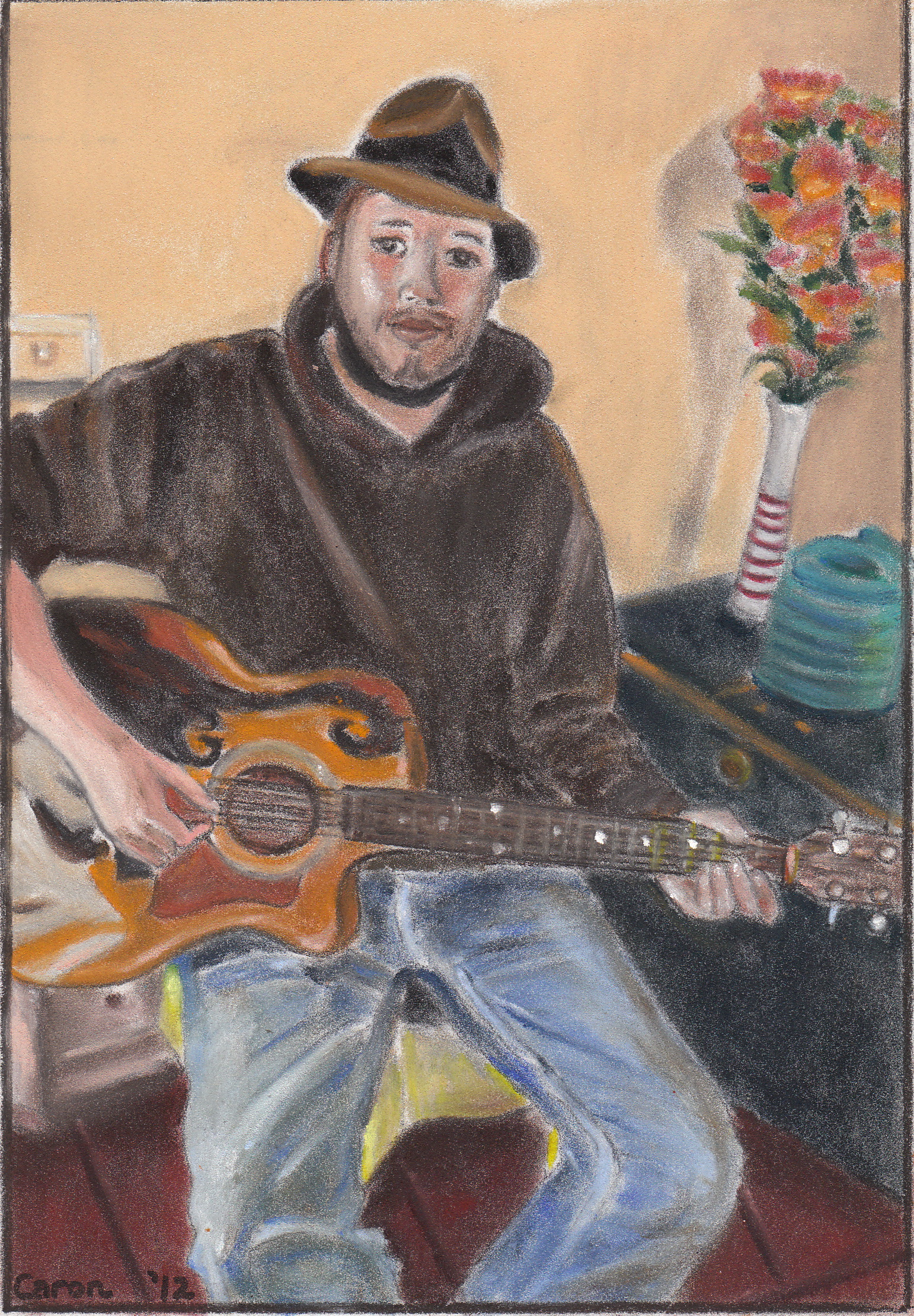
"The Musician", pastel painting of Vorn Doolette, by Caron Eastgate Dann

“The Musician”, pastel painting of Vorn Doolette, by Caron Eastgate Dann

I once interviewed one of Australia’s most successful performers, who had started as a folk singer but moved on to stand-up comedy. He was equally good at both, and I asked him why he chose the latter over the former.

“Well, if you’re good at stand-up, you can always get a gig and it’s possible to make a living,” he said. “But with music, you can be the most talented musician in the world, better than everyone you hear on the radio, and still not be able to pay your bills.”

Although choosing music as a career is about answering a calling, of course it has to be treated as a business if it is to be a source of income. I like the way musicians and other performers, and their supporters, are inventive when it comes to forging a career.

Late last year, my friend Sally organised a music concert in her apartment, featuring her friend Vorn Dolette, a wonderfully quirky folk-with-a-twist singer-songwriter from South Australia. Twenty of us attended the event, paying $20 each for the concert and substantial nibbles, and everyone bringing whatever they wanted to drink.

The result was an intimate performance, highly professional yet much more personal than going to a commercial venue. All the money collected goes to the performer, instead of most going to middlemen.

Afterwards, I did a pastel painting of Vorn during his concert, using a photo I took on the day as a reference. I gave the original to Sally to thank her for hosting such a special event.

Living in Tomorrowland

I have a long time to work before I could consider retirement—around 20 years—and I probably won’t be able to afford to retire then anyway. I’ve always hated the word “retirement”, and thought it would never apply to me.

Instead, I’ve decided that I’m not going to wait until I retire to do the stuff a lot of people take up at that time. I’m going to somehow find the time to do it now.

Two years ago, I took up painting. Instead of sitting in front of the TV in the early evening, I now get out my easel and paints, or whatever other medium I’m using. I’ve just started an online art course from the London Art College, and I hope this will help me improve.

In the two years since I started my new hobby , I have completed more than 40 paintings. Except for the last month, when long work hours have had to take precedence, I’ve painted on about five nights a week. You can see lots of my work on other posts of this blog tagged “art”. The pictures at the top of my blog pages are all detail from paintings I’ve done, too. Here’s a charcoal drawing I did recently:

© Caron Eastgate Dann, 2013

Charcoal drawing by Caron Eastgate Dann, featuring the first native-American ballerina, Maria Tallchief, as Firebird for the New York City Ballet in 1949. The reference was a black & white photograph in the 1987 book Ballerina, by Mary Clarke & Clement Crisp.

The Retiring Sort, a blogger I follow who has just celebrated her first anniversary free of work, has issued Future Challenge – Enjoying the Fun Stuff to ask bloggers to consider what they would like to do in the future or in retirement, no matter what age they are now. I think it’s a worthy topic to think about, whether you’re 20, 40, 60, 80 or older.

I say that the future is here and you shouldn’t put off these things to some far-off time when you will be “retired”. I’ve known people who have then missed out on their greatest desires, because in the meantime they’ve become ill or even died, or their circumstances have changed (such as having to become carers for grandchildren, for example).

The thing is, we never know what we’ll be able to do in future and how long we’ll be able to do it for.

One of my other ambitions was to write a blog. I had been introduced to this world by my friend Kenny at Consider the Sauce, and I wanted to try it. Despite being paid to write all my adult life, I shook off the shackles of professionalism and jumped in to the blogosphere…and here I am.

Of course, we are all time poor, and it’s hard to find time to do the basics, such as cleaning and maintenance, let alone the fancy stuff. It’s amazing though, how it is possible to find this time if you have to. Here are some ideas for clawing back some time:

*Cook in a more simple way. Not every meal has to be a “recipe”. Even if you have guests, as a friend of mine advises: “Throw some steaks on the barbecue, make a salad and bake some potatoes in the oven. They all love it”. Provided they’re not vegetarians, of course. I have lots of simple but wholesome meals I can do in a jiffy. Here’s another: slice some zucchini and fry gently in olive oil until brown on both sides; throw in some garlic and chopped fresh chilli (optional) towards the end of frying; meanwhile, boil some pasta until al dente. Combine the two, season with salt and pepper, and serve with parmesan and parsley. Sometimes I add low-fat salami to the zucchini.

*Watch less TV. I even stopped watching the news closely on some nights, though it is still on in the background. I found that the TV news wasn’t telling me anything new that I hadn’t read on line already.

*When you are watching TV, get up EVERY ad break and do something. I often paint in the ad breaks. It’s amazing how a dabble here and a dabble there can turn into a painting eventually.

*Get off line. Limit your Facebook and other internet access to certain times of the day. I do not always practise what I preach here.

*If you take public transport, get a tablet computer and use part of the commute time to send emails and so on.

*If you drive to work, consider swapping to public transport. I did that this year.  Even though I have to take two trains and a bus to work most days, it takes about the same time all up as driving. The huge benefit, besides being cheaper, is that the time is my own, so I use it to read books—I can get up to 50 pages a day read—and to do my emailing and keep up with social networking.

I really want to finish writing my second novel, too. I don’t like to write at night, so somehow I’m going to have to find the time to do that. I’m thinking that less TV late at night would be the smart thing to do so that I could go to bed earlier, get up earlier on the days I’m not working, and get that novel written.

But I really like staying up late when it’s not a work night. So, I have a decision to make, don’t I?

Letter FROM my 17-year-old self

Magazine columns, websites and blogs lately have taken up the idea of asking a columnist to write a letter to their teenage self, given the wisdom they have today. My version of this is a bit different: it’s a letter from my teenage self, caught in a time warp and forgotten about for 30 years, a surprising blast from the past.

The occasion was the 30th reunion of graduates from my one-term journalism certificate course at Auckland Technical Institute (now AUT), which I was travelling to New Zealand to attend. My former classmates were coming from throughout New Zealand, from Australia and the US. From memory, about 18 of the 23 graduates were there.

We had two tutors: the formidable Geoff Black and his younger sidekick, Colin Moore. Geoff had died years before, but Colin was in his 60s, still writing and very active.

Colin was delighted to be invited to our reunion, and had made plans to attend. Sadly, just a few weeks before the reunion, he was killed in an accident, crushed between his boat trailer and his van on a boat ramp at Taupo Bay in the Far North (not to be confused with Lake Taupo).

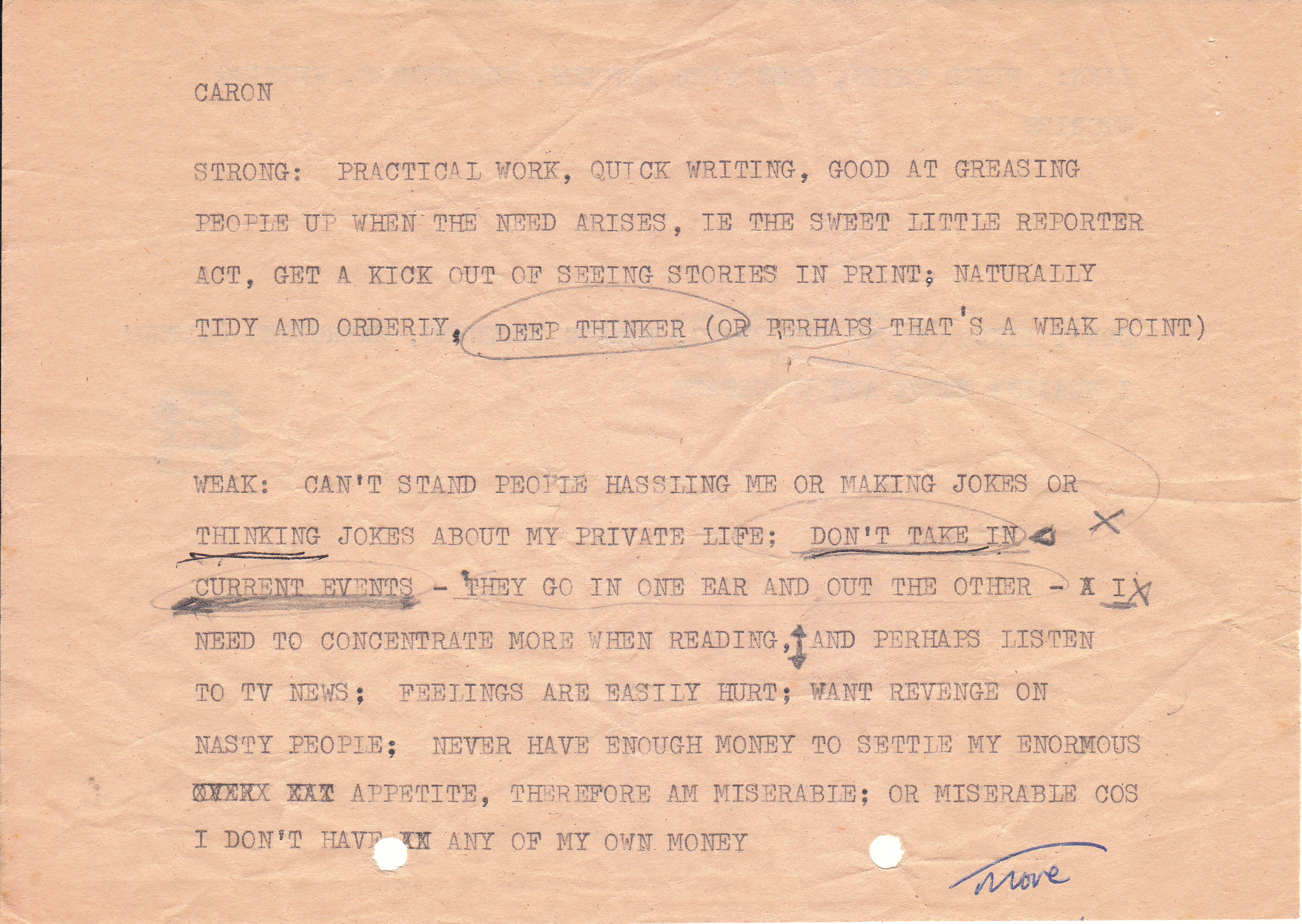
When Colin’s children were going through his belongings, they found he had kept some of his materials from his one term of teaching at ATI so long before. Among them was an exercise we had done at the end of our course, when we’d been asked to write a paragraph about our strengths and weaknesses, likes and dislikes during the term. Colin’s children kindly contacted us and said they would send these papers to us, which would be even more poignant given it was our reunion.

I looked forward eagerly to receiving mine, written by manual typewriter on a piece of old-size journalist’s copy paper. When I received it, I was disappointed that mine seemed so juvenile. My feelings were easily hurt, I said, and I hated the thought that people might be gossiping and laughing about me—though there would have been absolutely nothing in my life for anyone to gossip about in those days, to be sure!

I thought of myself as grown up then, but instead, I reveal myself as a typical mid-teenager. In fact, I exhibit the same characteristics for which I find myself criticising young people today: lack of interest in or knowledge of current affairs, won’t watch the TV news despite wanting to be a journalist, dislike of formal tertiary study (such as lectures and exercises), and an over-emphasis on obtaining money.

My description of myself as putting on a “sweet little reporter act” to “grease people up” was perhaps something I had seen in a movie and was romanticising about: most politically incorrect, these days, but I had done a lot of acting training as a child, after all.

This is what my paper said, strengths and weaknesses on one side, likes and dislikes on the other:

ATI-aspirations

Strong

Practical work, quick writing, good at greasing people up when the need arises, i.e. the sweet little reporter act, get a kick out of seeing stories in print; naturally tidy and orderly, deep thinker (or perhaps that’s a weak point)

Weak

Can’t stand people hassling me or making jokes about my private life; don’t take in current events – they go in one ear and out the other – I need to concentrate more when reading and perhaps listen to
TV news; feelings are easily hurt; want revenge on nasty people; never have enough money to settle my enormous appetite, therefore am miserable; or miserable cos I don’t have any of my own money.

ATI-Aspirations-2

Like

Field trips, newspaper layouts, lunchtimes, writing stories

Don’t like

Court reporting, boring lectures, exercises (Altho’ I realise these are important. [sic]

The hand-written marks on the paper show my tutor did actually read it. Oh, another thing it reveals: contradictions. In “strengths”, I claim to be a “deep thinker”, yet in “weaknesses”, I say information goes “in one ear and out the other”. Colin was clearly perplexed at this, and circled it.

It seems strange that I typed this all in capital letters. But perhaps it shows I felt like shouting with frustration, as many teens do. At 17, I wanted to get on with my life, leave home (to the dismay of my family, though they supported me) and be the best journalist I could be. I knew that to do all that, I would need a living wage. I also had a weakness for beautiful and expensive clothes.

I really did wish for more than money in those days—for a start, I thought that one day, I would be a top broadcaster with my own news show, or editor of the New York Times, or a famous actor, or a scriptwriter of films. As a teenager though, perhaps I was too embarrassed to write these things. Teens often give ridiculous or non-descript answers to adults’ questions. For example, when my brother was a teenager, if my mother asked him what he’d done at school that day, the answer would be “Stuff”.

So, if I could write to myself today, what would I say? Well, I’d probably give myself the same sort of advice my parents gave me back then…to which, for the most part, I refused to listen. As my mum says, although “they don’t know what they don’t know” you can’t tell them—young people have to make their own mistakes.

Although I was disappointed at first, all those years later when I was older and wiser, in what I’d written on the scrap of copy paper, now, a couple of years later, I think it has more to say to me than I at first thought. More than anything, it teaches me to be more tolerant of young people, because once upon a time, I was just like them.

My Brilliant Careers

Well, that’s what I’d like to think, with a nod to the famous Australian book, My Brilliant Career, by Miles Franklin.
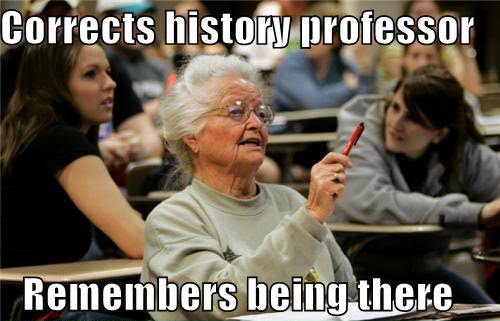
In reply to The Retiring Sort’s Future Challenge post about second and third careers  (which you can read more about here), I am much in favour of them. Gone (mostly) are the days when someone retired at a set age and expected to die a few years later of old age. People are starting new careers in their 40s, 50s, 60s and older.

CorrectsHistoryProfessor-RemembersBeingThere
It’s exciting to think, for example, that one of New Zealand’s best selling authors, Jenny Pattrick, did not have her first novel, The Denniston Rose, published until she was in her 60s. Now well into her 70s, she’s still going strong. Before she was a novelist, she had a long career as a jeweller.
The great British novelist P. D. James, now aged 92, did not have her first novel published until she was in her early 40s, and did not give up her career as a hospital administrator until she was 48.
After a couple of decades as a journalist, I did a PhD in literary studies in my 40s and have worked for five years as a university lecturer in media studies.
But it’s hard to get an ongoing position in this field: perhaps harder than it is to get a full-time journalism position these days. So I could be heading for a third career—I’m thinking I might become a secondary school teacher. That would require me to get a diploma, which would take two years part-time.
What I’d most like to do, of course, is be a full-time writer, instead of having to write in my “spare” time. I’ve already had two books published and I’d dearly like to do a third. Perhaps this will be my next career. I once asked my late father, who was a dentist, what career he would choose above all others if he had the talent to do anything. He replied that he’d be a best-selling novelist, because he could be famous without being recognised in the street (debatable though in these days of modern media). Unfortunately for him, he couldn’t write fiction.
I know many people in their 50s and older who are sick of the career they have chosen—because it has changed so much, because there is ageism in it, or because there is a drive to employ cheaper staff and casuals. I urge them to think about what they would like to do, to plan for it, retrain and take up something new. It took me five years to get my PhD while working full-time for most of the duration, but I’m very glad I did it.
Even if gaining a qualification doesn’t lead directly to a job, the sense of satisfaction involved is worth its weight in gold.

What’s In a Name?

A few people have asked me to explain the title of my blog, The Crayon Files. It actually evolved from an apt nickname someone once gave me.
My first name, Caron, is a French surname (as in Leslie Caron, the dancer and star of Gigi, for whom I was named).

I’ve been writing constantly since I knew how. When I was a journalist, I always scribbled down my notes in shorthand. I worked for years in the 1990s at a tabloid TV magazine that had a big youth readership. During that time, I appeared in an ABC (Australian Broadcasting Corporation) series for children titled Writers and their World, or something similar.  I had thought it would be an innocuous little show screened during the day and forgotten. But the power of TV in those days was extraordinary. The series was shown during the day all right, but loads of children, their parents and teachers tuned in, and it was repeated for years. I was even recognised in the street! “Are you on TV?” a stranger asked me one day. “No,” I replied, truthfully I thought. “Well if you’re not, you’re a dead ringer for that girl on that show about writers,” he said. I had to then sheepishly admit that it was me after all. A local shopkeeper recognised me too.
Then the funniest part: I was then our magazine’s reporter for one of Australia’s highest rating shows, so the cast knew me well. So, one day, they were in the makeup room preparing for the day’s shooting. There was a TV in the room, which was tuned not to their own network but to the ABC.
Up pops Caron on the writers’ show episode. “Oh look,” said a cast member, one of the country’s best known actors and a writer himself now, “It’s Crayon”.
The name stuck, and quite a few colleagues called me Crayon for years—one still does.

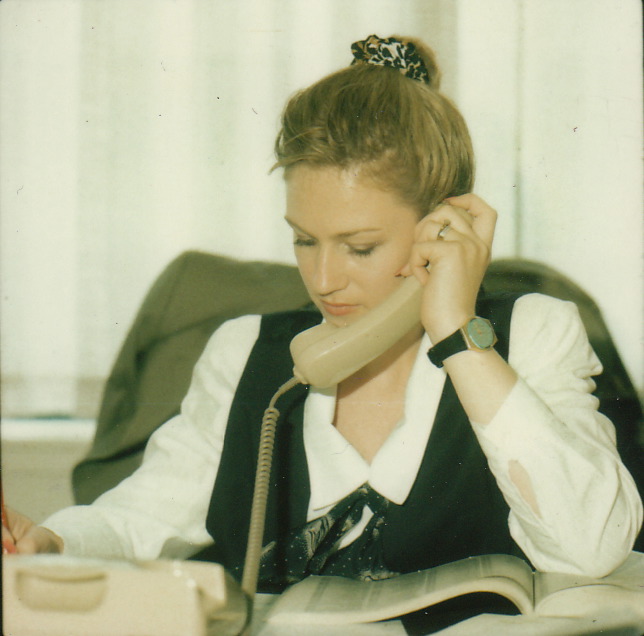
Crayon-to-be: Caron at work at the magazine in 1990, about six years before the "Crayon" nickname came about.

Crayon-to-be: Caron at work at the magazine in 1990, about six years before the “Crayon” nickname came about.

I’ve also been nicknamed C.J., after my then initials, which morphed to Siege; and Biddle, by my parents when I was a baby, because I used to say “Biddle, biddle biddle” when I got frustrated.
Most people have had at least one nickname in their time—some stick and some don’t. If you’re Thai, you most likely use your nickname for all but the most formal of occasions.

I’d love to hear some of your nicknames and how they came about.

My life in TV

Going, going, gone: some of my old TV Week clippings that I don't need any more.

Going, going, gone: some of my old TV Week clippings that I don’t need any more.

You know how an old song can conjure up images of where you were in the past when that song was popular? I have the same memories when I see old TV programs. I was an entertainment journalist from the 1980s to the 2000s, and browsing through my clippings file is like a walk through the history of Australian and New Zealand television and associated events in my own life.

I worked for Australia’s then-most popular entertainment magazine, TV Week, from 1989-1990 and from 1993-1997, becoming assistant editor in 1994. I kept all my clippings—probably about 1000 articles—from that time, and a fair few of the magazines intact, particularly the editions for which I was acting editor.

After my father died in 2006, my mother gave me their collection of seven years’ worth of TV Weeks that I had written for. This collection took up eight drawers in my home office.

Recently, I’ve been trying to streamline my household and get rid of stuff I don’t wear, don’t read, don’t look at, don’t need. As the Canadian writer Fransi Weinstein said in her blog Three Hundred Sixty-Five this month, it’s about “living simpler”.

So, some of those old TV Week magazines had to go. As journalists, we were taught from the beginning to keep all our clippings. They are a record of your work and you need them when you apply for a new job.

Today, however, no one would be interested in my clippings from so long ago. And if I need clippings for a job application, I have more recent ones that I can simply provide a website link to.

I don’t have children, so there’s no sense that I would need to keep something for posterity. Yet, always before when I’ve tried to cull this collection, I’ve become lost in sentimentality and nostalgia, and have ended up putting the mags back in the drawers.

Not this time, though. Last weekend, I got rid of 60% of the magazines in the eight drawers, plus about half of my clippings, keeping only the more notable among them. I also threw out lots of clippings from my work as a news reporter in the 1980s, again keeping only the important ones.

Now I have extra storage space in which I can accrue more stuff.

A Writer’s Diary #2: Goodbye, dear little filing system

1990s writer's filing system

Ye Olde Worlde Filing System, c1991.

Remember this? If you’re under 30, you’ve probably never seen one: it’s an index-card filing system. Before the internet, this is how we used to file our research. This is the one I compiled when I was writing my historical novel, The Occidentals, set in 19th-century Thailand.
I did six months of full-time research before I started writing the novel. This involved reading and indexing information from 42 books and hundreds of articles. Then, say, when I wanted to know about transport in Bangkok in the 1860s, I would look up the index card labelled “Transport”, and it would tell me the books, articles and page numbers where I would find the information.
Though I have not used this index since the late 1990s, I feel sentimental about it and have kept it all this time in my office. I’ve tried to throw it away several times, but something always stops me doing it. However, finally, I’ve agreed with myself, something once so useful has become just a waste of space.
So, I thought I would take a photo of it and write an obituary for my dear little filing system. Goodbye, you served me well, but now it’s time to go. Xoxo.

Have you heard the one about the journalist who wanted to be a novelist?

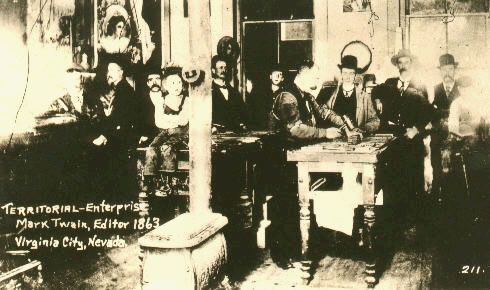
Mark Twain as editor of the Territorial Enterprise, Virginia City, Nevada, 1863

Mark Twain as editor of the Territorial Enterprise, Virginia City, Nevada, 1863

I went to a fiction writing workshop in November at which the tutor, a university lecturer, insisted that “Very few good novels have been written by journalists”. I was astounded by this statement, but said nothing during the seminar, not wanting to be seen as adversarial or—as I am a university lecturer myself—as trying to be a know-it-all and trump the teacher.
I was offended, actually, because I am a former journalist and a published novelist, and I think I’m not bad at both.
Traditionally, many young people who want to be novelists have been steered into journalism as a way of making a living but still using their writing skills. It seems most journalists I know have a manuscript half-written or ambitions to write a novel.

Anyway, this got me thinking about great writers who also worked as journalists. Contrary to what the fiction workshop tutor said, there are many great novelist-journalists. What follows is a list of just a few that occur to me. They are in no particular order and they are eclectic: that is, some are world renowned, others are much lesser known; some are from a previous age and some are current; some are literary, some populist, some both.

Ernest Hemingway
Mark Twain (pictured above)
Geraldine Brooks
Graham Greene
Djuna Barnes
P G Wodehouse
Martin Amis
Willa Cather
Charles Dickens
George Orwell
Ruth Rendell
Will Self
Linda Grant
Tom Wolfe
Susan Kurosawa

In a recent article in the Guardian on this topic—specifically on the worth of Will Self’s work—Robert McCrum examines the cliché of the journalist as unable to write good fiction:  “What lies behind this prejudice, of course, is the idea that fiction (and poetry) is a higher calling,” McCrum says. “Journalism is hack writing (it doesn’t have to be) and novelists dwell closer to the top of Mount Parnassus (well, occasionally).” Read the full article here.

A 2006 scholarly book on the subject, Journalism and the Novel, by Professor Doug Underwood, examines why so many journalists have aspired to fiction writing careers. I think it’s often the other way round: many people aspire to the seemingly more romantic and mystical calling of fiction writing first, then realise they have to make a living as well. That’s what happened to me. I was going to be a famous actor, playwright and novelist. However, making a living as a journalist is not wasted time, for journalism is a fascinating occupation that allows access to people and places that others don’t get, thus providing much material a novelist can use.

Just because someone works as a journalist doesn’t mean they can’t write good fiction: that’s faulty logic. Just because I once worked at McDonald’s, for example, doesn’t mean I couldn’t become a chef at a fine-dining restaurant; and just because I worked at Target doesn’t mean I couldn’t become a high-end fashion designer. Making a generalisation, as my erstwhile tutor did, can manifest simply as a prejudice with no evidence to support it.

So, my advice to anyone who thinks journalists can’t write impressive fiction is, read The Old Man and the Sea, Animal Farm, Huckleberry Finn, March, and The Quiet American, then get back to me.

Wrap it up: the dreaded to-do list

Today’s post is in response to the Weekly Writing Challenge call for bloggers to write about the year that was.

With only two weeks of the year left, I checked my personal non-urgent to-do list, written in January,  and discovered that I hadn’t  done anything on it this year! I was a bit disappointed in myself until I realised that I hadn’t done these things because I didn’t need to. On the other hand, my work-based to-do list is down to one final project, and even that is nearly complete.
I like making and working through to-do lists. These days, I use the Stickies app, virtual post-it notes in pink, yellow, blue, green and purple, stuck to the front of my desk-top computer. On my iPad and iPhone, although I have several specialist apps for lists, I use Notes for stuff I have to do right away. It automatically then sends my list to my email.
There’s something satisfying about writing a list and then crossing it off as you complete each task. It reminds me of school exams, in which the teacher would write the time in chalk on the board in 15-minute blocks until the finish. She or he would then cross off the time as it passed, so students could see where they were up to. A school friend of mine applied this concept to everyday tasks she didn’t like, such as maths class. At the beginning of the class she would draw up her list: 10.00, 10.15, 10.30, 10.45, 11.00. Then she would cross off each time as it occurred. She said it helped make the class go quicker! My father would have said “Don’t wish your life away”, but back then, we didn’t really understand what he meant.

Remember these? My Time Manager folder, 1988-1998.

Remember these? My Time Manager folder, 1988-1998.

In 1988, the bank where I worked as a corporate publications journalist sent me on a Time Manager-brand course, which included this marvelous thick black folder (pictured above), in which you could manage your life, and which I used for 10 years, until computers superseded it. I still have this folder and the sections inside reveal all sorts of fascinating snippets from 20 years ago: how much I paid for rent at various places, the cost of living in Bangkok in the early 1990s, my aspirations, a list of ideas for books, never written. Hmmm, that novel set in the Australian gold rush era could  be worth resurrecting…
There are even a couple of long-forgotten British stamps, sent to me by a relative because I needed to provide stamped self-addressed envelopes when I submitted work to publishers (no email submission in those days). Apparently, there was something called an international reply coupon, but I could never find out at any post office what this was or where to get it.
Unfortunately, I culled a lot of stuff from this folder years ago which would have made interesting reading now.
So, unfulfilled to-do lists aside, what were my top 10 achievements for 2012? I made a list! Here they are in no particular order:
1. Completed my 10th back-to-back teaching semester as a university lecturer. As a contractor, I don’t get sabbaticals or opportunities to use research grant money to pay others to teach for me, so I have no choice but to teach every semester. I spoke at a conference, chaired sessions at another, and finished or nearly finished writing three academic articles.
2. Spent two weeks in Thailand, including visiting Bangkok for the first time in 11 years. I attended the Reaching the World writers’ summit there and read from some of my work-in-progress at a women writers’ night in Bangkok.
3. Went to the dentist three times. I’m the daughter of a dentist, but my dad died suddenly nearly seven years ago, so it was a big step for me in 2009 to get up the courage to go again regularly, to someone else. After a load of appointments to make things right again, I now have to go only every six months.
4. Got a doctor and plan to have all the tests I should have. I’m a great avoider of doctors, but these things have to be done. I started to change my mind when I read a story about a woman whose friend died of an illness that could have been cured if they’d caught it earlier. “My friend died simply because she didn’t go to the doctor for 15 years,” the friend said.
5. Completed about 15 paintings. My “new” hobby will be two years old in February. A hobby is good for your soul—I urge everyone to take up something they thought they couldn’t do but would love to have a go at. Singing, playing the guitar, painting, running, swimming, whatever. The great thing about a hobby is you don’t need to be great at it and it doesn’t have to bring in any money and you don’t have to do it at a particular time; all you need do is enjoy it.
6. Read more books than last year.
7. Committed to having one day off work a week, most weeks. I have been much more relaxed this year as a result.
8. Cleaned out my wardrobe floor, disposed of unwanted and unworn shoes. Now all the shoes sit neatly in pairs.
9. Arranged a birthday bash for my husband, which was a great success.
10. Started a blog (this one).

It’s a wrap!