The adult orphan

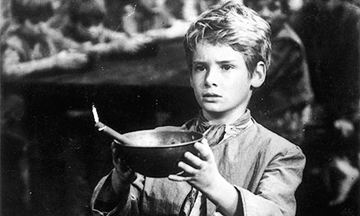
Mark Lester as Oliver Twist in the 1968 film 'Oliver'

Mark Lester as Oliver Twist in the 1968 film Oliver

When you hear the term “orphan”, a sad picture of a parentless child comes up. Think Oliver Twist, the fictional boy in an orphanage who dared asked for more porridge and who asked plaintively, “Where is Love?”.

Sadly, some children are made orphans. But by far the majority of orphans are actually adults, some of them seniors themselves by the time both of their parents have died. Indeed, my father-in-law was 78 by the time his mother died at nearly 102. When he died just eight years later, in 2014, he left three adult orphans behind: orphans with grown-up children of their own, and two of the three orphans with grandchildren. But orphans, nevertheless.

The first time I thought of the adult orphan was when my mother’s father died, just a few months after her mother. the first thing she said when she came off the phone was, “I’m an orphan”.

Technically, the term refers to a child who has lost both parents (or, interestingly, to an animal who has lost its mother). But the term “adult orphan” is sometimes used.

It doesn’t carry with it, however, the same connotations of sadness, destitution, or the horrible possibility of an orphanage.

Yet the loss of one’s parents is devastating for many adults, even if both parties are “old”. When the first parent goes, it is a shock; when the second goes, I am told you feel rather alone and vulnerable, mortal after all.

Luckily, I’m not an orphan, because I still have my mother, and you can’t be half an orphan. My mother, in her 70s, says she still thinks often that she would like to ask her own mother or father something, then remembers they’re not here to ask. (And when her sister died recently, she became an only-child adult orphan, as she reminded me when I was writing this piece).

When the parent of an adult dies, particularly of an older adult, it seems that most other people don’t take much notice. That is, they might say how sorry they are, put a message of condolence on Facebook or send a card, then everything goes on as normal the next week.

Yet the bereaved are suffering just as much as if they’d been younger when their parents died. They might not have missed out on the guidance a parent can provide while you’re young, but having a good parent or parents is comforting at any age.

When they’re gone, the world is a different place.

The “away child”

The "away child": I was 13 and living with my grandparents for a year when this picture was taken.

The “away child”: I was 13 and living with my grandparents for a year when this picture was taken.

How thrilling it must be for parents to raise children to become independent adults who go off and do their own thing. They might travel, study, work, marry, even immigrate somewhere else.

But how bittersweet that must be: on the one hand, being proud of that child’s achievements, and on the other, not being able to see them regularly, perhaps not for years at a stretch.

I call this the “away child” phenomenon.

By “away child”, I mean a person who lives in a different city or country to their parents, and this applies to a person at any age. If you’re 80 and your mother is 100, but you live in different cities, you are still an “away child”. As my mother says, she will always be my mother—age is irrelevant.

Mum and Dad always encouraged us to be independent, to aim high and to travel the world. We started travelling internationally as a family when I was 5.

I was an “away child” first at the age of 12. My parents and brother went back to Los Angeles to live for another year, and I stayed behind in Auckland, New Zealand, with my grandparents.

When they came back the next year, it was exciting to meet them at the airport: I got the day off school and Mum wrote a letter to say they had decided to keep me home that day. I think it was a Tuesday.

Just a few years later, I was leaving home “for good” to take up my first journalism job at 17 in another region. Mum and Dad said I shouldn’t leave home so young, but I insisted, and my grandparents drove me to my new town—actually a place my father had lived in 40 years before and my grandmother had lived on her family’s farm. Some locals even remembered them.

It was in Waipukurau, in Central Hawke’s Bay, about five hours’ drive from home (not that I had a car). In those pre-internet days, we couldn’t be part of each other’s daily lives. Communication was by letter and the occasional expensive phone call, and I travelled home for a weekend every six weeks or so. I didn’t go home for Christmas that first year I was working.

It was such an exciting adventure for one so young that I didn’t think much about how my parents would feel. My mother revealed to me only recently that it was sad for them and that she felt almost as if I’d died: the empty room, what to do with the old toys, whether to repurpose my bedroom or leave it as it was. (Three years later when my first brother actually did die, I moved home for a year to be close to them; then they had a new baby, a second brother for me, and I visited as often as I could before moving to Australia. They followed, not long after, and then I moved to Thailand! But that’s another story).

Social media has made the phenomenon of the away child much easier to bear, I guess. My international students tell me this helps them deal with homesickness, the thought that they can actually see and hear their families daily (even if they don’t).

Now my mother and I actually live in the same city, and last year I moved suburbs so I am only 18km from her, not 72km. But my much younger brother lives in the US, and although that is great—a happy marriage, an amazing city to be young in, a career, a dog—it’s hard to get used to seeing this “away child” only every couple of years.

On the other hand, I have quite a few friends who live in the same town they were born in, just down the road from their parents. Some have been “away children” for long periods, but others have been happy just to stay.

I wonder what that’s like.

Look at these funny little things!

Daffs-1

Melbourne is having a colder-than-usual winter, and this past week was leaden-skied and full of rain as well as days that started near 0 degrees centigrade (32F) and didn’t climb higher than about 12 (53.6F). I know, I know, it’s nothing like the cold in some other countries and regions!

Nevertheless, it’s been very dreary walking to the train each morning on my way to work. Until…a glimmer of hope!

I thought spring bulbs were activated by warming weather, but these funny little things don’t seem to care that it’s nearly freezing overnight.

Yes, these cute little daffodils have bloomed along the roadside, brightening the day and letting us know that there’s nothing surer than the fact that spring will come.

Daffs-2

There’s something funny going on with bread

In our “new” suburb, to which we moved a year ago, there are no independent bakeries close by, so we have to buy bread from the supermarket or one of those bakery franchises, which are pretty much the same, actually.

It’s disappointing to see row upon row of spongy white bread on the supermarket shelves: there must be 30 brands. Even their bakery section has mostly plain white bread in various guises.

It’s a far cry from the aromatic, heavy, crunchy-crusted loaves we used to buy at any of several small independent bakeries within walking distance of our house in our old suburb. For convenience, we also used to buy bread in the supermarket there, but again, there was less of your limp white pre-sliced type and more of your grained, dense brown styles.

Lately, I’ve noticed something funny about the bread, whether it be from the supermarket or the bakery chain: it won’t toast.

That’s right. Brands that previously came up hot and golden in our new toaster, with its wily ways and plethora of buttons, now refuse to toast. The slice simply becomes drier and drier, and the crust eventually burns, but the middle never toasts.

We have found this to be so with white bread, sourdough bread, brown bread and muffins of various brands, for a couple of months now.

***Conspiracy theory***: Could the bread all be made at some big central bread depot, then just put in separate packets and called different names? And could the bread formerly known as good for toasting, be being made with different (i.e. cheaper) ingredients that stop it behaving like real bread?

I think the only answer is to buy a bread-making machine and make our own.

Bread

WAIT! There’s no Easter Bunny?

I heard a funny (peculiar, not hah-hah) story this week about a company function to which the families of employees had been invited, and of course there were little kids there. The Easter Bunny made an appearance too.

It was really warm in Melbourne that afternoon – about 30C. After a while, the Easter Bunny, able to stand the heat no more, took off his head. “Whew!” the man inside the suit said, “It was getting hot in there”.

And all the little kids around him began to cry.

They were worried that the Easter Bunny had lost his head.

Or perhaps they were just upset that they’d been sold a pup, so to speak. The awful truth was, the Easter Bunny wasn’t real.

I grew up with the same stories about the Easter Bunny and Father Christmas, though I soon deduced that the EB couldn’t be real. I did, however, believe in the big FC until I was about 10 and some ratbag kid at school told me the truth.

Now, I don’t know about you, but I’m glad The Easter Bunny’s not real. A rabbit the size of a man would not be my idea of cute. Before long, he’d find a partner rabbit the size of a woman, and they’d have thousands of human-sized rabbit babies and eat all the grass and crops in Australia.

Rabbits are not native animals here, and they are pests in the wild, though apparently, they make adorable pets.

I do wonder, however, why as an entire society, we feel a need to pretend the Easter Bunny and Father Christmas are real, when the rest of the time we’re reassuring kids that the characters in their story books, including the monsters, are not real, and they shouldn’t talk to strangers they don’t know, even if they seem nice.

I guess it’s all part of the commercialised, commodified, mediatised world we live in.

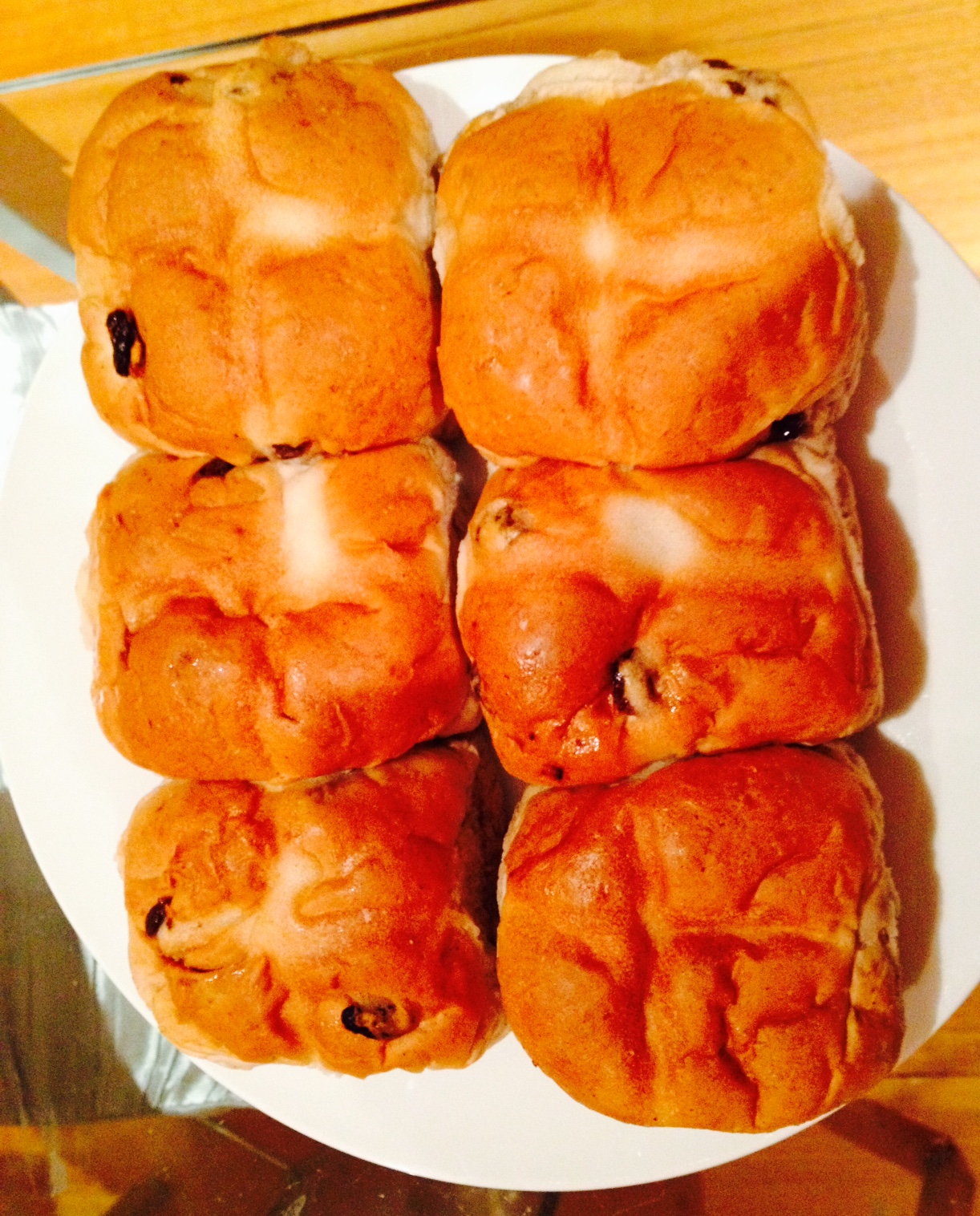
Freshly baked hot cross buns from my favourite Vietnamese-run bakery will be my Good Friday breakfast.

Freshly baked hot cross buns from my favourite Vietnamese-run bakery will be my Good Friday breakfast. The crosses didn’t work out too well, but I’m assured people travel from afar to buy them.

That aside, there are aspects of Easter I like. Mainly, it’s a few days off work (during which I get to catch up with my marking—oh joy!). There are hot cross buns on Friday (ours are from my favourite family-run bakery), shopping on Saturday, a family meal on Sunday and a well-deserved lie-in on Monday.

And not to forget the chocolate Easter eggs. I’ve suddenly, just since a year ago, become a regular chocolate eater after not being much interested in it since childhood.

Back then, I used to hoard all my Easter eggs and eat them a tiny piece at a time, sometimes taking a month to finish them. This would infuriate my brother, who would finish all his on the same day he received them and then appeal to me for some of mine. Mum would tell me I should “share” with my brother and not be selfish. Hmph!

It’s pretty much the same in my house today: I savour a piece or two of chocolate a day, whereas Himself scoffs his then thinks I’ll take pity on him and share mine.

Not me: boys have always been taking my chocolate, and they don’t get it any more!

Should you stand up for a pregnant woman in the train or bus?

I shouldn’t have to ask that question — it should go without saying that you would do so. But, sadly, I do have to ask it.

This is because twice this week I have seen instances where people appeared reluctant to stand for obviously pregnant women.
This morning, a woman got on the train and, after a few moments, I stood up for her, and she gratefully sat down, thanking me and giving me a lovely smile.
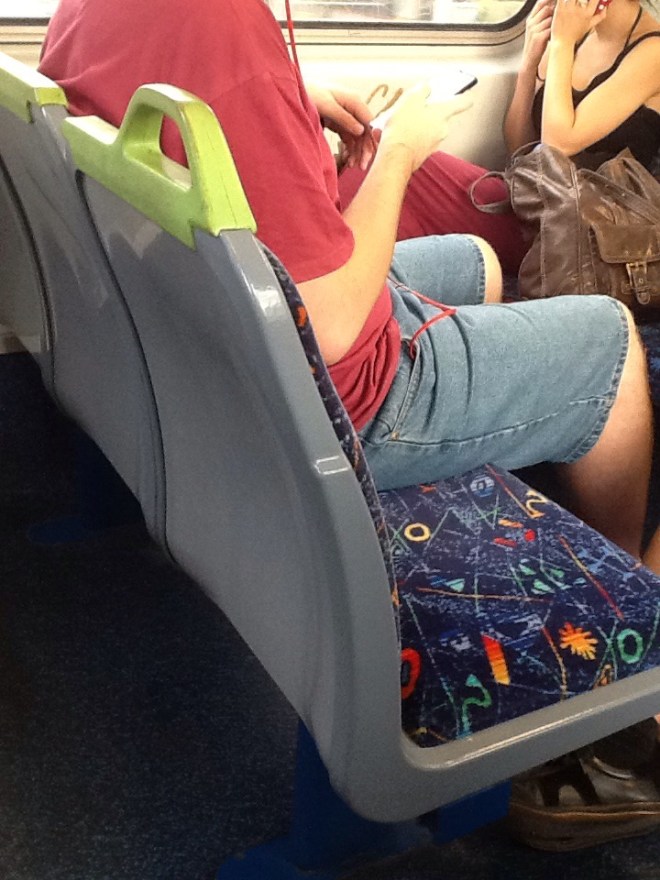
I say “after a few moments” because I was surrounded by young men and women, most of them 20 or perhaps even 30 years younger than me. I admit, I’d thought one of them would stand (is that wrong?). However, they remained in place, even in the seats opposite with notices that say the seats must be vacated if elderly, pregnant or disabled people need them.


 When I got up, none of the young men or women made a counter offer. They settled further into their seats, one making eye contact but quickly looking away.
A 35-ish man standing opposite me was shaking his head in disbelief. “I can’t believe that out of that whole group, you were the one who had to stand up,” he said. “Manners! Modern society, eh?” He said it loud enough for others to hear; they just sat there. Now, I’m not elderly or infirm or anything, but I do think that very young people should stand up before middle-aged people. There used to be a rule, too, that if you were on a student ticket, you were obliged to give up your seat to an adult. What annoyed me most was that more than one of us should have been prepared to give up his or her seat.
As I said, this was not the only incident this week (I catch a lot of public transport!). A few days ago, I got on to a crowded bus with no spare seats. After me, a woman got on who was pregnant. She stood for a while: no one got up for her, including people in seats right next to her.
Finally, a young woman standing on the other side of me courageoulsy tapped one of them on the shoulder and said, “I think you should stand up for her”, indicating the pregnant woman. The seated girl was genuinely surprised, and leapt up immediately. “Oh! I didn’t even notice,” she said.
I wondered if this was indicative of what had happened in both incidents. That people weren’t being rude, ill-mannered, or insensitive. They just didn’t notice.
Are we so embroiled in our personal worlds of music played via headphones or ear buds, texting, social media and even reading, or a combination of those things, that we fail to notice when fellow humans need our assistance?
It seems we need to get over ourselves, look around, and notice what’s happening in the world.

Where has the time gone?

TimeDear February: who are you, and what have you done with my friend January, who has suddenly disappeared, seemingly without warning?
Which is just another way of saying, Where has the time gone?
Remember when you were a kid and the summer school break seemed to go on and on and on? In New Zealand, ours coincided with Christmas and, two weeks later, my birthday.
I remember endless days of playing outside with the neighbourhood kids, rolling down the sloping grass lawn in my grandparents’ garden, travelling by car with my parents to Palmerston North, via a day fishing at Lake Taupo, to see my great-grandparents and loads of great-aunts, great-uncles and second cousins.
This summer break stretched almost to infinity, so that when it was, finally, time to go back to school, I was ready and willing.
Now, time speeds by so quickly, there is no such thing as an endless holiday. Even three or four weeks off goes like wildfire, and in a flash, it’s time to start work again.
This disparity is probably in part because as adults, we have so much more responsibility. The annual clean-out, biannual dentist visit, tax return that should have gone in months ago but there was no time… We leave it all to this mystical period when we, seemingly, will “have the time”. We don’t, of course, and in the blink of an eye, it’s gone.
Add to that the complication that when I don’t work, I don’t get paid, so I’m always short on cash during this time, trying to eke out the last of my pay and looking forward to that regular fortnightly input again.
In addition, leisure time flying by is about attitude. When I’m on holiday (vacation) now, I seem to spend the whole time counting the days, saying, “Oh no, only three weeks and four days to go…oh no, only three weeks and three days to go…how will I ever get everything done? I haven’t even started to write that new novel yet!”
In comparison, when I was a child, every day was what it was: up at sunrise, enjoying the time for itself, not even thinking about the next day, because there was so much of this one ahead, never worrying about where the time went, how little was left of the holidays. We took each day as it came.
Perhaps that is the way adults should live, too, at least during breaks from work.

Nothing lasts forever

IMG_2532

I have a couple of possessions that have been part of my everyday routine for a decade or more. They are not necessarily valuable or one-of-a-kind, or even very unusual.

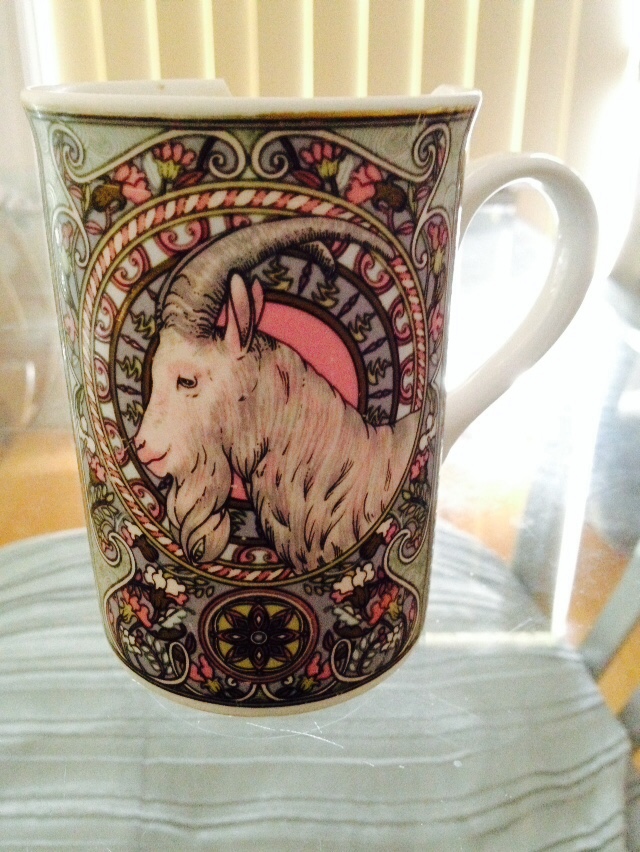
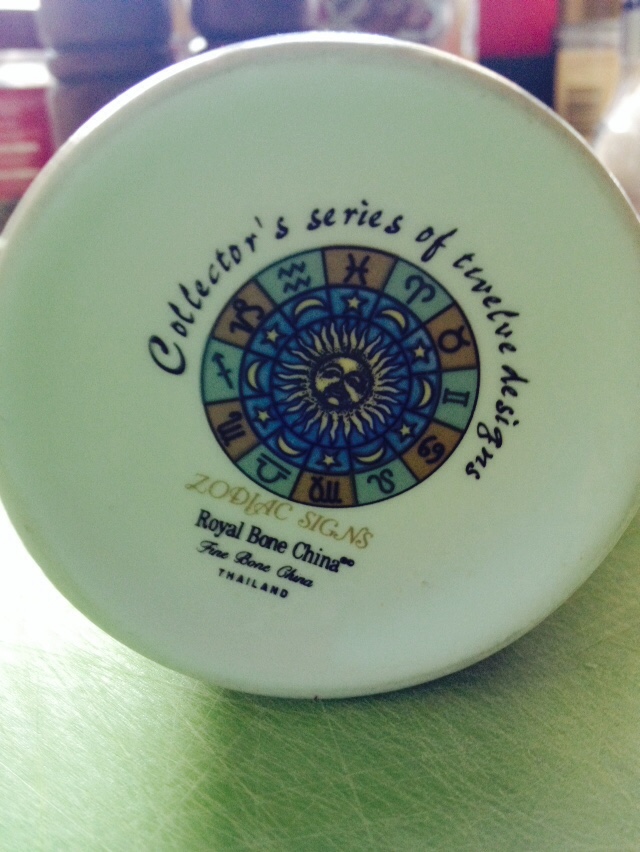
One of them was a Capricorn mug I got in Thailand when I was living there in the late-1990s. Almost every day since then, I have had at least one cup of tea from this mug.

IMG_2535Although the gold leaf that used to decorate it has almost gone, it seemed to be going strong. But a few days ago, it broke when it fell into the sink. Just broke, just like that.

Now I have to throw it away, and I will. But I will miss it.

Knowing it couldn’t last too much longer, I recently searched for another on the internet, but there is not one to be found, it would seem, although these mugs were available in a shop at a particularly popular shopping centre in central Bangkok for six years or more.

A couple of years ago, I even emailed the factory that makes Royal Bone China in Thailand, hoping they might have some remainders. They replied very cordially, but no luck: the cups had all been sold years before.

So now all I have is these pictures. If ever you see one, let me know, won’t you?IMG_2531

It’s how many days till Christmas? Nooooooooo!

My place settings at the Christmas table have names attached to baubles, which I reuse each year.

My place settings at the Christmas table have names attached to baubles, which I reuse each year.

For the first time, we actually went shopping on Boxing Day this year. For my friends in the US and other countries where they don’t have Boxing Day, that’s December 26. It is a national holiday and traditionally the time of post-Christmas sales (when retailers get rid of all the rubbish they couldn’t sell at inflated prices before Christmas).

However, we went to only one shop on Boxing Day, and it was for my husband to buy me a pre-approved present for my birthday, which is coming up soon. More about that in January.

Anyway, the shopping centre carpark was even more congested than it had been leading up to Christmas. It always astounds me that after the consumerist excesses of Christmas, people are still eager to acquire more stuff.

In the shop we went to, I saw people buying up huge baskets and trolleys-full of junk…for next Christmas. Themed serviettes, tree decorations, cards, wrapping paper and the like. I felt a pang of pity for them, actually, as if they have nothing else to look forward to except next Christmas, yet most of them will be under such financial stress that they have to buy stuff for December 2015 in December 2014 when it’s on sale.

Yesterday morning, fittingly, there was an interview on the radio with a woman who helps people de-clutter their houses. That is, get rid of the excess stuff. I remarked to my husband what a ‘first-world problem’ that was: having too much stuff, when most of the world doesn’t have enough.
I thought of all those useless baubles: the tinsel, the discarded cards, the wrapping paper, the table centrepieces. Imagine how many millions of dollars people spend on these every year. Do you really need a plastic reindeer and fake snow in a country where it’s summer at Christmas time and reindeer belong to countries across the other side of the world?

Not to mention the heaps of gifts that are unappreciated—and also the reason many people go to shopping centres on Boxing Day, to return stuff they didn’t like. Other unwanted gifts are just put in the back of a wardrobe, to be trotted out when the giver visits. Some are even re-gifted, of course.

I’m lucky: I seem to always get great presents that are things I want or can use productively. But I know lots of people don’t.

How about this idea? Instead of running around buying loads of presents for family members, everyone in the group draws a name out of a hat and buys one good present for that person. Each person provides a list of things they would like to a pre-determined amount. Result: you have to buy only one present; that present will be exactly what the person wants.

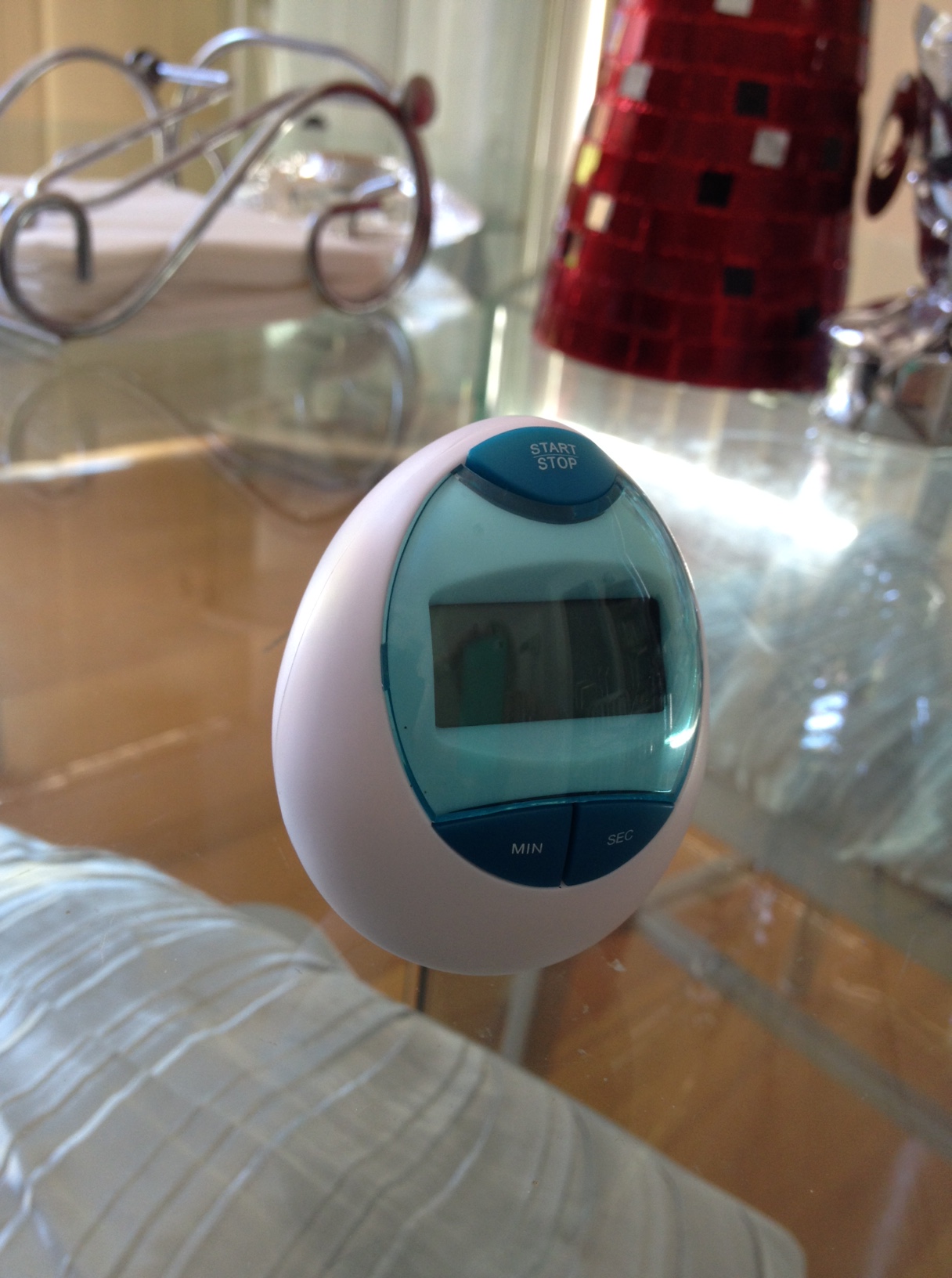
The world's loneliest egg timer: stuffed in a cracker, then left behind on Christmas day.

The world’s loneliest egg timer: stuffed in a cracker, then left behind on Christmas day.

Here’s an ironic tale to finish: this year, I spent $50 on a box of 6 extra-special Christmas crackers (Americans, you can see what these are here). This is because I usually spend about $20 and the prizes are all rubbish, and most people discreetly leave them behind when they depart.

The prizes inside my super crackers were indeed much better than normal…but one guest still left his prize behind. It was an electronic egg timer. Cute, but superfluous, nevertheless.

A funny thing happened on the way to the garden…

The first lettuce from our own garden

The first lettuce from our own garden

All my adult life Ive steered clear of gardening. Despite my mother being a keen green-thumb and growing our own produce, such as potatoes, mint and parsley, when I was young, I’ve always thought it wasn’t my ‘thing’.

Then a funny thing happened. A few years ago, I started watching a half-hour Saturday evening TV show called Gardening Australia. I still wasn’t into gardening itself, but I began to appreciate the peace and beauty of home-grown plants, particularly, as I’m a bit of a foodie, the edible kind.

In April this year, we moved out of the city to a suburb that is almost rural, to a street in which people take gardening seriously. And although we’re in a townhouse with only a very small courtyard, we’ve started a garden.

We’ve got lettuces, radishes, sweet corn, tomatoes, garlic, chillis, herbs such as rosemary, thyme, basil, parsley, coriander, chives and more. My husband has even started a small and joyful flower garden in one corner.

Because I’ve been watching Gardening Australia attentively for so long, I’ve found that I’ve picked up quite a bit of gardening knowledge without realising it. Soil types and planting widths and watering tips: no longer are they useless information to me.

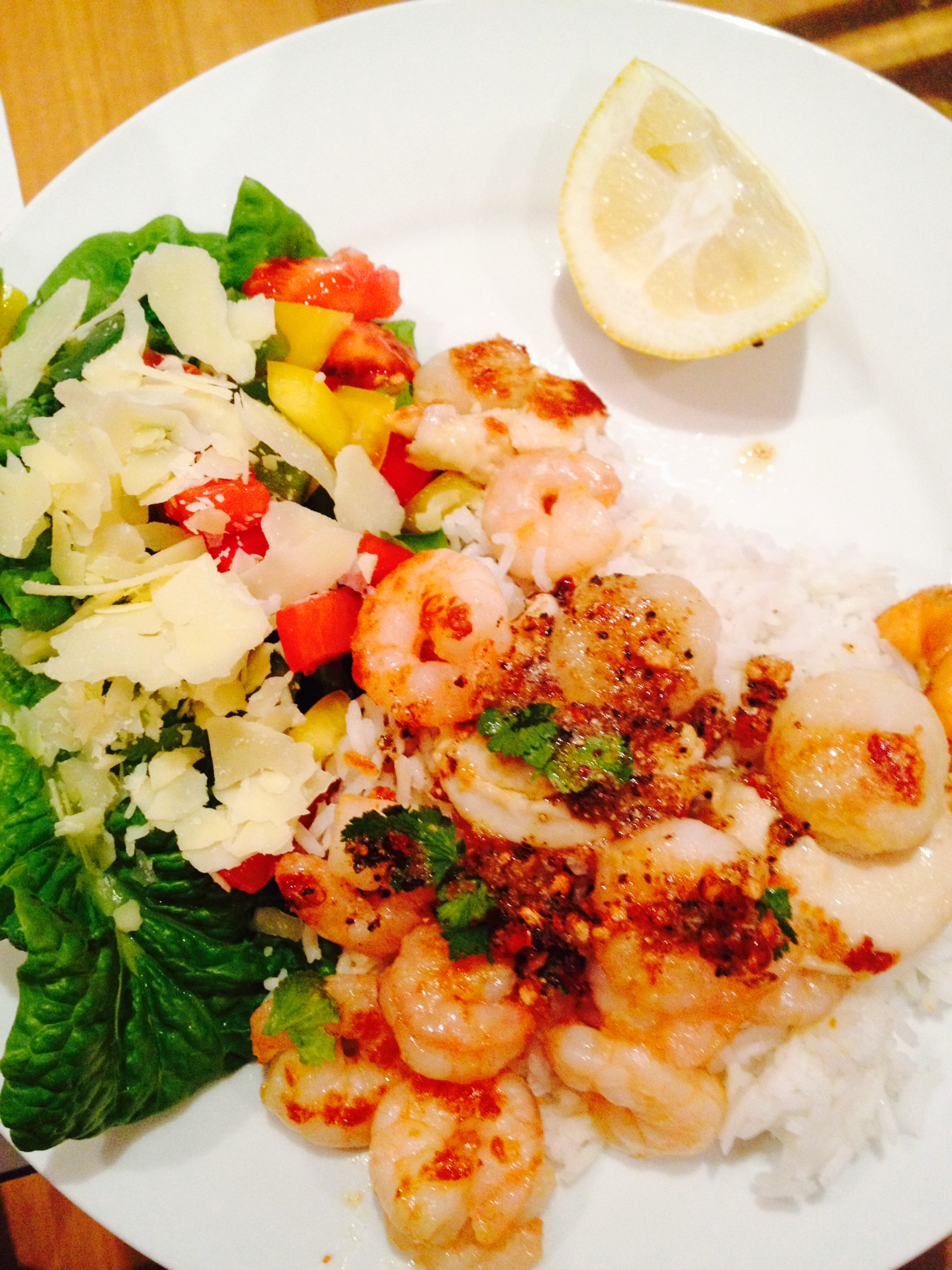
On Friday night, we had the first lettuce from our garden the star of a salad for dinner. Nothing ever tasted so good—bursting with flavour, nutty, buttery almost, and crunchy.

Lettuce2I teamed it with simple fare: tomatoes and multi-coloured capsicum (not our own, yet); and seared scallops and prawns with my hot butter-garlic-chilli-lemon pepper dressing on a bed of steamed basmati rice.

Best meal I’ve had in ages!