Recreationist Theory

GrandCanyon

This post is written in response to Kozo’s monthly peace challenge at everyday gurus

When I was about 10 and living in Los Angeles, my parents took me and my brother to Arizona to see the Grand Canyon. Though we came from New Zealand, a land of majestic and awesome scenery, we were aghast at the sheer size of the canyon. When I first got out of the car, for some reason I thought that in front of me was a giant billboard painting, it looked so surreal. “No, it isn’t a painting,” my mother replied. “It’s real.”

I now live in Australia, but I went back to see the Grand Canyon in 2009. You know how when you’re a child, things look enormous, and then when you revisit as an adult, they look so much smaller? This was NOT one of those moments. The big GC was every bit as magnificent as I remembered.

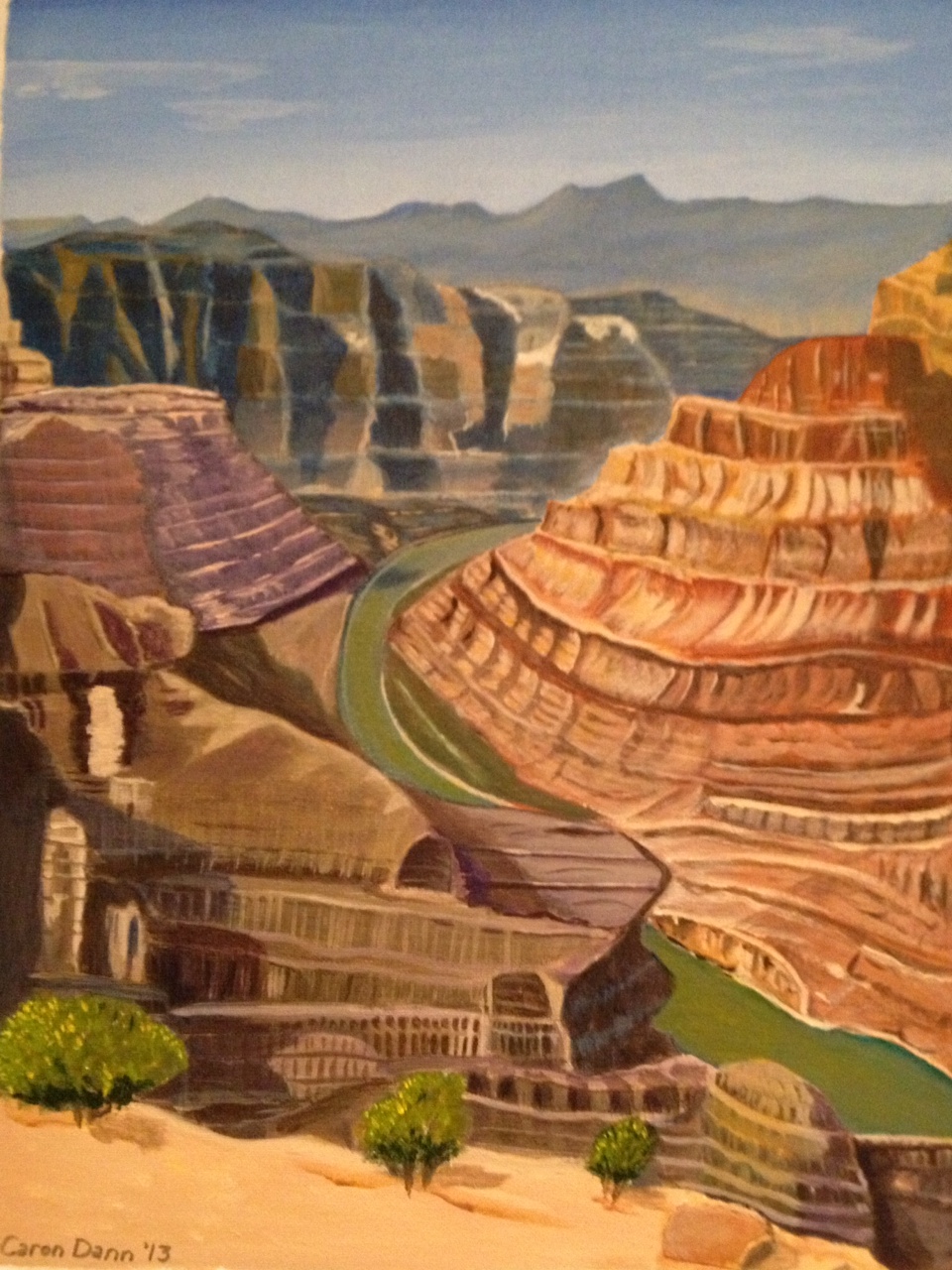
More recently, I saw a remarkable documentary series on America’s national parks, then I found the photos I had taken on the last trip, and I was inspired to try to paint the Grand Canyon as I’d seen it in my mind’s eye as a child.

I am a novice painter and the Grand Canyon is notoriously difficult to paint, but whether the painting is any good or not is irrelevant, really. The point is, the Grand Canyon reminds us of the great beauty in nature that we should be celebrating every day. Painting the Grand Canyon was a creative challenge that I set myself and which took concentration and effort, and trying some bits again and again.

This, I believe, is how creativity can help make a more peaceful world. When you are trying to create or recreate something beautiful, whether it be in an image or in words, whether a piece of writing, a painting, a photo, a sculpture, a garden or a hundred other things, your mind becomes peaceful and focused on the task.

Perhaps it is something to do with that idiom, “Idle hands make the devil’s work”.

Back to Burma

These are the best photographs I’ve ever seen of Burma, magnificent in their composition, their juxtapositioning, and in capturing the moment. I walked into Burma from Thailand in the 1990s for a day, but these make me want to go back and take a proper look.

The sound of music

This post is in response to A Word in Your Ear’s Word A Week Challenge—Music

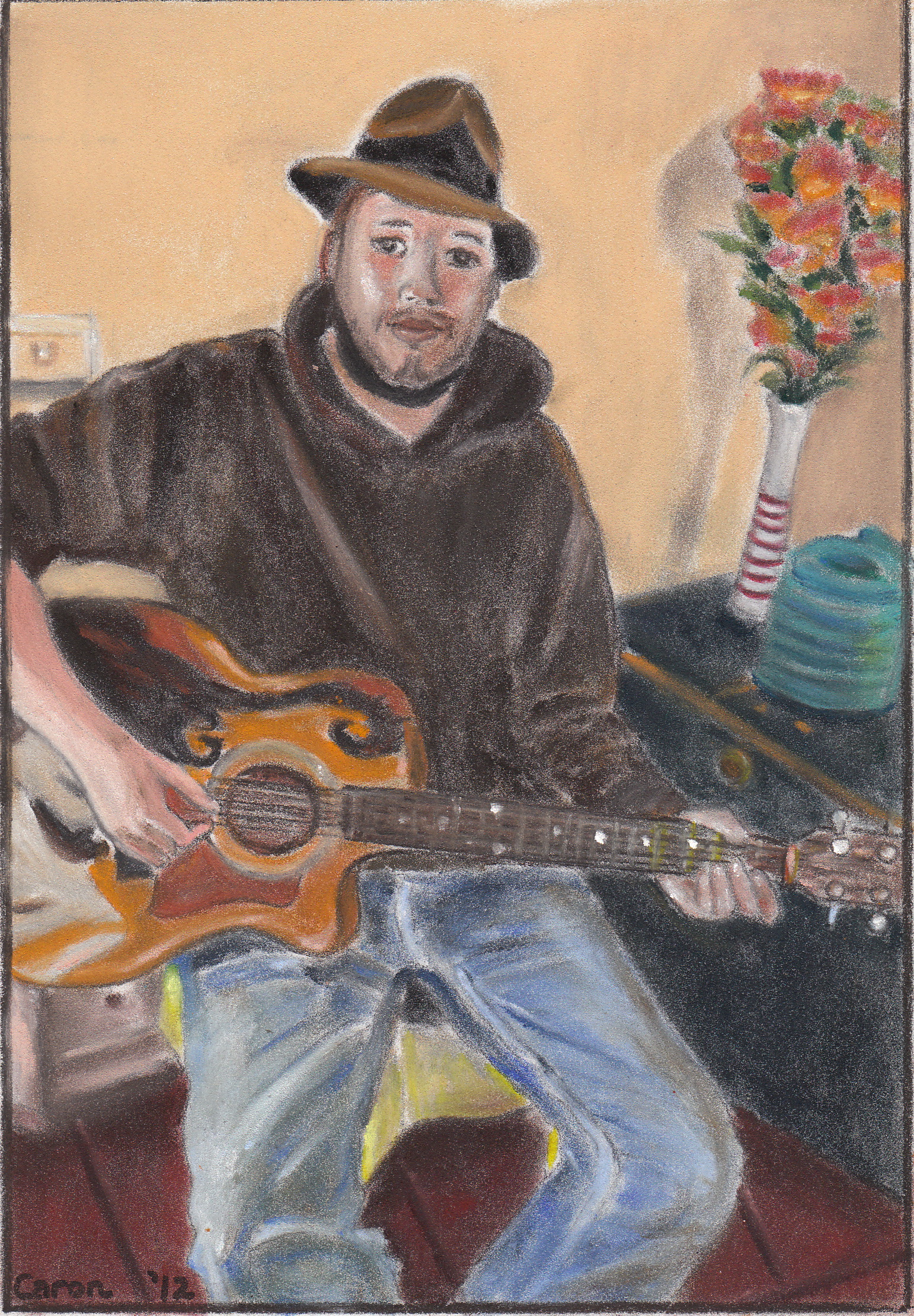
"The Musician", pastel painting of Vorn Doolette, by Caron Eastgate Dann

“The Musician”, pastel painting of Vorn Doolette, by Caron Eastgate Dann

I once interviewed one of Australia’s most successful performers, who had started as a folk singer but moved on to stand-up comedy. He was equally good at both, and I asked him why he chose the latter over the former.

“Well, if you’re good at stand-up, you can always get a gig and it’s possible to make a living,” he said. “But with music, you can be the most talented musician in the world, better than everyone you hear on the radio, and still not be able to pay your bills.”

Although choosing music as a career is about answering a calling, of course it has to be treated as a business if it is to be a source of income. I like the way musicians and other performers, and their supporters, are inventive when it comes to forging a career.

Late last year, my friend Sally organised a music concert in her apartment, featuring her friend Vorn Dolette, a wonderfully quirky folk-with-a-twist singer-songwriter from South Australia. Twenty of us attended the event, paying $20 each for the concert and substantial nibbles, and everyone bringing whatever they wanted to drink.

The result was an intimate performance, highly professional yet much more personal than going to a commercial venue. All the money collected goes to the performer, instead of most going to middlemen.

Afterwards, I did a pastel painting of Vorn during his concert, using a photo I took on the day as a reference. I gave the original to Sally to thank her for hosting such a special event.

Pets for Peace

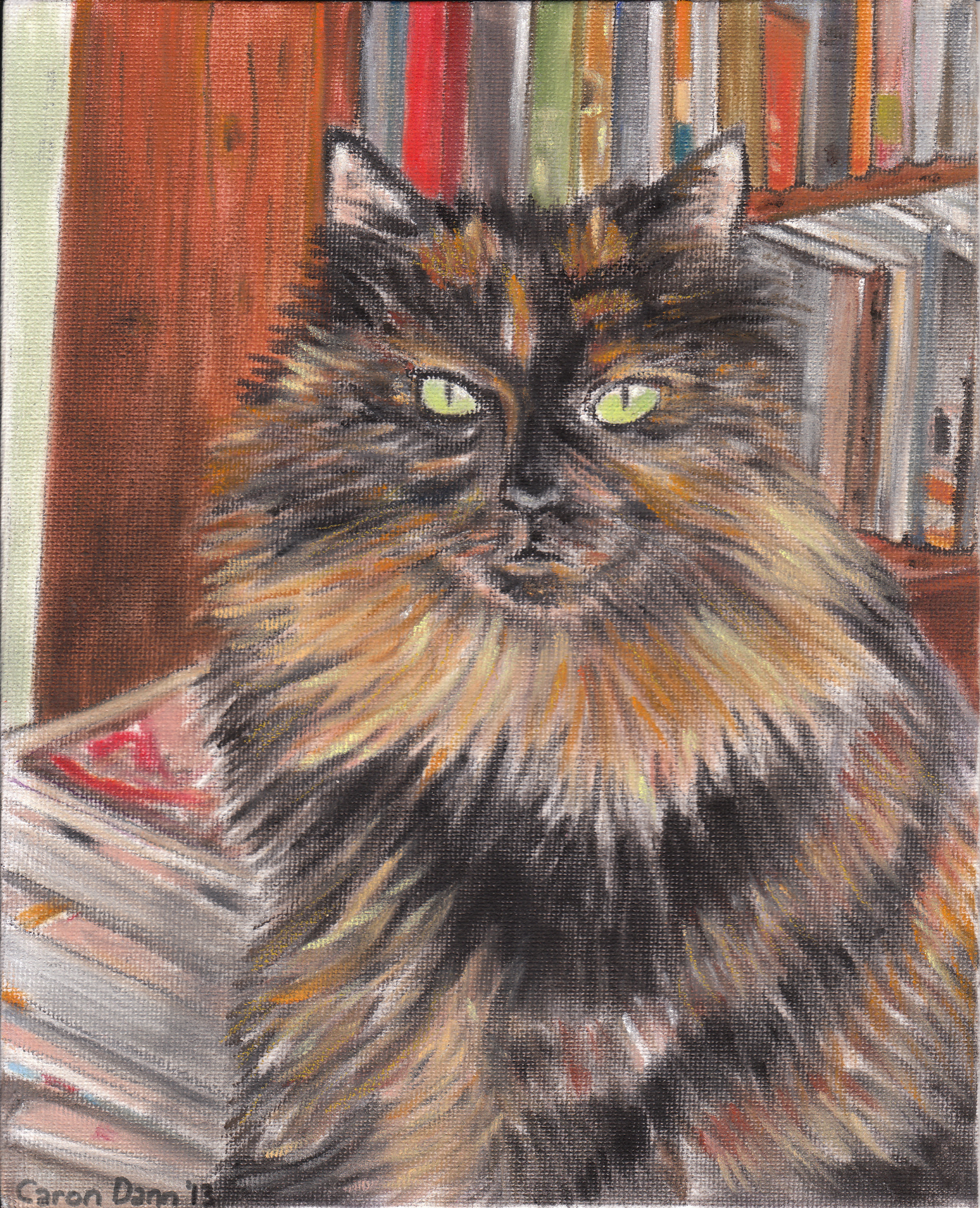
Lucy Locket stars as "A Bookish Cat" in a pastel painting I did of her this week.

My pastel painting of my cat, Lucy Locket, who sits with me while I work

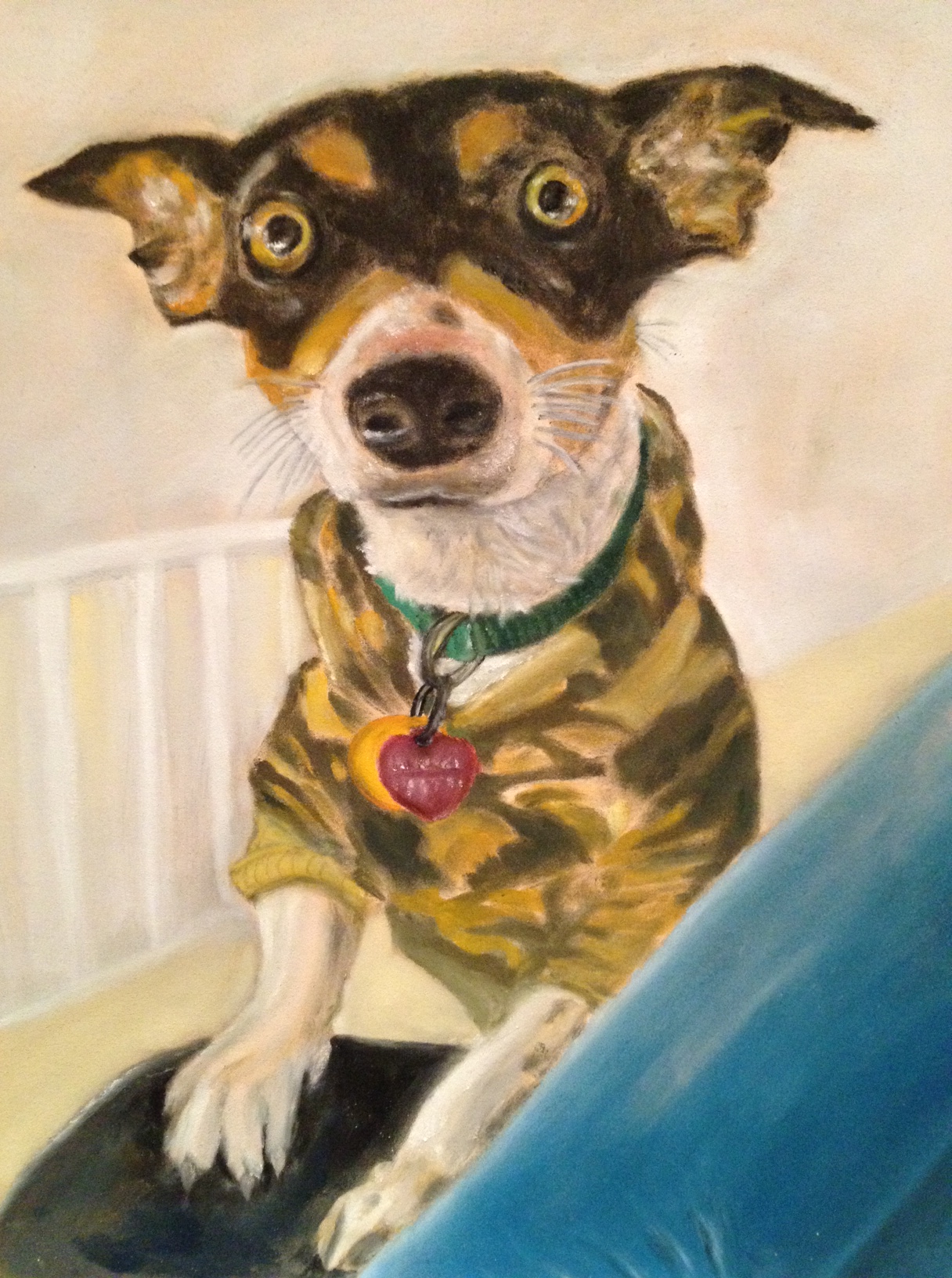
"Maggie", by Caron Dann, 2012.

“Maggie”, my brother’s dog, rescued from an animal shelter

These two pets don’t know each other, but my mother calls them her “grandchildren”. The dog is Maggie, who lives in the US with my brother and his wife. The cat is Lucy Locket, who lives with me in Melbourne, Australia. I share my paintings of them in this post, in answer to Kozo’s Bloggers for Peace challenge this month on raising children so they know the value of peace.
In order to truly promote peace in the world, you have to be a person who knows inner peace. I believe there are few experiences in our everyday lives that give this sort of peace as much as owning a pet does.
The undying love of a dog who thinks you are perfect, no matter what; the companionship, elegance and spirit of a cat who thinks you are part of its litter (or perhaps its servant); the sweetness of a small bird that will sit on your shoulder and mimic your sounds: these are pets I have known.
I’m a cat person. I’ve owned cats since I was very young. Times have changed since I was a child and we put the (un-neutered) cat OUT for the night. These days, my cat is an indoor being, perfectly happy in our townhouse. She has an enclosed courtyard to play in, and to wistfully watch birds strut across high-up roofs. She could, if she wanted, climb the fence and run off—but she never does.
As for Maggie, my brother’s dog, she’s an American rat-terrier. They acquired poor Maggie from an animal shelter. When she had been brought in, there were signs she had recently had puppies, but no trace of the puppies. Her claws were very long and she was malnourished. After that awful start, Maggie now has an idyllic life and is devoted to her owners.
If you have a pet, you have responsibilities to look after it, to keep it safe and to give it the affection it deserves. In return, this pet will be your greatest companion.
It doesn’t matter what you look like, whether you’re fat or thin, whether you’re rich or poor, whether you did well in school, whether you are popular or not, or whether you are talented at anything. As long as you look after it—which means training, of course, especially for dogs—your pet will love and respect you.
These are good lessons for children to learn: that love and care given will result in love and care back, and that life is about much more than material things.

Living in Tomorrowland

I have a long time to work before I could consider retirement—around 20 years—and I probably won’t be able to afford to retire then anyway. I’ve always hated the word “retirement”, and thought it would never apply to me.

Instead, I’ve decided that I’m not going to wait until I retire to do the stuff a lot of people take up at that time. I’m going to somehow find the time to do it now.

Two years ago, I took up painting. Instead of sitting in front of the TV in the early evening, I now get out my easel and paints, or whatever other medium I’m using. I’ve just started an online art course from the London Art College, and I hope this will help me improve.

In the two years since I started my new hobby , I have completed more than 40 paintings. Except for the last month, when long work hours have had to take precedence, I’ve painted on about five nights a week. You can see lots of my work on other posts of this blog tagged “art”. The pictures at the top of my blog pages are all detail from paintings I’ve done, too. Here’s a charcoal drawing I did recently:

© Caron Eastgate Dann, 2013

Charcoal drawing by Caron Eastgate Dann, featuring the first native-American ballerina, Maria Tallchief, as Firebird for the New York City Ballet in 1949. The reference was a black & white photograph in the 1987 book Ballerina, by Mary Clarke & Clement Crisp.

The Retiring Sort, a blogger I follow who has just celebrated her first anniversary free of work, has issued Future Challenge – Enjoying the Fun Stuff to ask bloggers to consider what they would like to do in the future or in retirement, no matter what age they are now. I think it’s a worthy topic to think about, whether you’re 20, 40, 60, 80 or older.

I say that the future is here and you shouldn’t put off these things to some far-off time when you will be “retired”. I’ve known people who have then missed out on their greatest desires, because in the meantime they’ve become ill or even died, or their circumstances have changed (such as having to become carers for grandchildren, for example).

The thing is, we never know what we’ll be able to do in future and how long we’ll be able to do it for.

One of my other ambitions was to write a blog. I had been introduced to this world by my friend Kenny at Consider the Sauce, and I wanted to try it. Despite being paid to write all my adult life, I shook off the shackles of professionalism and jumped in to the blogosphere…and here I am.

Of course, we are all time poor, and it’s hard to find time to do the basics, such as cleaning and maintenance, let alone the fancy stuff. It’s amazing though, how it is possible to find this time if you have to. Here are some ideas for clawing back some time:

*Cook in a more simple way. Not every meal has to be a “recipe”. Even if you have guests, as a friend of mine advises: “Throw some steaks on the barbecue, make a salad and bake some potatoes in the oven. They all love it”. Provided they’re not vegetarians, of course. I have lots of simple but wholesome meals I can do in a jiffy. Here’s another: slice some zucchini and fry gently in olive oil until brown on both sides; throw in some garlic and chopped fresh chilli (optional) towards the end of frying; meanwhile, boil some pasta until al dente. Combine the two, season with salt and pepper, and serve with parmesan and parsley. Sometimes I add low-fat salami to the zucchini.

*Watch less TV. I even stopped watching the news closely on some nights, though it is still on in the background. I found that the TV news wasn’t telling me anything new that I hadn’t read on line already.

*When you are watching TV, get up EVERY ad break and do something. I often paint in the ad breaks. It’s amazing how a dabble here and a dabble there can turn into a painting eventually.

*Get off line. Limit your Facebook and other internet access to certain times of the day. I do not always practise what I preach here.

*If you take public transport, get a tablet computer and use part of the commute time to send emails and so on.

*If you drive to work, consider swapping to public transport. I did that this year.  Even though I have to take two trains and a bus to work most days, it takes about the same time all up as driving. The huge benefit, besides being cheaper, is that the time is my own, so I use it to read books—I can get up to 50 pages a day read—and to do my emailing and keep up with social networking.

I really want to finish writing my second novel, too. I don’t like to write at night, so somehow I’m going to have to find the time to do that. I’m thinking that less TV late at night would be the smart thing to do so that I could go to bed earlier, get up earlier on the days I’m not working, and get that novel written.

But I really like staying up late when it’s not a work night. So, I have a decision to make, don’t I?
“Peace is Possible”


At Bloggers for Peace, the Monthly Peace Challenge: Mad Men is to create something that conveys the message of peace: an ad, a slogan, a short film, a poem, a song perhaps.

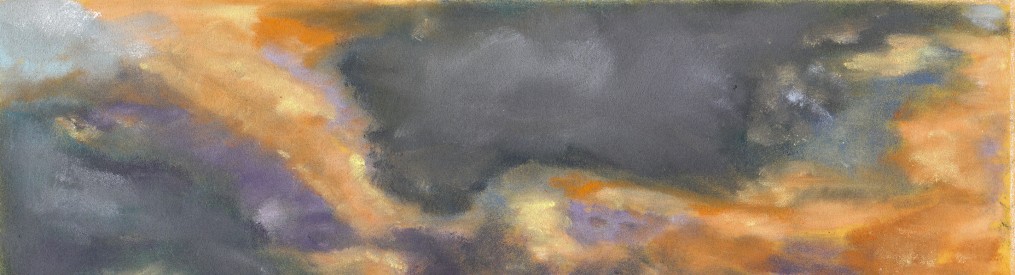
My modest contribution is this slogan, “Peace is Possible”. It might seem simplistic at first, but it has a powerful message, and that is, don’t give up hope and always think positively. Perhaps the slogan should be “Peace is Positively Possible”.

"Peace is Possible", by Caron Eastgate Dann:  I put together this makeshift peace sign out of bits and bobs—buttons, brooches, earrings (I always knew those buttons you get in tiny plastic packets when you buy something new would come in handy one day).

“Peace is Possible”, by Caron Eastgate Dann: I put together this makeshift peace sign out of bits and bobs—buttons, brooches, earrings (I always knew those buttons you get in tiny plastic packets when you buy something new would come in handy one day).

I was reminded how important hope is for achieving goals by my friend Bryan Patterson on his Faithworks blog this week.

Without hope, we may as well give up. With hope, there is still possibility.

Kozo at Bloggers for Peace has discussed (in the post linked above) the idea that in achieving a goal, it is important to affirm what you want, such as “Peace is Possible”, instead of making a negative statement, such as “No war”.

By envisioning what you want, you can work towards it. This reminded me of something that happened to me 10 years ago. I was working as the branch editor of a magazine, and was particularly unhappy with the way the job had progressed under a new supervisor. However, I felt trapped because I had a big mortgage and needed the regular income.

My friend, who is now a clinical psychologist, asked me what was wrong, and I explained. She said, “So, what do you want?”. I told her I wanted to become a freelance journalist and work for myself from home while continuing my PhD studies. She said that because I already knew what I wanted, I had won half the battle. “Now, you just have to work out how to get there,” she said.

I decided to sell my expensive house for a cheaper one in the same area, thereby halving my mortgage. I could now afford to become a freelance and casual journalist, and did so for about four years, until my PhD was complete and I became a university lecturer.

So, if we know what we want (peace), I reckon we have won half the battle. Now, if we could only work out how to get there…

Check out Fish of Gold’s incredibly cute animal drawings, including the platypus, whose odd looks FOG captured perfectly.

goldfish's avatarFish Of Gold

The other day, I showed you how I drew a giraffe and I asked for suggestions on what to draw next.

Caron Eastgate Dann suggested I draw a platypus:

Platypus. Suggested by Caron Eastgate Dann.

Behindthemaskofabuse suggested I draw a dragon:

dragon1

Kozo suggested I do a calendar of all the Chinese zodiac animals starting with a snake:

snake

But he really wanted me to draw a fox:

fox

And finally, C. R.requested a butterfly:

butterfly

That’s all for today. I’m spent and I haven’t even written anything. The request line is now closed (maybe).

View original post

The art of food

In response to a challenge from The Daily Post’s Weekly Writing Challenge to “detail a three to five step story or process, and illustrate each of the steps with something visual”.

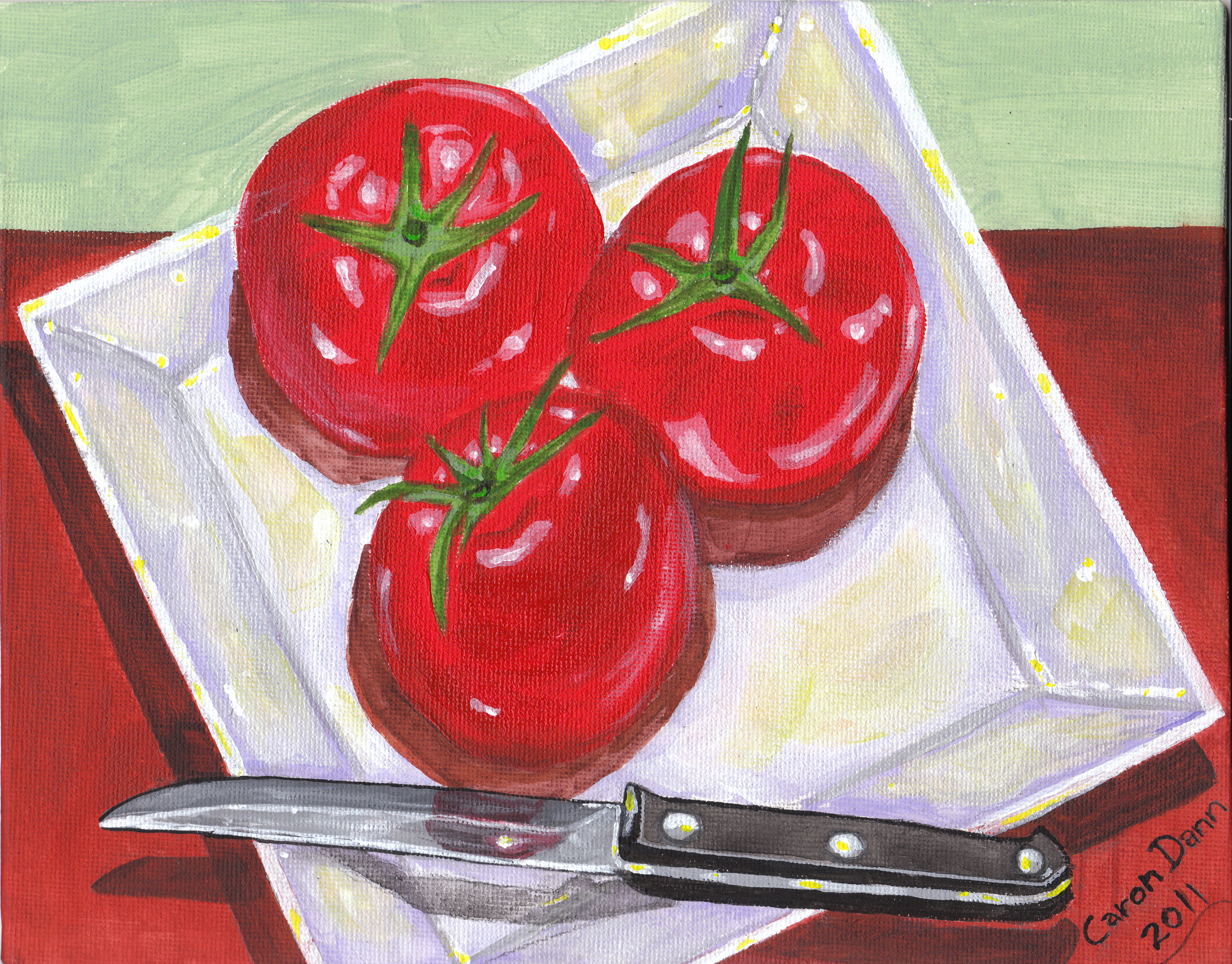
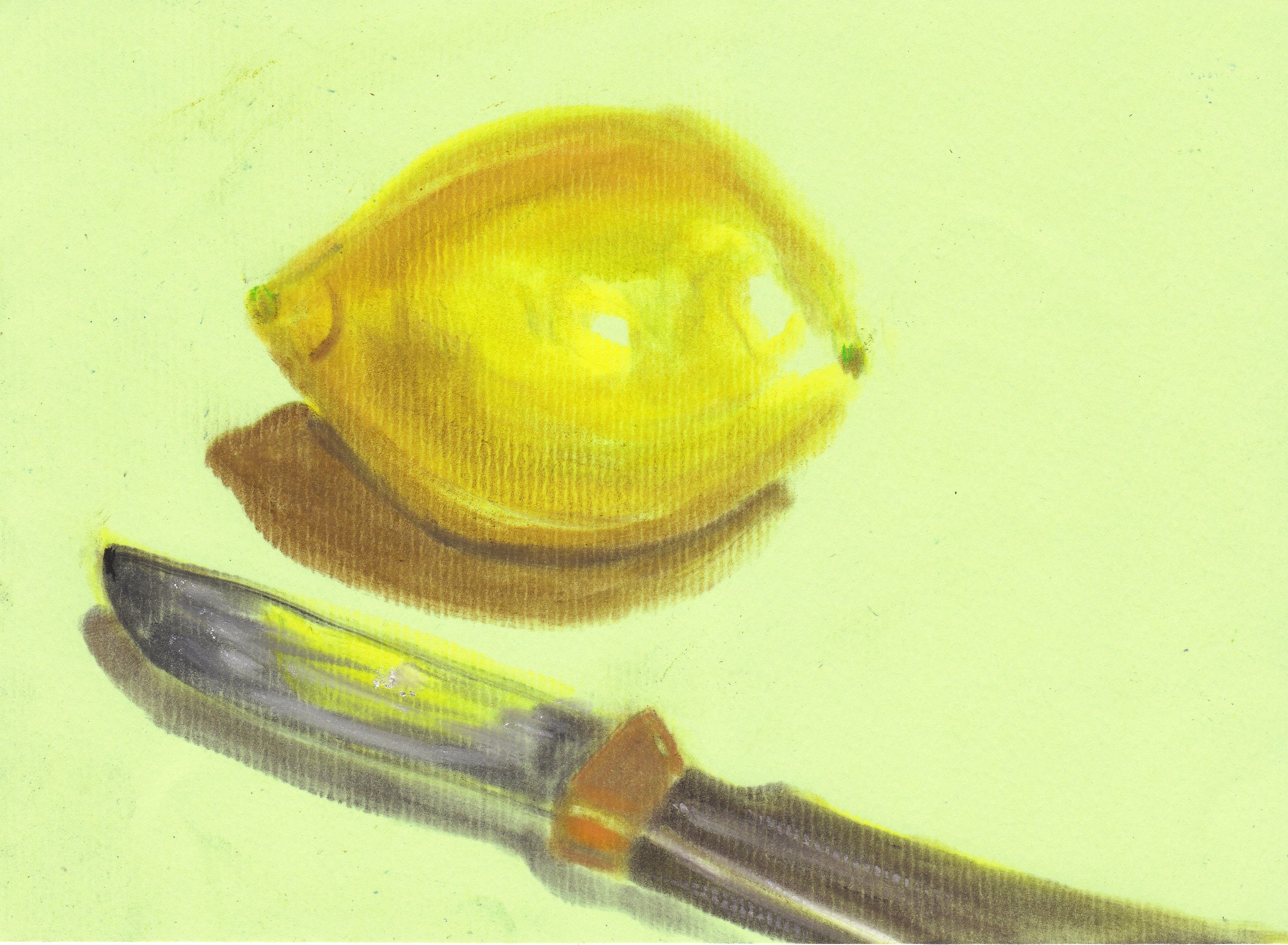
When I took up painting two years ago, I didn’t think still life would interest me. However, I gave it a go and found that I loved painting food. I had  an idea to paint recipes: that is, to paint the elements of a recipe before they became a meal. This idea evolved to include place settings and pre-dinner snacks—anything to do with food preparation, utensils or consumption in the home, in fact. Strangely, I have painted a knife in all of them!

CutMeFeb2011

“Cut Me” (above): This is the very first painting I did. It was with trepidation that I took up a paintbrush and loaded it with that wonderful vibrant red. I was pleased with the result, especially the way the knife turned out. It took me about 15 tries to get that reflection right!

Lemon and Knife

“Lemon and Knife” (above): This wasn’t really meant to be a painting at all, just a trial of my new PanPastels, which are a pastel medium pressed into small dishes and applied with sponges. This took me only about 15 minutes at the breakfast table one morning. The knife is special, as it was given to me by my late father when I was about 20. I have used it almost every day in the kitchen since then. As someone on an online art group I belong to commented: “Sometimes the simplest things are the best”.

OnlyOnHisDayOff

“Only On His Day Off” (above): Until recently, my husband worked evening shift five nights a week. On his days off, he loved to indulge in some red wine and accompanying snacks. The cloth is one I bought from Bali when I visited in 2005.

MakingSangria

“Making Sangria” (above): the ingredients for this classic Spanish drink are peaches, oranges, lemons, red wine and soda water. The red wine was sourced from a shop in Melbourne that stocks the right kind, and it was expensive! There is also usually sugar in the recipe, too, but I thought I had enough elements already.

Salad Niçoise

“Making Salad Niçoise” (above): For the ingredients of this French salad I bought a Spanish onion and bottled olives, Italian canned tuna and anchovies, and Australian extra virgin olive oil. You can also add capers to this salad. I used those fantastic green plastic souvenir salad servers sent to me by a friend in Auckland, New Zealand, plus a wonderful green glass platter given to me by a friend in Melbourne, Australia. Most of my paintings contain elements that are meaningful to me.

Cats I have known

Lucy Locket stars as "A Bookish Cat" in a pastel painting I did of her this week.

Lucy Locket stars as “A Bookish Cat” in a pastel painting I did of her this week.

I’ve always loved cats. I don’t know what it is about them, but I’m always happiest with a book, a cup of tea, and a cat. My current cat is Lucy Locket, named for the old English nursery rhyme, which may or may not be a flattering name for her, depending on how you interpret the poem. If I had a second cat, I’d call it Kitty Fisher. (You can read why here ). I did a portrait in pastels of Lucy Locket this week (above).

Anyway, Lucy Locket is an indoor cat, except for being allowed into our enclosed courtyard, because I have had several cats run over, and so has my husband, and we couldn’t bear for that to happen again. Lucy seems very happy and the vet says that, at six, she is in the prime of her life.

I wish my dad were still alive to meet Lucy Locket. I wonder if he’d give her one of his famous cat nicknames. When I was a baby, we had Button—who before I arrived had been treated like a baby and sat at the dinner table wearing a bib. When I was a pre-schooler, we had Bomb (who was smelly) and Loopy (who had one eye). Later, there were part-Abyssinians Abdul, always known as Ringtail, and Omar, known as Other One. Yes. Can you imagine calling them in from outside: “Ringtail! Other One!” Ridiculous.

At one stage, we had three cats at the same time, all of whom hated each other. Sandy was a big pale ginger tom who became Fat Ginger; Thin Grey’s real name was Kelly Jason; and Jawa (named after the creatures in the first Star Wars film) was a pitch-black tom who became Blackness and who lived for 16 years and moved from New Zealand to Australia with my parents. My aunty had an all-white cat that Dad always called White Fright (though I don’t think they called it that!).

I couldn’t have a cat of my own for years, because I was moving towns and countries and living in flats. But my flatmates often had cats. I remember in particular Aunty Huia, a small grey cat named after a TV character of the time. She was one of a menagerie at a flat in the rural town of Warkworth, New Zealand, where I was working as a journalist. We also had German short-haired pointers Apollo and Zeus, Bunny Bunny the rabbit, Casper the bird, many unnamed goldfish, and another cat whose name escapes me now but was something like Molly.

As an adult, I kept on the tradition of giving a cat a “proper” name, but also giving it nicknames. The exception was Patsy, my Abyssinian kitten who mysteriously went missing forever from our enclosed backyard at six months. She was named after Joanna Lumley’s character  in Absolutely Fabulous.

10 years ago, I had a beautiful Burmese cat named Mandalay, but I always called her Babette. She had a brush with celebrity when the famous Australian TV vet Dr Harry examined her when I was writing a magazine story about a clinic he was running. Explaining to me some of the faults in her breeding, he said, in the kindest way, “She’s a lovely cat, but she’ll never be best in show”. I replied, “Oh well, she’s best in Mummy’s show”.

Australian TV celebrity vet Dr Harry with Babette. His verdict: "A lovely cat, but she won't be best in show".

Australian TV celebrity vet Dr Harry with Babette. His verdict: “A lovely cat, but she won’t be best in show”.

At 18 months, Babette was bitten by a tiger snake and nearly died: but $900 worth of anti-venom saved her. Two weeks later, she was run over by a car and killed.

Mandalay/Babette’s successors, sibling half-feral moggies Peter (named for a friend) and Minky (for a Peter Sellers line in the Pink Panther film), became Boy and Schmink.

And Lucy Locket? She’s Punchinella (a variation of the Italian puppet Punchinello, but there is also a Jamaican children’s song called Punchinella Little Fella). Don’t ask me why I call her that; it just seems to fit.


Digital art versus traditional art media

The blogger known as Fish of Gold, who is an art director by profession but who is also an artist, was discussing how different in style her fine art is using traditional media such as charcoal and pencil, from the artwork she does using digital media (see more here). I am just an amateur artist, but I have noticed the same thing with my art. So, for example, here is a pastel painting I did of my brother’s dog, Maggie:

"Maggie", by Caron Dann, 2012.

“Maggie”, by Caron Dann, 2012.

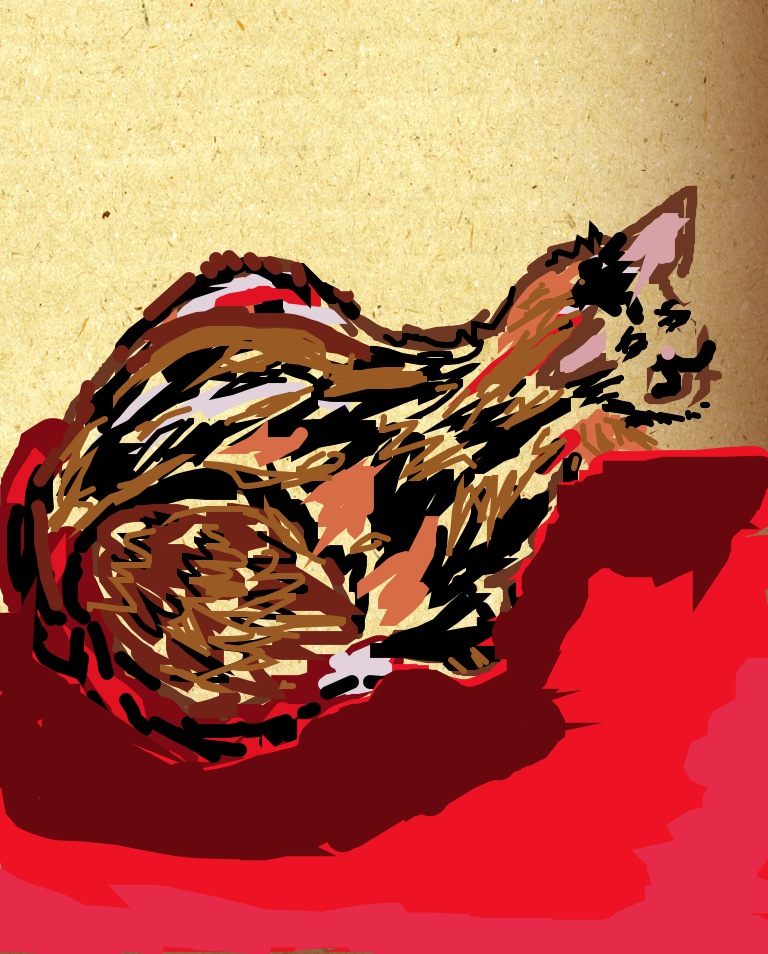
In comparison, have a look at how different this digital painting is, done with my finger on an iPad, depicting my cat, Lucy Locket:

Lucy Locket, digital painting by Caron Dann, 2012

“Lucy Locket”, digital painting by Caron Dann, 2012

Maggie took me weeks to do, but Lucy took me only about 15 minutes. Lots of people like the style of the Lucy painting better! I could get a similar result using paint if I used my fingers and not a brush, I guess. But I wouldn’t—painting to me is about brush work, sometimes fine brush work.

So, perhaps Marshall McLuhan was right in this regard, and the medium really is the message. (By the way, here is an interesting MM memorial website run by his family, I think: http://www.marshallmcluhan.com/).