Cooking, Grandma Style

I was reminiscing with one of my cousins recently about stuff our grandparents cooked for us in New Zealand. He remembered Grandad Freddy toasting Vogel’s classic mixed-grain bread, then spreading it with butter and, sparsely, with Vegemite (I’m a Marmite girl myself). As far as I know, this delicious bread is no longer available in Australia, so is but a memory to me now.

Just like Grandma used to make.

Just like Grandma used to make. Photo courtesy of  PDPhoto.org

We remembered what Grandad called “toad in the hole”, which was cutting a hole in a piece of bread, then frying it in a pan with an egg dropped into the centre. This was actually not the right name for it, as the real toad-in-the-hole is an English dish made of sausages and Yorkshire pudding batter.
Grandad would whistle while he was in the kitchen cooking. He always made breakfast, and when I lived with them for a year when I was 12 and 13, he also usually made my school lunch. He was a career army man, a Captain after fighting in the Korean War. When I lived with them, Grandad had retired from the army and was working as a clerk for the government department that was then known as Maori Affairs. I’m not sure what he did for them, as he never talked about his work.

Grandma Rita most often cooked the evening meal. I remember her cooking had much more salt, butter and cream in it than my parents’ cooking. She would mash a big pot of potatoes, adding an egg and some raw onion. I always liked mashed potatoes done this way, though my father, her son, did not. Grandma Rita also made tasty girdle scones, and cheese or currant scones baked in the oven. And rock cakes that were impossible to chew! Grandma also liked to make an apple crumble, or perhaps an apple pie with a fancy flower on top made of the leftover pastry pieces.

On the maternal side of my family, Nanna would make wonderful fluffy little pikelets, spread with jam. Also, she would carefully peel tomatoes so they were skinless—I still don’t like tomato skins—and put them on crackers spread with butter. She would sprinkle salt and pepper on them. These had to be eaten straight away, as she said, before the tomato made the crackers soggy.

Harking back to his family’s strong Scottish Highlands origins, my maternal grandfather, Grandad Mac, made porridge every morning, adding a pinch of salt, and believed it was the only suitable breakfast. He always got up very early —about 5am—and if he was staying with us, I would find my school shoes outside my bedroom door, gleaming with polish.

Before porridge was served, there was something better, something so simple but something I love to this day and sometimes still have as a treat: Grandad Mac would cut the crusts off a slice of fresh white bread, then spread it with butter. He would cut it into halves and bring it in to me with the first cup of tea of the day.  As a young person, I mostly drank coffee, but I liked the tea he made. Nowadays, I usually have tea, and my first morning cuppa always brings back memories of Grandad Mac.

When I was 19, I lived with my great-grandmother, my father’s grandma, for a year in Palmerston North while I attended Massey University. Great-Grandma Abbott always served dinner—she called it “tea”, as we did too when I was growing up—at 5pm. It was possible to have the plate kept in the warming drawer of the oven if you were late, but you were generally expected to sit and eat with the family at that time. She always told me off for not having sugar in my tea or coffee—“a girl needs a bit of sugar”—and for washing my hair too often—”I’ve never known a girl to wash her hair so much; it’s not healthy”. My reply? “Yes, Grandma”. One didn’t argue with her.

One afternoon I came home to find that tripe and onions in a white sauce were on the menu. I made some excuse and, to this day, still haven’t tried tripe, though I’m not a picky eater.

Great-grandma never got used to the electric stove. The old coal range on the farm had been far better to cook on, she said. She didn’t like the newfangled washing machine, either, even though she never had an automatic one, only one of those tubs with a wringer above it. Wooden boards in troughs of water had worked better, she said.

I asked her one day what had been her favourite time in her long life. She grinned and said she wished she were back on the farm in Waipukurau, Central Hawke’s Bay, “with all the boys” in the 1930s. She had had seven children, four boys and three girls, but one son had died in the Second World War and another of cancer, while her husband, my great-grandfather, the All Black Harold “Bunny” Abbott, had died about 10 years before I lived with her. She said she loved firing up the range on the farm, ready for the boys to come in from work for a big cooked breakfast at about 9am.

My great-grandmother in 1938 or early 1939 with "all the boys", including  my father as a toddler. Shortly after this, her son Harold (standing directly behind her), would be killed in World War II.

My great-grandmother in 1938 or early 1939 with “all the boys”, including my father as a toddler. Shortly after this, her son Harold (standing directly behind her), would be killed in World War II. My Grandma Rita is seated left, with Grandad Freddy standing behind her.

At Great-Grandma Abbott’s house, left-over meat from a roast was not put in the fridge, but in a meat safe in one of the cupboards. And soup would bubble away on the stove for days, added to from time to time with various leftovers. I can’t remember any of us getting food poisoning.

There was no pasta or rice to be had in my great-grandmother’s house, or even in my grandparents’ houses. I wonder what they’d make of our multi-cultural cuisine these days: one night we might have Thai-style food, the next Italian, Greek, Malaysian, Chinese, Fijian, Spanish, Colombian, or Japanese.

While my grandparents and great-grandparents cooked tried-and-true recipes handed down through generations, we are constantly trying new cuisines—it’s a very different approach to home cooking. Mind you, I still have my old favourites that I’ve been making for many years. But that’s a post for another day.

Through a glass, darkly: the strangest house in my suburb

Glasshouse4I’ve been watching with great interest as this house has risen out of a very small block in my Melbourne suburb of Northcote. All the other houses in the street are period styles, mostly Victorian and mostly renovated. I suspect most have a heritage overlay and have to keep their frontage in line with the original style.

Glasshouse 5

So this new glass house looks bizarre in the street. I actually quite like it—for a raised location with coastal or city or botanical garden or river views. But this street is in a dip. The only views are of the road and the neighbours’ houses. Also, the houses are all close together in this street: if you lived in the glass house, you would have to keep your blinds closed day and night, unless you wanted everyone to be able to look in on you. Then again, perhaps it will be a Big Brother-like experiment.

It’s surprising that the council approved the plans—usually people in streets of renovated Victorian houses seem to want everyone else to adhere to their style too and would have complained when given the opportunity.

On the other hand, shouldn’t you be able to build whatever you like on your own property? And what’s wrong with being a little (or a lot) different to others? It reminds me of this wonderful piece of needlework a friend made for me:

Yourself

I’d be interested in readers’ opinions. Do you think this house is exciting and innovative, or just wrong? You be the judge.

The secret to writing a bestseller

In his ground-breaking 2006 novel J-Pod, Douglas Coupland reveals on the second-to-last page a recipe for writing books people will want to read:

“Yesirree, nothing could possibly go wrong with everything being so good.

“But of course, in books, good is boring.

“Good is a snoozer.

“Good makes people close the covers and never reopen them.”

—Douglas Coupland 2006, J-Pod, Bloomsbury, London, p.448

These words are posted in response to this week’s  Trifextra Reading Challenge, which asked participants to find a 33-word quotation of great writing they admire. If you want to join the challenge, you can find the link here.

If you think about your favourite books, very few—if any—of them will be all about happy events. The interest comes from tension, adversity, bad luck, conflict, bad choices, addiction, indulging in any of the seven deadly sins and so on. In fact, a happy ending is only so when there’s been a lot of unhappiness along the way.

Cats I have known

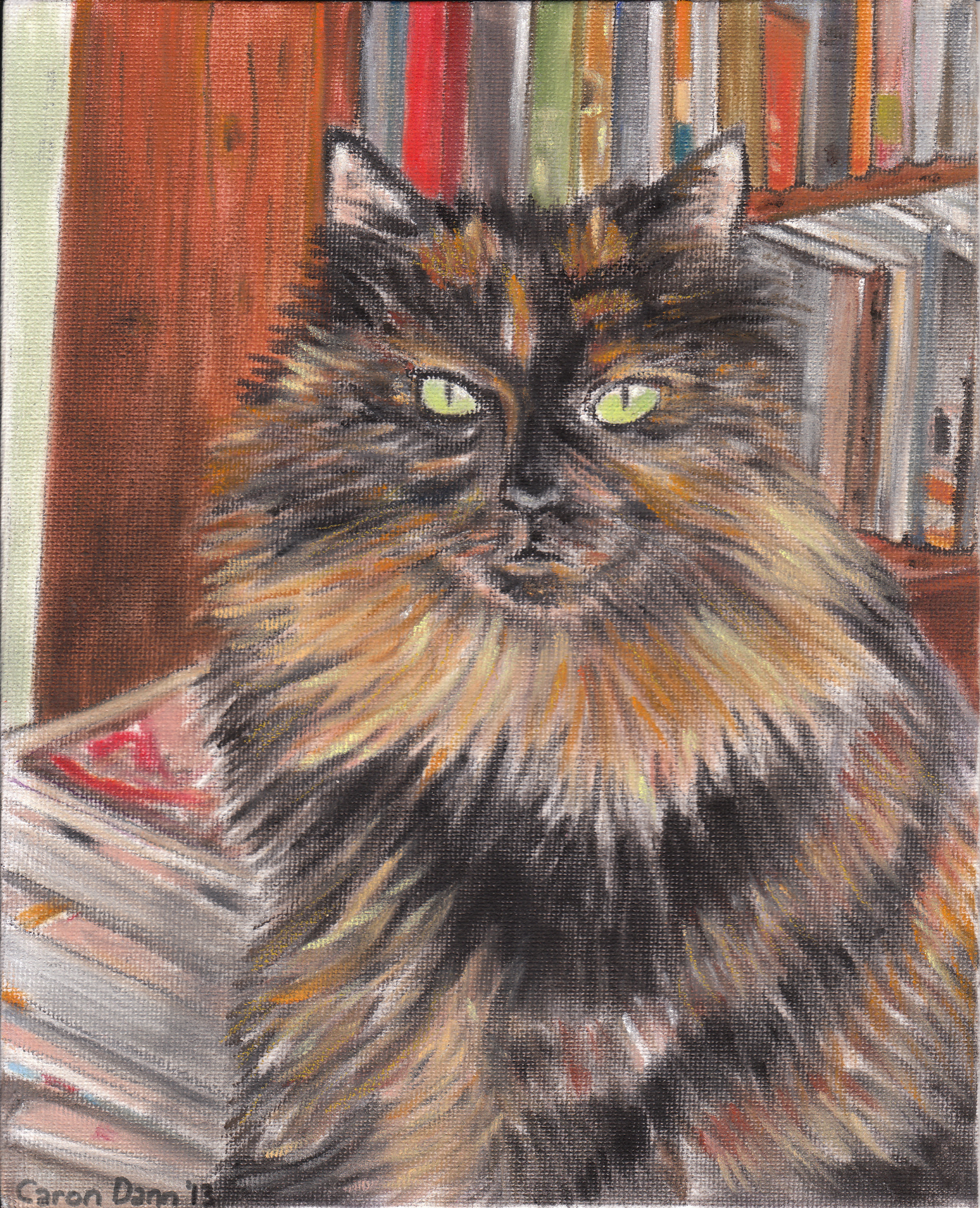
Lucy Locket stars as "A Bookish Cat" in a pastel painting I did of her this week.

Lucy Locket stars as “A Bookish Cat” in a pastel painting I did of her this week.

I’ve always loved cats. I don’t know what it is about them, but I’m always happiest with a book, a cup of tea, and a cat. My current cat is Lucy Locket, named for the old English nursery rhyme, which may or may not be a flattering name for her, depending on how you interpret the poem. If I had a second cat, I’d call it Kitty Fisher. (You can read why here ). I did a portrait in pastels of Lucy Locket this week (above).

Anyway, Lucy Locket is an indoor cat, except for being allowed into our enclosed courtyard, because I have had several cats run over, and so has my husband, and we couldn’t bear for that to happen again. Lucy seems very happy and the vet says that, at six, she is in the prime of her life.

I wish my dad were still alive to meet Lucy Locket. I wonder if he’d give her one of his famous cat nicknames. When I was a baby, we had Button—who before I arrived had been treated like a baby and sat at the dinner table wearing a bib. When I was a pre-schooler, we had Bomb (who was smelly) and Loopy (who had one eye). Later, there were part-Abyssinians Abdul, always known as Ringtail, and Omar, known as Other One. Yes. Can you imagine calling them in from outside: “Ringtail! Other One!” Ridiculous.

At one stage, we had three cats at the same time, all of whom hated each other. Sandy was a big pale ginger tom who became Fat Ginger; Thin Grey’s real name was Kelly Jason; and Jawa (named after the creatures in the first Star Wars film) was a pitch-black tom who became Blackness and who lived for 16 years and moved from New Zealand to Australia with my parents. My aunty had an all-white cat that Dad always called White Fright (though I don’t think they called it that!).

I couldn’t have a cat of my own for years, because I was moving towns and countries and living in flats. But my flatmates often had cats. I remember in particular Aunty Huia, a small grey cat named after a TV character of the time. She was one of a menagerie at a flat in the rural town of Warkworth, New Zealand, where I was working as a journalist. We also had German short-haired pointers Apollo and Zeus, Bunny Bunny the rabbit, Casper the bird, many unnamed goldfish, and another cat whose name escapes me now but was something like Molly.

As an adult, I kept on the tradition of giving a cat a “proper” name, but also giving it nicknames. The exception was Patsy, my Abyssinian kitten who mysteriously went missing forever from our enclosed backyard at six months. She was named after Joanna Lumley’s character  in Absolutely Fabulous.

10 years ago, I had a beautiful Burmese cat named Mandalay, but I always called her Babette. She had a brush with celebrity when the famous Australian TV vet Dr Harry examined her when I was writing a magazine story about a clinic he was running. Explaining to me some of the faults in her breeding, he said, in the kindest way, “She’s a lovely cat, but she’ll never be best in show”. I replied, “Oh well, she’s best in Mummy’s show”.

Australian TV celebrity vet Dr Harry with Babette. His verdict: "A lovely cat, but she won't be best in show".

Australian TV celebrity vet Dr Harry with Babette. His verdict: “A lovely cat, but she won’t be best in show”.

At 18 months, Babette was bitten by a tiger snake and nearly died: but $900 worth of anti-venom saved her. Two weeks later, she was run over by a car and killed.

Mandalay/Babette’s successors, sibling half-feral moggies Peter (named for a friend) and Minky (for a Peter Sellers line in the Pink Panther film), became Boy and Schmink.

And Lucy Locket? She’s Punchinella (a variation of the Italian puppet Punchinello, but there is also a Jamaican children’s song called Punchinella Little Fella). Don’t ask me why I call her that; it just seems to fit.


Weekly Writing Challenge: the great ebook versus pbook debate

Over at The Daily Post,  They’re having a debate about ebooks versus printed books. There’s been so much talk about how printed books are doomed, that there’s a danger this  could become a self-fulfilling prophecy.
Now, I am both a bibliophile and a bookworm. I have loved books for as long as I can remember. I also love new technology and, since 2008, have made a concerted effort to keep up with it. I love my Mac, iPhone, iPad and Kindle and I learn something new about them every day.

kindle
Well, I don’t learn so much about the Kindle, because there’s not much to learn: and that’s the way I like it. I have the old-style one with the keyboard, bought in 2010, from memory. My husband has a new one with a touch screen and virtual keyboard.
I have to say, I like mine better. The touch screen is annoying because you can suddenly touch the wrong thing and lose your page. The virtual keyboard is harder to use. Not that I use the keyboard much. My Kindle is for reading—not for games, emails, Facebook or surfing the net. Just reading.
That pretty much makes my Kindle just like a real book, only weighing less. When I first got it, I thought I would miss the physicality of a printed book. But that’s only a peripheral thing. Once I start reading, and lose myself in a book, the medium doesn’t matter; I forget about the medium entirely, unless it’s obtrusive or clunky.
If I turn my iPad to airplane mode, I can read comfortably on it. Ditto, even the iPhone—excellent for commuter trains when you can’t get a seat and have to stand.
HOWEVER—and it’s in upper case because it’s a big however—I still like printed books. The book, to my mind, is one of few things in the world that I call a perfect invention: that is, it’s not necessary to improve upon it.
The printed book is portable (more or less, depending), doesn’t need batteries, and is very durable.

As a young journalist, I wormed my way into a position of literary editor of the then-Sunday Star newspaper in Auckland. I interviewed Jeffrey—now Lord—Archer (a hilarious story for another time). I asked him to sign my copy of his latest paperback, First Among Equals, which he did.
Then my flatmate asked to borrow the book and took it away camping. When he brought it back, he apologised for its condition, explaining that he’d dropped it into a puddle. Because of the autograph, I still have that paperback 28 years later: it is a wreck, but it’s still readable, and none of the pages is even loose.

Archer, Crayon Files
Another reason the printed book is a perfect invention, is that it’s not seen as a security risk. You can read it anywhere, any time (unless it’s a banned book, of course). I love my Kindle for journeys, because it means I can travel lighter—and buy more books while I’m away. BUT, I still have to take a book for planes, for landing and taking off when electronic devices must be turned off.
Another perfect invention that has not been superseded by new technology is the transistor radio. This is because the batteries last forever, radios are comparatively cheap to buy, and you can listen all day and night for free. Despite all my expensive, high-tech devices, I still have a portable radio in my bathroom. It’s simple, cheap to run and it always works.
radio
It seems that whenever a new medium becomes popular, lots of people think the old medium will disappear. While sometimes this is true: the telegram, for example, was largely trumped by more convenient and cheaper phone and email services. I was surprised though, in the course of researching this post, to discover that some countries still offer telegram services, although Australia’s closed in 2011. New Zealand closed its service in 1999 but reopened it in 2003 for business customers: apparently, it’s useful for debt collection services.

But there are a lot of old media that have not been superseded by the new.  My mother says that when she was young, everyone thought TV would spell the end of films and that all the cinemas would close down. This didn’t happen.

Similarly, live theatre didn’t die when film came along, video didn’t kill the radio, digital music didn’t kill vinyl. The latter is the most interesting of all. It was said that cassettes and the “indestructible” (ha ha, what a lie) CD would put paid to vinyl records. But now, the cassette is dead, CDs are on their way out, and vinyl is back in a huge way.

What happens is that the old medium changes to accommodate the new. So, for example, we no longer have news reels before movies at the cinema.

I believe that ereaders and printed books can continue to exist side by side.
How great for students to be able to get electronic text books, which are so much cheaper and easier to carry than the printed versions.
For myself, I prefer text books and academic texts in printed form. This is because I’m constantly looking up notes, indexes and other references, and often have seven or eight books on the floor beside my desk, all open at different pages. Even though I’ve got a huge screen on my Mac desktop, I can’t quite emulate the convenience of my books-on-the-floor method.

Aesthetics is another reason printed books will remain: the world is full of collectors, and showing someone your collection of ebooks isn’t quite the same as showing them your collection of 200 vintage books on Thailand, as I have.

So let’s agree to live and let live: ebooks and printed books side by side in glorious harmony.

Digital art versus traditional art media

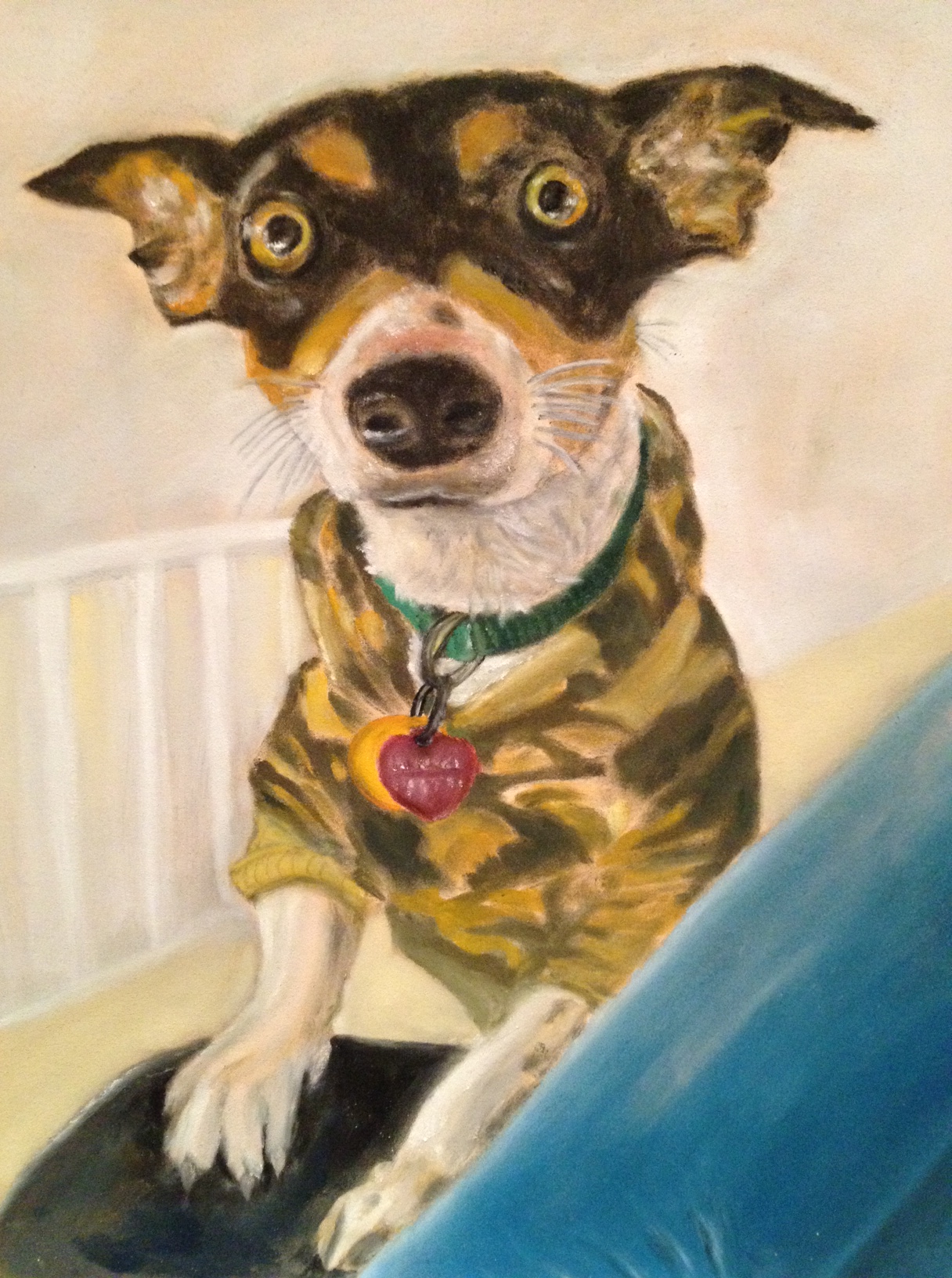
The blogger known as Fish of Gold, who is an art director by profession but who is also an artist, was discussing how different in style her fine art is using traditional media such as charcoal and pencil, from the artwork she does using digital media (see more here). I am just an amateur artist, but I have noticed the same thing with my art. So, for example, here is a pastel painting I did of my brother’s dog, Maggie:

"Maggie", by Caron Dann, 2012.

“Maggie”, by Caron Dann, 2012.

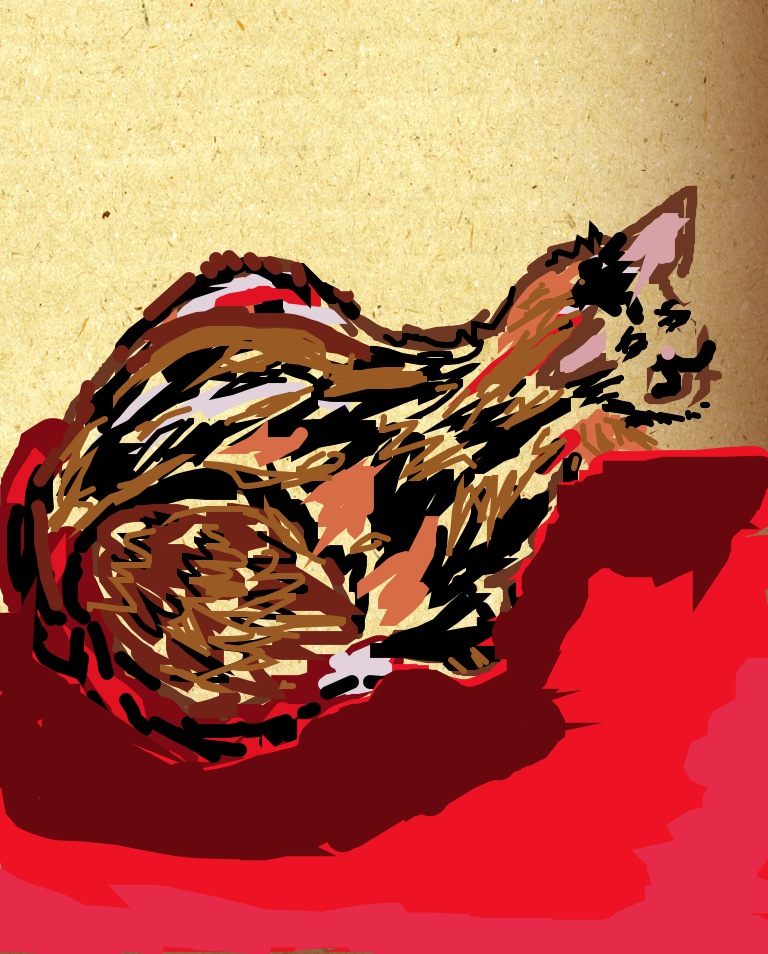
In comparison, have a look at how different this digital painting is, done with my finger on an iPad, depicting my cat, Lucy Locket:

Lucy Locket, digital painting by Caron Dann, 2012

“Lucy Locket”, digital painting by Caron Dann, 2012

Maggie took me weeks to do, but Lucy took me only about 15 minutes. Lots of people like the style of the Lucy painting better! I could get a similar result using paint if I used my fingers and not a brush, I guess. But I wouldn’t—painting to me is about brush work, sometimes fine brush work.

So, perhaps Marshall McLuhan was right in this regard, and the medium really is the message. (By the way, here is an interesting MM memorial website run by his family, I think: http://www.marshallmcluhan.com/).

My Brilliant Careers

Well, that’s what I’d like to think, with a nod to the famous Australian book, My Brilliant Career, by Miles Franklin.
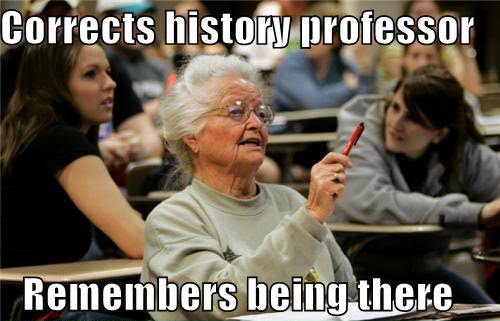
In reply to The Retiring Sort’s Future Challenge post about second and third careers  (which you can read more about here), I am much in favour of them. Gone (mostly) are the days when someone retired at a set age and expected to die a few years later of old age. People are starting new careers in their 40s, 50s, 60s and older.

CorrectsHistoryProfessor-RemembersBeingThere
It’s exciting to think, for example, that one of New Zealand’s best selling authors, Jenny Pattrick, did not have her first novel, The Denniston Rose, published until she was in her 60s. Now well into her 70s, she’s still going strong. Before she was a novelist, she had a long career as a jeweller.
The great British novelist P. D. James, now aged 92, did not have her first novel published until she was in her early 40s, and did not give up her career as a hospital administrator until she was 48.
After a couple of decades as a journalist, I did a PhD in literary studies in my 40s and have worked for five years as a university lecturer in media studies.
But it’s hard to get an ongoing position in this field: perhaps harder than it is to get a full-time journalism position these days. So I could be heading for a third career—I’m thinking I might become a secondary school teacher. That would require me to get a diploma, which would take two years part-time.
What I’d most like to do, of course, is be a full-time writer, instead of having to write in my “spare” time. I’ve already had two books published and I’d dearly like to do a third. Perhaps this will be my next career. I once asked my late father, who was a dentist, what career he would choose above all others if he had the talent to do anything. He replied that he’d be a best-selling novelist, because he could be famous without being recognised in the street (debatable though in these days of modern media). Unfortunately for him, he couldn’t write fiction.
I know many people in their 50s and older who are sick of the career they have chosen—because it has changed so much, because there is ageism in it, or because there is a drive to employ cheaper staff and casuals. I urge them to think about what they would like to do, to plan for it, retrain and take up something new. It took me five years to get my PhD while working full-time for most of the duration, but I’m very glad I did it.
Even if gaining a qualification doesn’t lead directly to a job, the sense of satisfaction involved is worth its weight in gold.

What’s In a Name?

A few people have asked me to explain the title of my blog, The Crayon Files. It actually evolved from an apt nickname someone once gave me.
My first name, Caron, is a French surname (as in Leslie Caron, the dancer and star of Gigi, for whom I was named).

I’ve been writing constantly since I knew how. When I was a journalist, I always scribbled down my notes in shorthand. I worked for years in the 1990s at a tabloid TV magazine that had a big youth readership. During that time, I appeared in an ABC (Australian Broadcasting Corporation) series for children titled Writers and their World, or something similar.  I had thought it would be an innocuous little show screened during the day and forgotten. But the power of TV in those days was extraordinary. The series was shown during the day all right, but loads of children, their parents and teachers tuned in, and it was repeated for years. I was even recognised in the street! “Are you on TV?” a stranger asked me one day. “No,” I replied, truthfully I thought. “Well if you’re not, you’re a dead ringer for that girl on that show about writers,” he said. I had to then sheepishly admit that it was me after all. A local shopkeeper recognised me too.
Then the funniest part: I was then our magazine’s reporter for one of Australia’s highest rating shows, so the cast knew me well. So, one day, they were in the makeup room preparing for the day’s shooting. There was a TV in the room, which was tuned not to their own network but to the ABC.
Up pops Caron on the writers’ show episode. “Oh look,” said a cast member, one of the country’s best known actors and a writer himself now, “It’s Crayon”.
The name stuck, and quite a few colleagues called me Crayon for years—one still does.

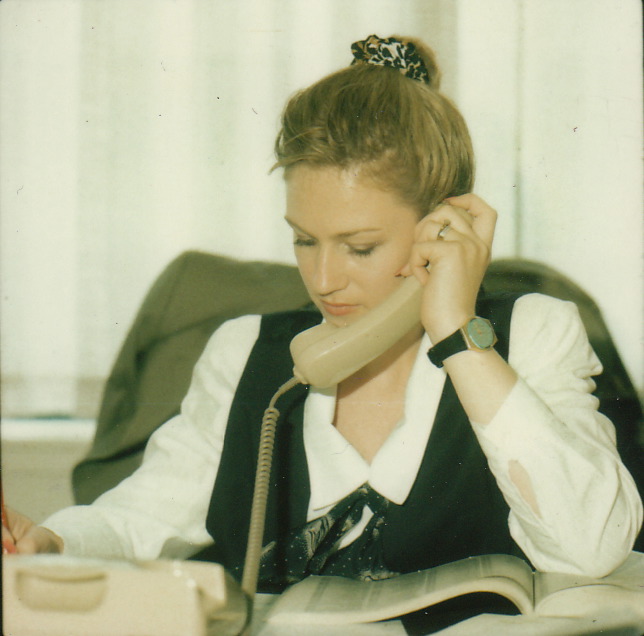
Crayon-to-be: Caron at work at the magazine in 1990, about six years before the "Crayon" nickname came about.

Crayon-to-be: Caron at work at the magazine in 1990, about six years before the “Crayon” nickname came about.

I’ve also been nicknamed C.J., after my then initials, which morphed to Siege; and Biddle, by my parents when I was a baby, because I used to say “Biddle, biddle biddle” when I got frustrated.
Most people have had at least one nickname in their time—some stick and some don’t. If you’re Thai, you most likely use your nickname for all but the most formal of occasions.

I’d love to hear some of your nicknames and how they came about.

Writer’s Diary #4: Build a bridge and find your inner engineer

An engineer taught me to write. I tell this story to anyone who asks me for advice about writing.

Years ago, when I was struggling to start writing my novel, The Occidentals, a structural engineer of close acquaintance told me that, in his mind, writing was fundamentally the same thing as building a segmental bridge.

At the time, this accomplished young engineer was working on a big elevated expressway that required thousands of prefabricated concrete segments to be precast off-site and then trucked in piece by piece. We would see the trucks, trundling along and not elegant at all, taking up space on the road and disturbing the traffic.

In its entirety, the engineer said, the project seemed vast and overwhelming. But once the design, construction plan and calculations were done, it was better to manage the project day by day than to think of it as a whole. So, he had goals for how many segments needed to be completed daily and weekly, in order to finish the project on time. As he explained, eventually, if you meet your target most days (and use others to make up ground), you have your finished bridge, ready for the public.

So, he said, he reckoned that if you attacked the writing of a novel the same way, you’d soon have your completed manuscript. Think about how many chapters (segments) you want and about how many pages will be in each. Set a deadline and work out how many chapters you want to finish a month. Perhaps you have 20 chapters and you will do two a month of about 20 pages each. Thus, you must write 10 pages a week. You have Saturday and two evenings a week to devote to writing. So, say, each Saturday you will commit to writing four pages, and each available evening to three pages.

After 10 months, you will have your completed 400-page manuscript, ready for the next stage, editing.

I’ve been thinking about this advice again, lately. I think there are more similarities between bridges and books than just a work ethic. Both bridges and books are more than the sum of their parts. When you look at a beautiful bridge like this…

The completed Pierre Pflimlin Bridge, which was opened in 2002.

The Pierre Pflimlin Bridge, opened in 2002, over the Rhine.

…you probably don’t think about the concrete, water, labour, segments and so on that made it, unless you’re an engineer. In other words, you don’t think of it under construction, like this:

Construction of the segmental Pierre Pflimlin Bridge over the Rhine in 2001. The bridge was opened in 2002.

Construction of the segmental Pierre Pflimlin Bridge in 2001.

Similarly, when a book is published, readers don’t think much about the blood, sweat and tears the author went through, first to write it at all, and second to get it published. Nor do they consider the work of the publisher in taking the novel from manuscript to book. A good book is, rather, a thing of beauty, a work of art, and like a bridge, a symbol of humankind’s infinite creative capabilities.

A monologue in Shakespeare’s Hamlet comes to mind here:

What a piece of work is a man! how noble in reason!  how infinite in faculty! in form and moving how express and admirable! in action how like an angel!

[The Tragedy of Hamlet, Prince of Denmark, Act II, scene II. Text presented following the First Folio, 1623; published by Rex Library, 1973.]


Travel Theme: Walls

In response to a theme suggested by Where’s my backpack?

I’m fascinated by walls. I like brick, stone, glass and wooden walls, and I especially like tiled walls. I like walls with wallpaper from the 1960s and 1970s, and from Victorian times. I like crumbling ancient temple walls and glittering Thai palace walls. I’ve taken lots of photos of walls, and I’ve begun to feature walls in my artwork inspired by these photos.

This one is of an ancient wall at the temple ruins of the old capital of Thailand, Ayutthaya (1350-1767). It’s a miniature, the size of a business card, and is part of a set of four I did of temple walls and windows in Thailand.

Ayutthaya-1

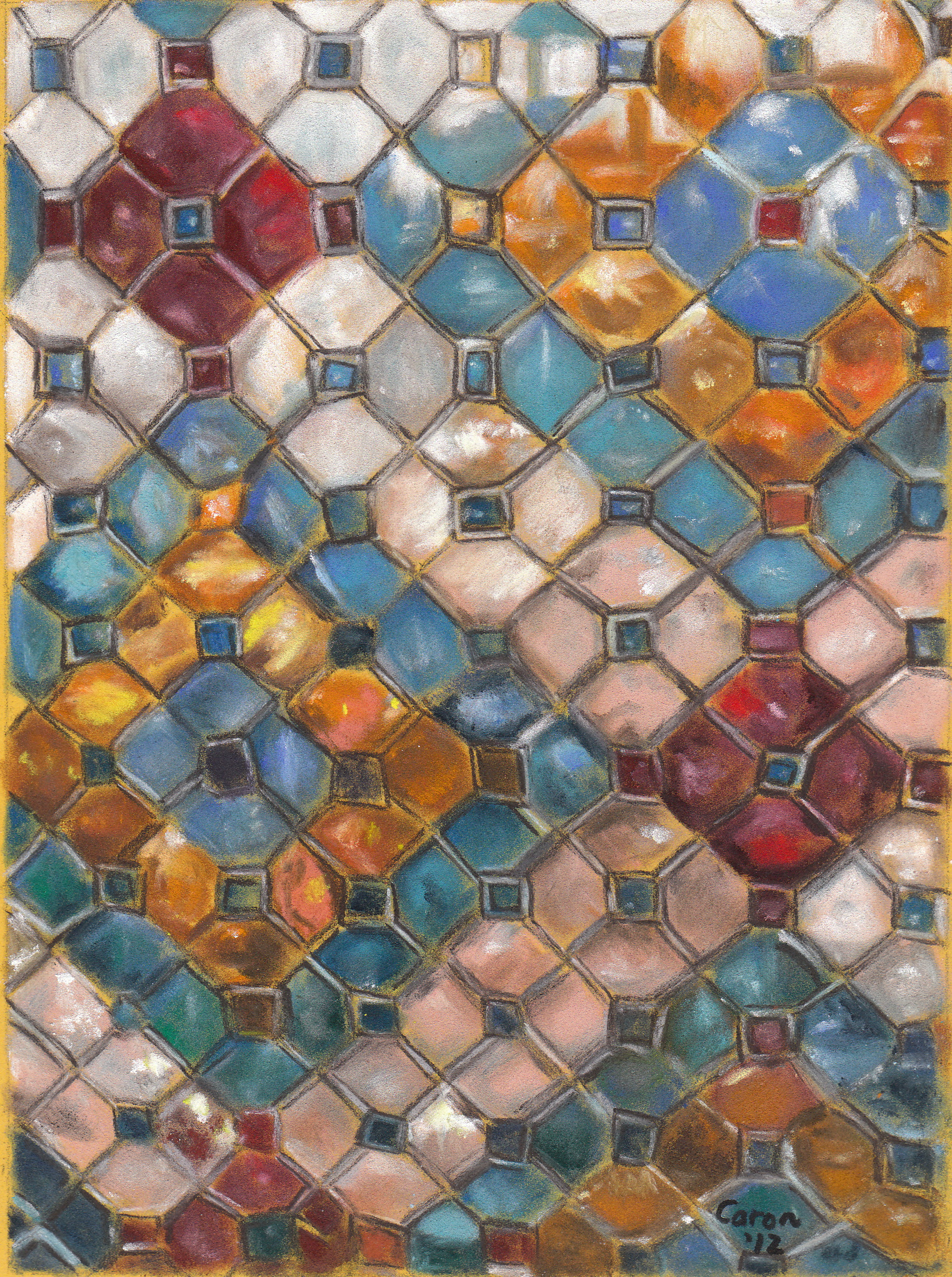
In November last year, I visited the Grand Palace in Bangkok for the first time in 11 years. This is a pastel painting I did depicting part of a tiled wall at a temple within the palace grounds.

GrandPalace


The physicality of walls as man-made structures pervades most cultures—so much so, that when there are no walls, or when walls are knocked down or fall down, it is something to be remarked upon. Walls can keep enemies out, imprison those within, or conceal secrets. Walls are the key to privacy in the modern era, in which access to personal privacy has become paramount.

In pondering the significance of the wall across various cultures, I came up with these lists:

Geographical locations

Great Wall, China

Berlin Wall, Germany

City walls to keep out invaders, eg Chiang Mai, York

Wall St, US

Hadrian’s Wall, UK

Maginot Line, France

Western Wall (Wailing Wall), Israel

Wall of Remembrance, Australian War Memorial, Canberra


Virtual Walls

Facebook wall

The Virtual Wall Vietnam Veterans Memorial

The Virtual Wall of Fame to celebrate Manny’s music shop in New York, the “original music superstore”, 1935-2009.

Remembering Our Fallen: The Virtual Wall of Remembrance for US service people in all conflicts

Woolworths Australia’s Virtual Walls for Christmas

US-Mexico virtual-wall border


English usage of the word “wall”

Interestingly, many languages differentiate between exterior walls and interior walls, but English does not.

“If these walls could talk…”

“The walls have ears”

Wallflower

Wall eye

Wall of fire

Wall of water

To drive someone up the wall

To hit the wall

Wall of sorrow

Wall of shame

Wall of fame

Wall of honour

To put up (psychological) walls

Wall-to-wall, as in carpet, but also TV coverage

Off the wall

To bang one’s head against the wall

To have one’s back to the wall

To take something (such as a business) to the wall

Climbing the walls

Hole-in-the-wall bar

Sea wall

Fly-on-the-wall

Stone-walled

Wall hanging

Wallpaper