Recreationist Theory

GrandCanyon

This post is written in response to Kozo’s monthly peace challenge at everyday gurus

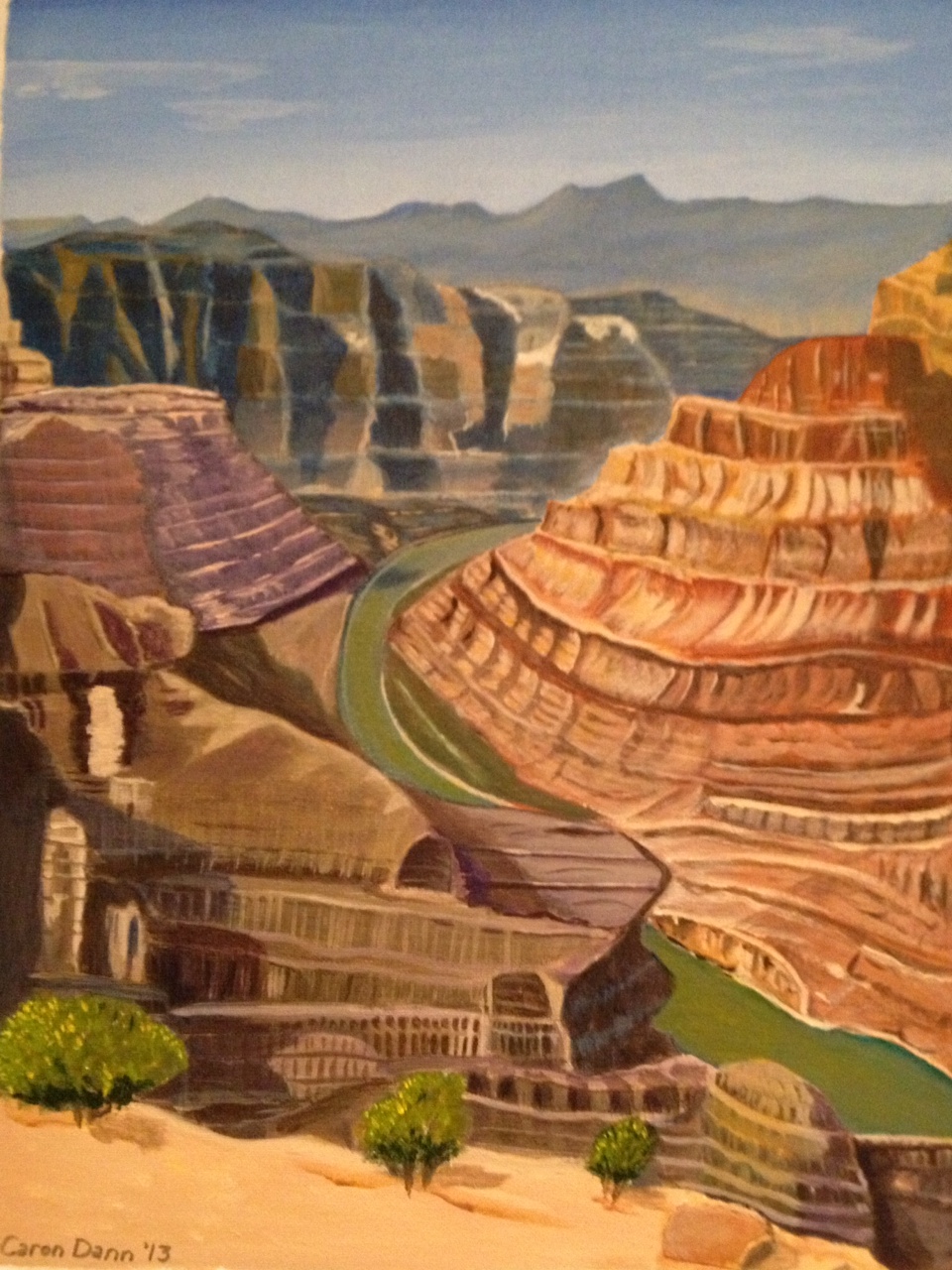
When I was about 10 and living in Los Angeles, my parents took me and my brother to Arizona to see the Grand Canyon. Though we came from New Zealand, a land of majestic and awesome scenery, we were aghast at the sheer size of the canyon. When I first got out of the car, for some reason I thought that in front of me was a giant billboard painting, it looked so surreal. “No, it isn’t a painting,” my mother replied. “It’s real.”

I now live in Australia, but I went back to see the Grand Canyon in 2009. You know how when you’re a child, things look enormous, and then when you revisit as an adult, they look so much smaller? This was NOT one of those moments. The big GC was every bit as magnificent as I remembered.

More recently, I saw a remarkable documentary series on America’s national parks, then I found the photos I had taken on the last trip, and I was inspired to try to paint the Grand Canyon as I’d seen it in my mind’s eye as a child.

I am a novice painter and the Grand Canyon is notoriously difficult to paint, but whether the painting is any good or not is irrelevant, really. The point is, the Grand Canyon reminds us of the great beauty in nature that we should be celebrating every day. Painting the Grand Canyon was a creative challenge that I set myself and which took concentration and effort, and trying some bits again and again.

This, I believe, is how creativity can help make a more peaceful world. When you are trying to create or recreate something beautiful, whether it be in an image or in words, whether a piece of writing, a painting, a photo, a sculpture, a garden or a hundred other things, your mind becomes peaceful and focused on the task.

Perhaps it is something to do with that idiom, “Idle hands make the devil’s work”.

Back to Burma

These are the best photographs I’ve ever seen of Burma, magnificent in their composition, their juxtapositioning, and in capturing the moment. I walked into Burma from Thailand in the 1990s for a day, but these make me want to go back and take a proper look.

Life in the fast lane or, revenge of the madding crowd

Platform 1, Flinders St station: Yes, it's 7.55am and I am rushing to my second train connection of the day. Picture: Caron Dann

Platform 1, Flinders St station: Yes, it’s 7.55am and I am rushing to my second train connection of the day. Picture: Caron Dann

I thought I had left the rat race behind years ago. But for the last month or so, I have found myself having to travel to work with all the other madly scurrying rodents who must be at their desks before 9am.

I have to take two trains and a bus to get to work. It’s better than driving in peak traffic though, and parking would cost me more than $100 a week, not to mention petrol. Public transport costs me a mere $30, and for some of the journeys I can get a seat and get emails done or do some reading.

Although I live in a big city, I’ve had the luxury over the past eight years or so of being able to work from home a fair bit, or being able to travel out of peak hour to work.

When I do have to be at work early—which is four days out of five at the moment—it always astounds me just how many people there are everywhere, all trudging off to work at pretty much the same time. As they march off the train to the exits, tickets in hand to “touch off” through the gates, there’s a rhythmical stamp to their progress.

In my teens, I visited Melbourne, Australia, and was entranced by life there in what I saw as the fast lane. When I was in my mid-20s, I left New Zealand to live in Melbourne. I loved the thought of being a city worker. I felt cosmopolitan, sophisticated, excited and energised by the throngs of people, the sky scrapers and the daily rush.

St Paul's Cathedral, Melbourne CBD, 1981: scenes like this impressed me enough as a teenager to make me move to Melbourne in my 20s.

St Paul’s Cathedral, Melbourne CBD, 1981: scenes like this impressed me enough as a teenager to make me move to Melbourne in my 20s.

I got a job in corporate publications at the HQ of a big bank in one of those city sky scrapers. It made me feel very “New York” when I’d get a takeaway coffee and raisin toast or a doughnut for breakfast (I could eat such things in those days). From my 23rd-floor office, I had a sweeping view of the city.

In the 1990s, I went to live in a much bigger city, Bangkok, and revelled in its great mix of culture, history, modernity and tradition.

In the 2000s, I was based in the small seaside town of Sorrento (Victoria, Australia, not Italy!). Whenever I had to go to Melbourne, the noise of the crowds and the traffic would accost my ears and I would wish to go home immediately.

I’ll never forget one fine Friday afternoon in Sorrento. I was out on a boat with some friends, and we were fishing, the three of us lolling on the deck, cutting up bait and drinking tea from a thermos. The sea was like glass, and all we could hear was its gentle lapping against the boat. On the horizon, we could just see the hazy cityscape of Melbourne. My friend squinted towards it: “There are people in all those buildings, sitting at desks and working as we speak,” he said. “Glad I’m here.” And we went back to our fishing, with no more than the thought of fresh King George whiting for dinner on our minds and whether or not to put parmesan in the crumb.

Now, I live quite close to the city centre (16 minutes by train), but far enough away that I can’t see or hear it. I can still appreciate a great CBD: a night-time skyline, cathedrals, beautiful book stores, the perfect coffee. But the daily drudgery of having to queue up, push, rush, open bags for security, have tickets checked, and so on leaves me cold. And don’t get me started about rudeness, aggression, people who don’t keep left up stair wells and round corners, and people who rush past you to grab a seat before you get it.

When I go to a city, I’d like it to be not because I have to travel through it at some ungodly hour for work, but because I’m visiting to sample all it has to offer. And therefore, it wouldn’t be at peak times. Count me out of the rat race.
New York, 1968: “Love, Daddy”

NY1968 NY1968_0001

My mother recently gave me some old cards and letters she’d kept, and among them was this wonderful postcard that my late father had sent me when I was a little girl, in 1968. Dad was in the New Zealand army, but we were living in England where he was doing some research at York University, and he had gone to New York on business. This might well be the first piece of mail I ever received addressed to me personally.

It is dated 24.6.68, and he writes:

Dear Caron,

My hotel is just along the road from this big building, and after lunch today, I am going to go right up to the top. I will take some movies, and you will be able to see them when I get home. Love, Daddy.

It reminded me of a much earlier letter I have, from another father to his young child. It is addressed to “My dear little man”, and it was written by my grandfather, Captain Freddy Eastgate, to his son, my father Harold Eastgate (later Captain as well). Dad was 5 when this letter was written to him by his dad, who was a career army man. Years after this letter was born, my grandfather would be away for seven years at the Korean War and with the army in Japan.

MyDearLittleMan

Hut 150
Trentham M. C.
Saturday 16-5-42
My Dear Little Man,
I thought you would be almost better by now. I sent you a small parcel last Sunday but it doesn’t seem to have arrived there yet. There is nothing in the camp much to buy or send to little boys. I hope you are getting better. Try and be a good boy and help Mummy as much as you can. I am going to try and get home to see you next week end. You try and get better by then aye.
Cheerio for now.
Lots & lots of love from
Daddy xxxxxx

I wonder now what was in the parcel and if Dad received it. Dad kept quite a few things from when he was young, so it’s possible whatever it was is still among his possessions, most of which my mother kept.

Thailand in my bookcase

Here’s a link to a guest post I have done this week for Novel Adventurers. I really enjoyed writing this post describing my collection of books about Thailand. Enjoy!

My Thailand book collection

Industrial Ballet

This post is written in response to A Word A Week Challenge: Industrial, which you can see more of here.

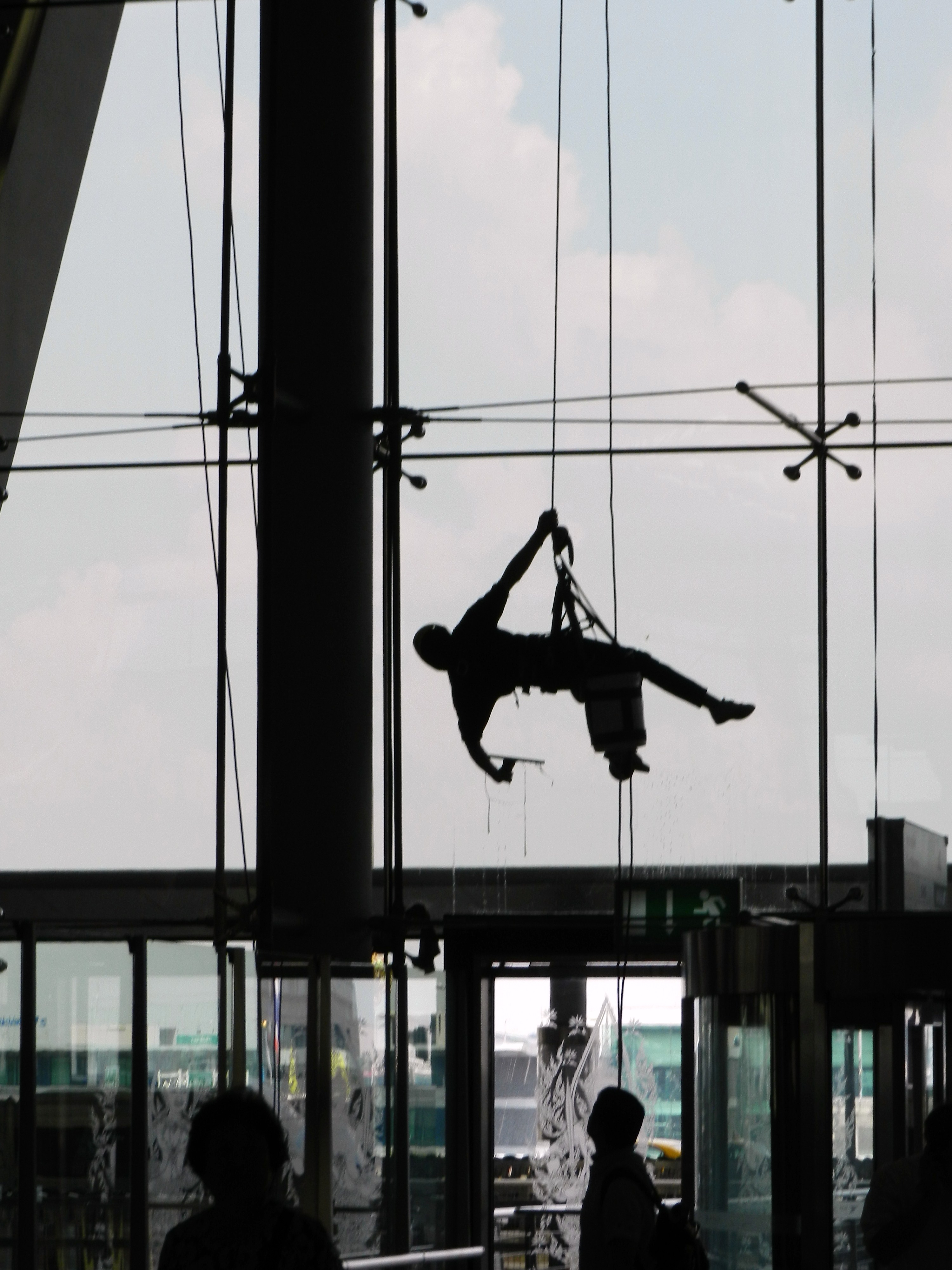
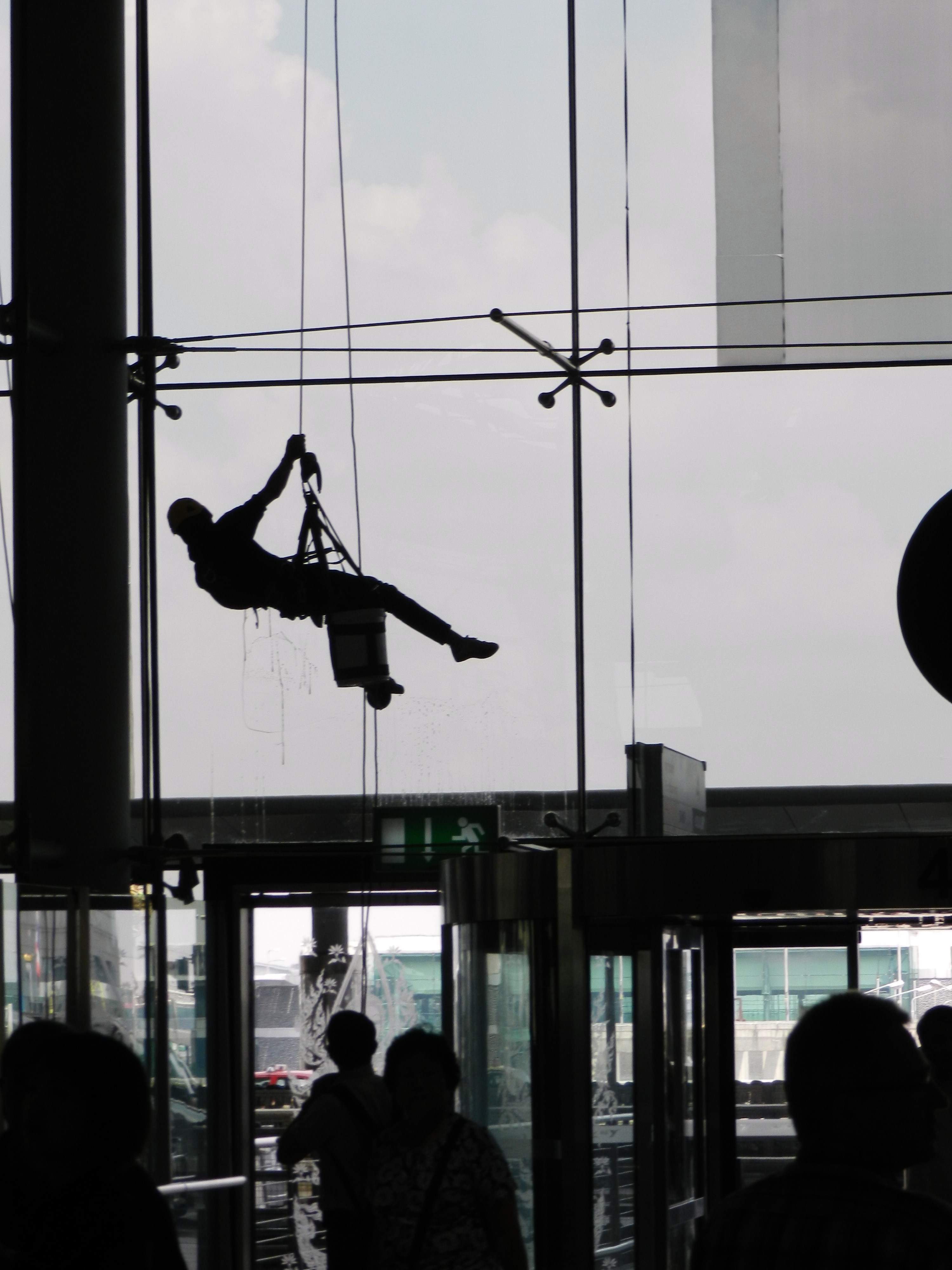
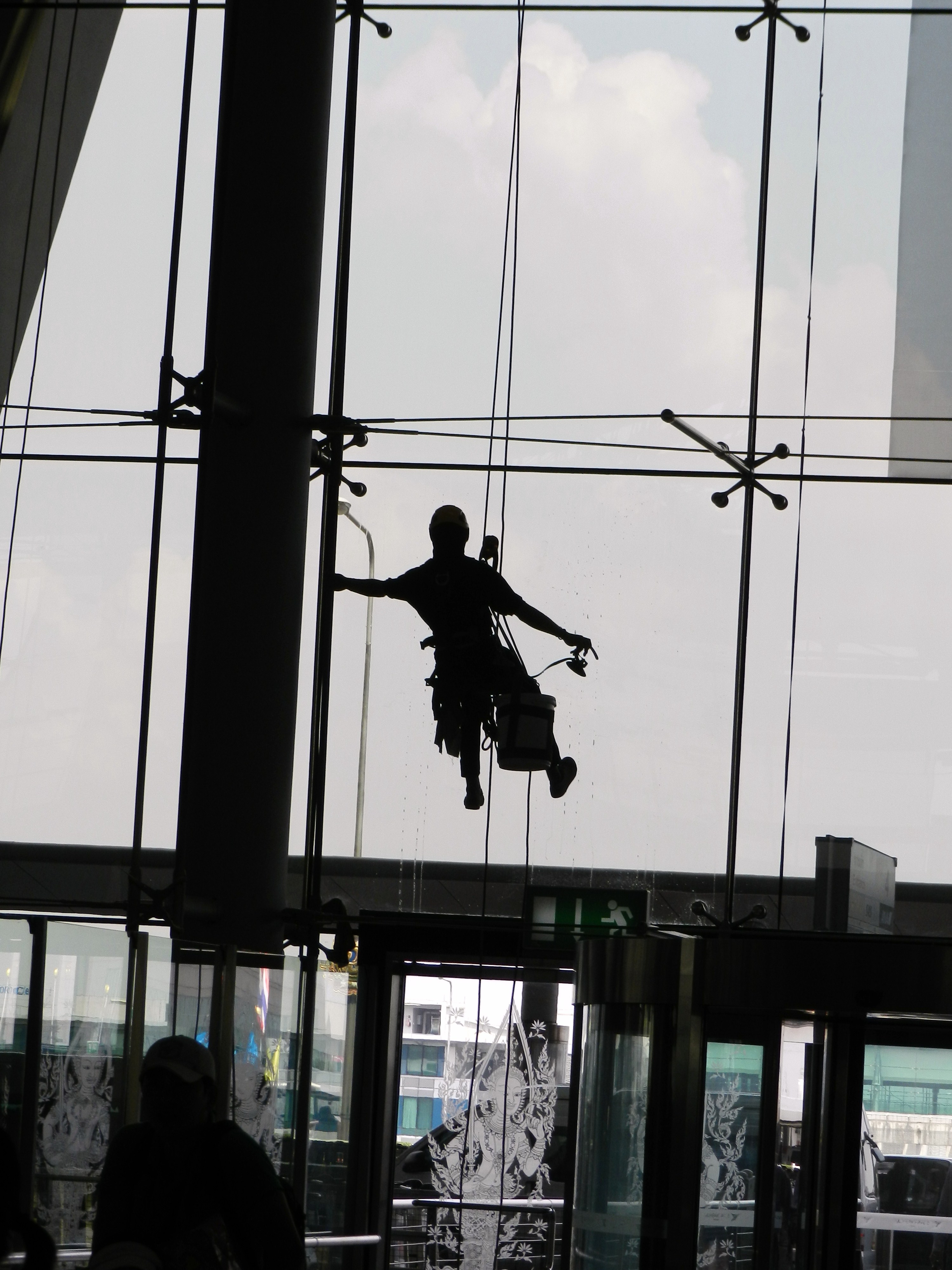
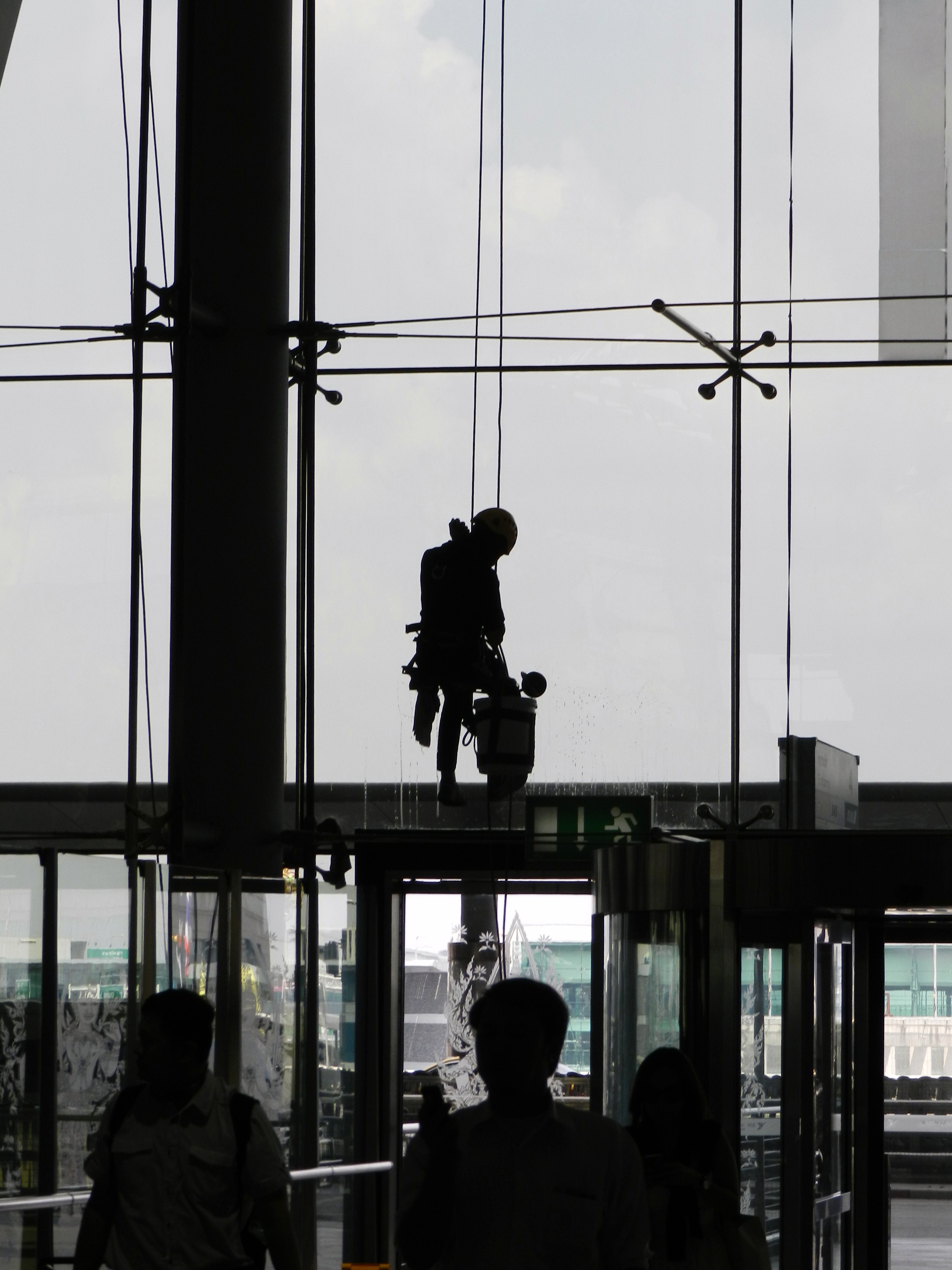
Suvarnabhumi AirportIn November, I visited Bangkok, where I used to live, for the first time in 11 years. Among the changes was the new airport, Suvarnabhumi (pronounced Su-wahn-na-poom), opened in 2006. I was impressed by the blend of structural engineering and architecture in the design, which its renowned Chicago architect, Helmut Jahn, describes as “archineering”. In 2012, the airport was the most popular location in the world for the taking of Instagram photos, according to the Bangkok Post (read more here).

There is a lot of glass in the passenger terminal, but everything looks sparklingly clean. While I was there, I was fascinated to see this window-cleaner at work. The series of photos looks almost like an industrial ballet. I love the etched glass doors, too.

Suvarnabhumi Airport, copyright Caron Eastgate Dann 2012


Suvarnabhumi Airport, copyright Caron Eastgate Dann 2012

Thainikon 017

Suvarnabhumi Airport, copyright Caron Eastgate Dann 2012

Suvarnabhumi Airport, copyright Caron Eastgate Dann 2012

Travel Theme: Walls

In response to a theme suggested by Where’s my backpack?

I’m fascinated by walls. I like brick, stone, glass and wooden walls, and I especially like tiled walls. I like walls with wallpaper from the 1960s and 1970s, and from Victorian times. I like crumbling ancient temple walls and glittering Thai palace walls. I’ve taken lots of photos of walls, and I’ve begun to feature walls in my artwork inspired by these photos.

This one is of an ancient wall at the temple ruins of the old capital of Thailand, Ayutthaya (1350-1767). It’s a miniature, the size of a business card, and is part of a set of four I did of temple walls and windows in Thailand.

Ayutthaya-1

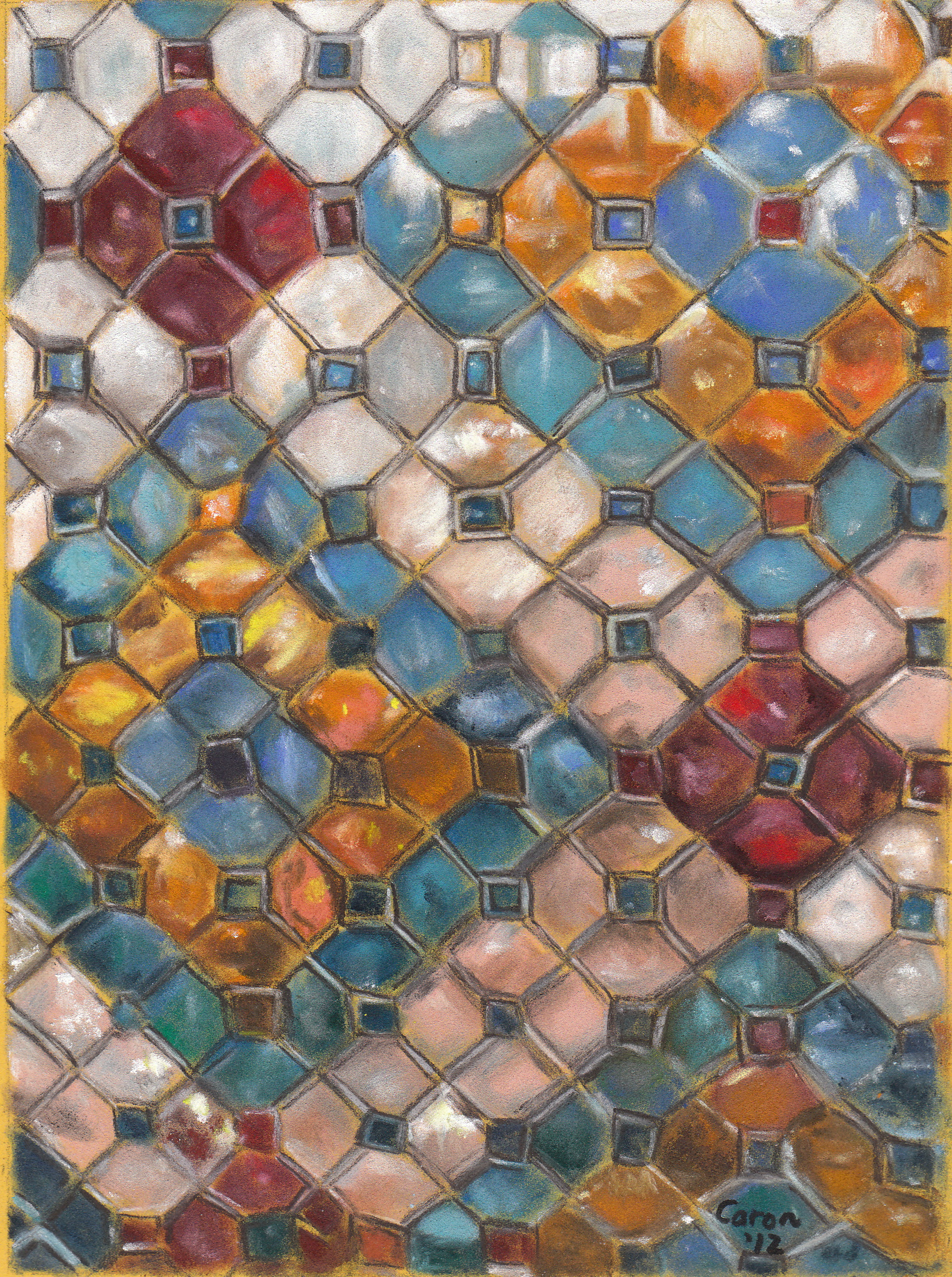
In November last year, I visited the Grand Palace in Bangkok for the first time in 11 years. This is a pastel painting I did depicting part of a tiled wall at a temple within the palace grounds.

GrandPalace


The physicality of walls as man-made structures pervades most cultures—so much so, that when there are no walls, or when walls are knocked down or fall down, it is something to be remarked upon. Walls can keep enemies out, imprison those within, or conceal secrets. Walls are the key to privacy in the modern era, in which access to personal privacy has become paramount.

In pondering the significance of the wall across various cultures, I came up with these lists:

Geographical locations

Great Wall, China

Berlin Wall, Germany

City walls to keep out invaders, eg Chiang Mai, York

Wall St, US

Hadrian’s Wall, UK

Maginot Line, France

Western Wall (Wailing Wall), Israel

Wall of Remembrance, Australian War Memorial, Canberra


Virtual Walls

Facebook wall

The Virtual Wall Vietnam Veterans Memorial

The Virtual Wall of Fame to celebrate Manny’s music shop in New York, the “original music superstore”, 1935-2009.

Remembering Our Fallen: The Virtual Wall of Remembrance for US service people in all conflicts

Woolworths Australia’s Virtual Walls for Christmas

US-Mexico virtual-wall border


English usage of the word “wall”

Interestingly, many languages differentiate between exterior walls and interior walls, but English does not.

“If these walls could talk…”

“The walls have ears”

Wallflower

Wall eye

Wall of fire

Wall of water

To drive someone up the wall

To hit the wall

Wall of sorrow

Wall of shame

Wall of fame

Wall of honour

To put up (psychological) walls

Wall-to-wall, as in carpet, but also TV coverage

Off the wall

To bang one’s head against the wall

To have one’s back to the wall

To take something (such as a business) to the wall

Climbing the walls

Hole-in-the-wall bar

Sea wall

Fly-on-the-wall

Stone-walled

Wall hanging

Wallpaper


Writer’s Diary #3: Into the unknown

Let your writing take you into the unknown. (By the way, I visited this jungle path, at Queen Sirikit's palace grounds on Doi Suthep, near Chiang Mai, Thailand, in November. I didn't realise until I got home that I had been there before, 20 years ago).

Let your writing take you into the unknown.
(By the way, I walked along this jungle-like path at Queen Sirikit’s palace grounds on Doi Suthep, near Chiang Mai, Thailand, in November. I didn’t realise until I got home that I had been there before, 20 years ago).

I’m not the first to say “Don’t necessarily write about what you know; write about what you don’t know”, but I am still in a minority, as conventional advice tells writers to write what they know and what they know about.

This seems strange to me, since writing is a journey of discovery, a journey into the unknown, even if you know your subject matter. There is always something mystical about good fiction writing: it is more than the sum of its parts.

More important to creative writing than knowing about your subject or theme is being passionate about them and being able to write about them in a way that no one has written before.

However, you do have to do your research. While it’s tempting to jump right into the writing, doing some research before you start is a huge help because it enables you to concentrate more on the writing when the time comes.

When I moved to Thailand in the early 1990s, I decided I would write a novel set in 19th-century Siam. I knew almost nothing then about history in that part of the world, except highly romanticised (and mostly incorrect) information from popular western culture.

When I found the Siam Society, a club in Bangkok promoting the study of South-East Asian culture and history, I was on my way. They had a library of 20,000 books, many of them on old Siam. I did six months’ research reading these books and taking notes before I started writing The Occidentals. In those days, research was not generally done on a computer screen or using the internet, and we kept track of our research using an index card system, as I wrote about here last week.

Actually, writing the first draft of my novel took me only three months—half as long as it took to do the research (though when it was accepted for publication, my editor asked me to add 100 pages, so I had to go back to my research, and I spent another three months on the addition). I wrote every day, six days a week, for five hours, 12.30-5.30pm.

The six months’ ground-work had ongoing benefits: I used it as the start of research for my PhD in the 2000s, which in turn became my second book, Imagining Siam: A Travellers’ Literary Guide to Thailand, and which has led to an academic career.

In saying don’t be afraid to write about what you don’t know, I’m in good company. For more on writing about the unknown, see this article in The Atlantic by Harvard Creative Writing Faculty director Bret Anthony Johnston.

I’d love to hear from you about your launch into the unknown for the sake of your writing.

A Writer’s Diary #2: Goodbye, dear little filing system

1990s writer's filing system

Ye Olde Worlde Filing System, c1991.

Remember this? If you’re under 30, you’ve probably never seen one: it’s an index-card filing system. Before the internet, this is how we used to file our research. This is the one I compiled when I was writing my historical novel, The Occidentals, set in 19th-century Thailand.
I did six months of full-time research before I started writing the novel. This involved reading and indexing information from 42 books and hundreds of articles. Then, say, when I wanted to know about transport in Bangkok in the 1860s, I would look up the index card labelled “Transport”, and it would tell me the books, articles and page numbers where I would find the information.
Though I have not used this index since the late 1990s, I feel sentimental about it and have kept it all this time in my office. I’ve tried to throw it away several times, but something always stops me doing it. However, finally, I’ve agreed with myself, something once so useful has become just a waste of space.
So, I thought I would take a photo of it and write an obituary for my dear little filing system. Goodbye, you served me well, but now it’s time to go. Xoxo.

Here’s to a peaceful New Year: make goals, not rules

Wat Buppharam, Chiang Mai. Pen & wash, by Caron Eastgate Dann.

Wat Buppharam, Chiang Mai. Pen & wash, by Caron Eastgate Dann.

Whenever I am in Thailand, I like to visit several temples. I enjoy wandering around the compounds, and though I no longer call myself a Buddhist, I find an enormous amount of peace within them. This illustration was inspired by a photo I took when I visited Wat Buppharam in Chiang Mai in November. Just looking at it now makes me feel peaceful.

I would like to wish everyone a happy new year—tonight for us here in the Southern Hemisphere and tomorrow for others. Instead of “resolutions”, I’m going to make a list of things I want to achieve this year. That way, I will have goals rather than rules. One of those goals, of course, will be to write one post a month for the Bloggers for Peace cause.