Light of my life

lampDo you have a possession that has been with you a long time and that you’d never part with? Mine is, surprisingly perhaps, this replica French art deco lamp.

I bought it when I moved to Australia as a young journalist in the late-1980s and, for me, it symbolised an exciting new life. I think it was one of the first things I bought in Australia, and it was expensive. But I had to have it, and it’s been with me ever since, to Thailand twice and to many different addresses and styles of house.

I loved art deco style (and still do), but in my 20s, I thought it THE most beautiful style. I’ve since broadened by ideas of what good style is, but art deco is still up there.  It is the reason I love the style of Napier in New Zealand, which is the best preserved art deco-style city in the world. Sadly, this is because there was a major earthquake there in 1931 and virtually the whole town had to be rebuilt.

But back to the lamp. It has been on the mantlepiece of the formal sitting room in an Edwardian house I owned in Kew, Melbourne. It has been on a side table in two marble-floored apartments in Muang Thong Thani and in Bangkok, Thailand. It has been in a flat above a fish and chip shop in the coastal town of Sorrento, Victoria (Australia).

The frosted glass backing has been broken and replaced twice. It wasn’t broken in transit, as you’d expect: you can undo the glass and pack it separately, and when reassembling it, if you do it back up too tightly, the glass breaks. But I haven’t done that for some 15 years now.

For the last 10 years or so, it has been my bedside lamp. Every night when I turn on my lamp, I find a source of comfort, like a dear old friend. If I wake in the night with a bad dream or a worry, I turn on my lamp. It’s bright enough to read by, but low enough to go to sleep by if you want.

Chances are, I will have this lamp forever.

lamp2

Thailand: kaleidoscope of patterns

Suvarnabhumi Airport, Bangkok

Suvarnabhumi Airport, Bangkok

Like Sara Rosso at The Daily Post, I am always inspired by the colourful, highly detailed and often surprising patterns of Thailand. This is the subject of my entry in The Daily Post’s Weekly Photo Challenge: Pattern.

My parents and brother visited me in 1999 when I was living in Thailand, and I always remember Mum said that when they returned to Melbourne, she missed the colours and shapes of the temples and other buildings of Thailand.

When I was there in November last year, I took many photos of the intricate patterns I saw all round me, both man-made and natural. I intend to use them to inspire abstract paintings.

Here are some of my photos from our trip, which took in Bangkok, Chiang Mai, Chiang Rai and Chiang Saen, and a painting to finish, of a temple wall mosaic at the Grand Palace, Bangkok.

Chair detail, in-room at Dusit D2, Chiang Mai

Chair detail, in-room at Dusit D2, Chiang Mai

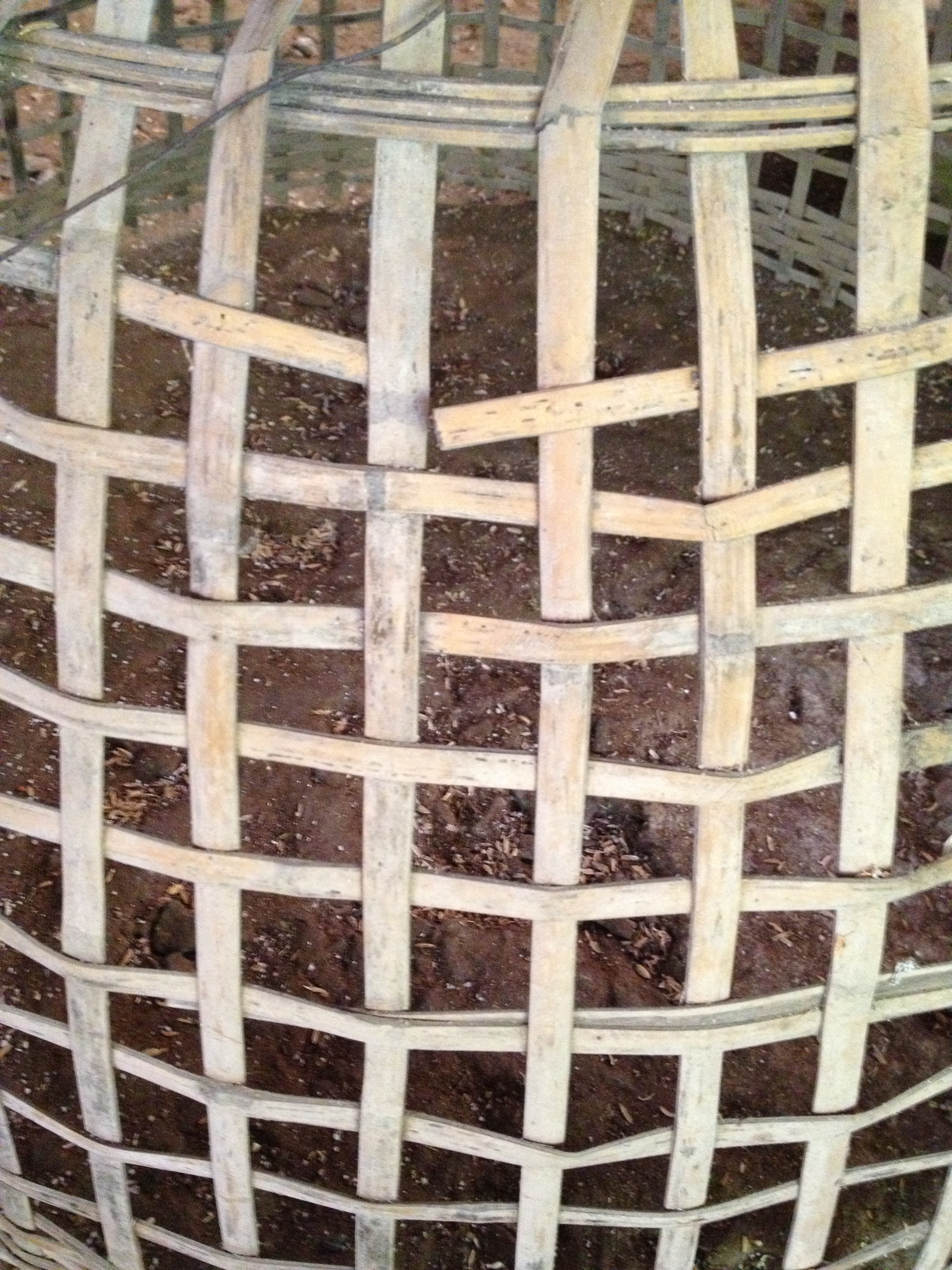
Basket detail, Thai Farmer House, Chiang Mai

Basket detail, Thai Farmer House, Chiang Mai

Floor tiles at Wat Doi Suthep, Chiang Mai

Floor tiles at Wat Doi Suthep, Chiang Mai

At the lush gardens of Queen Sirikit's Bhubing Palace, Doi Suthep, near Chiang Mai.

At the lush gardens of Queen Sirikit’s Bhubing Palace, Doi Suthep, near Chiang Mai.


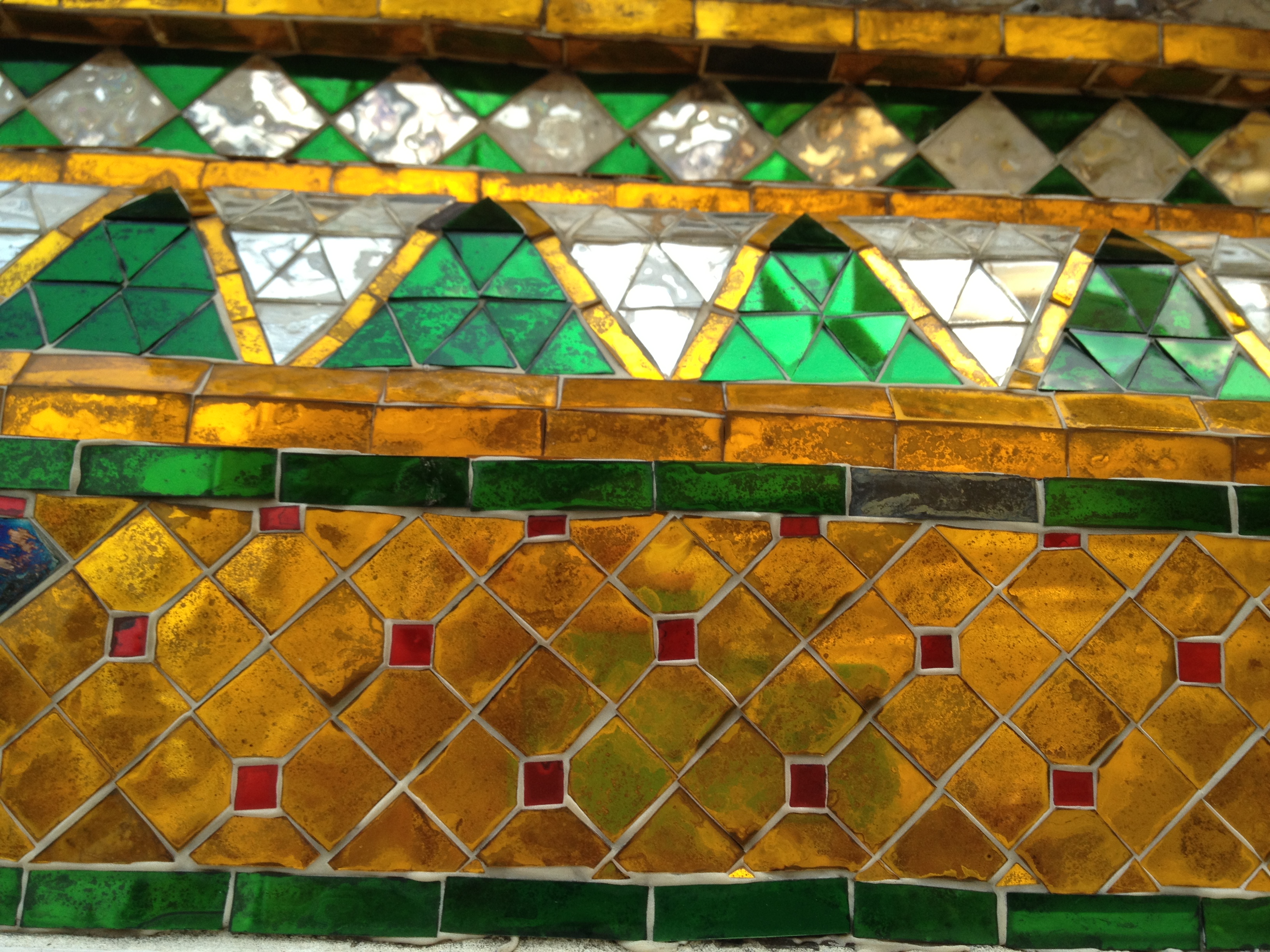
Temple Wall detail, Grand Palace, Bangkok

Temple Wall detail, Grand Palace, Bangkok

Grand Palace, Bangkok

Grand Palace, Bangkok

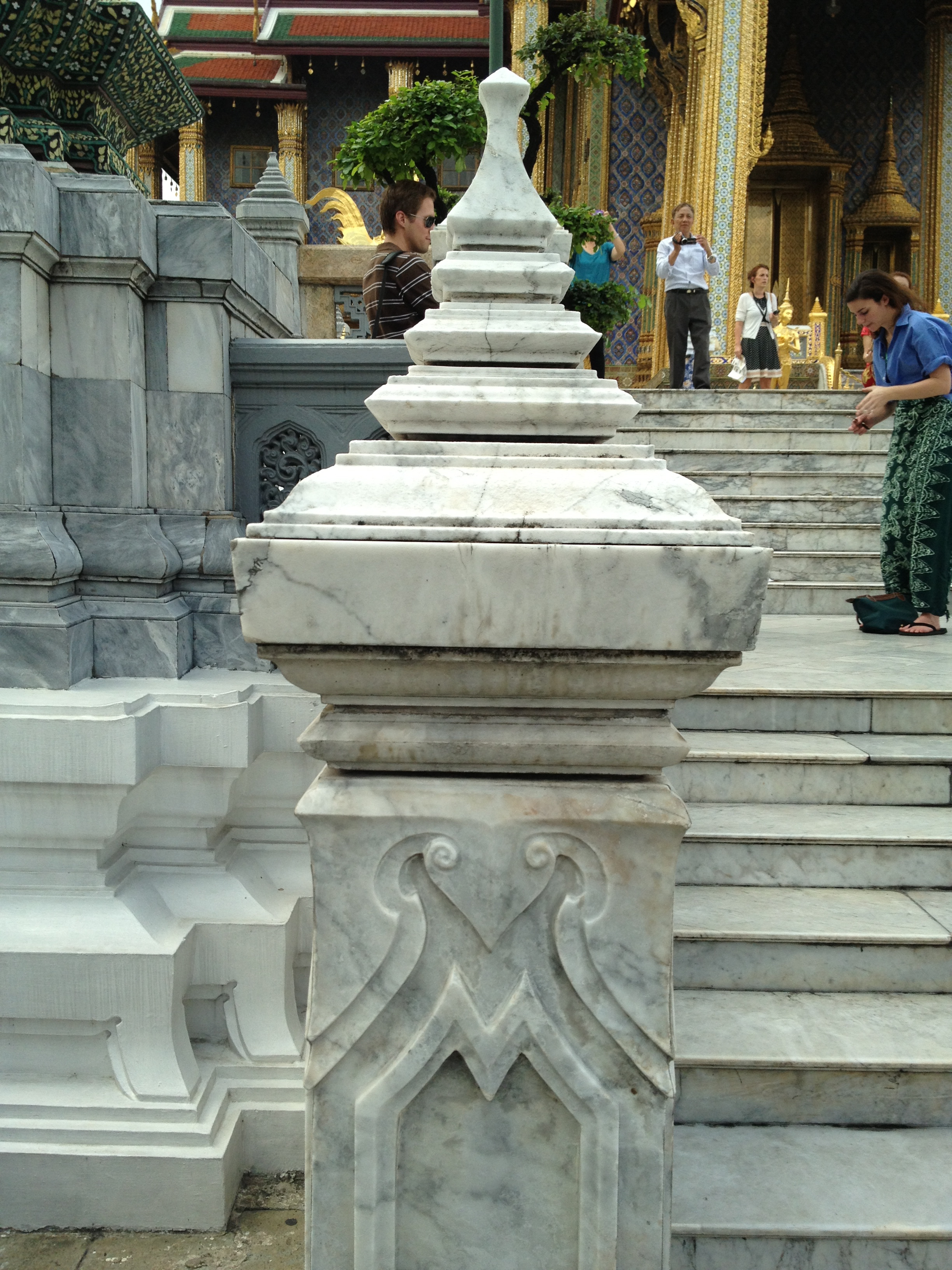
Temple tile details, Grand Palace, Bangkok

Temple tile details, Grand Palace, Bangkok

Detail, temple wall, Grand Palace, Bangkok

Detail, temple wall, Grand Palace, Bangkok

Wooden carving at Wat Doi Suthep

Wooden carving at Wat Doi Suthep

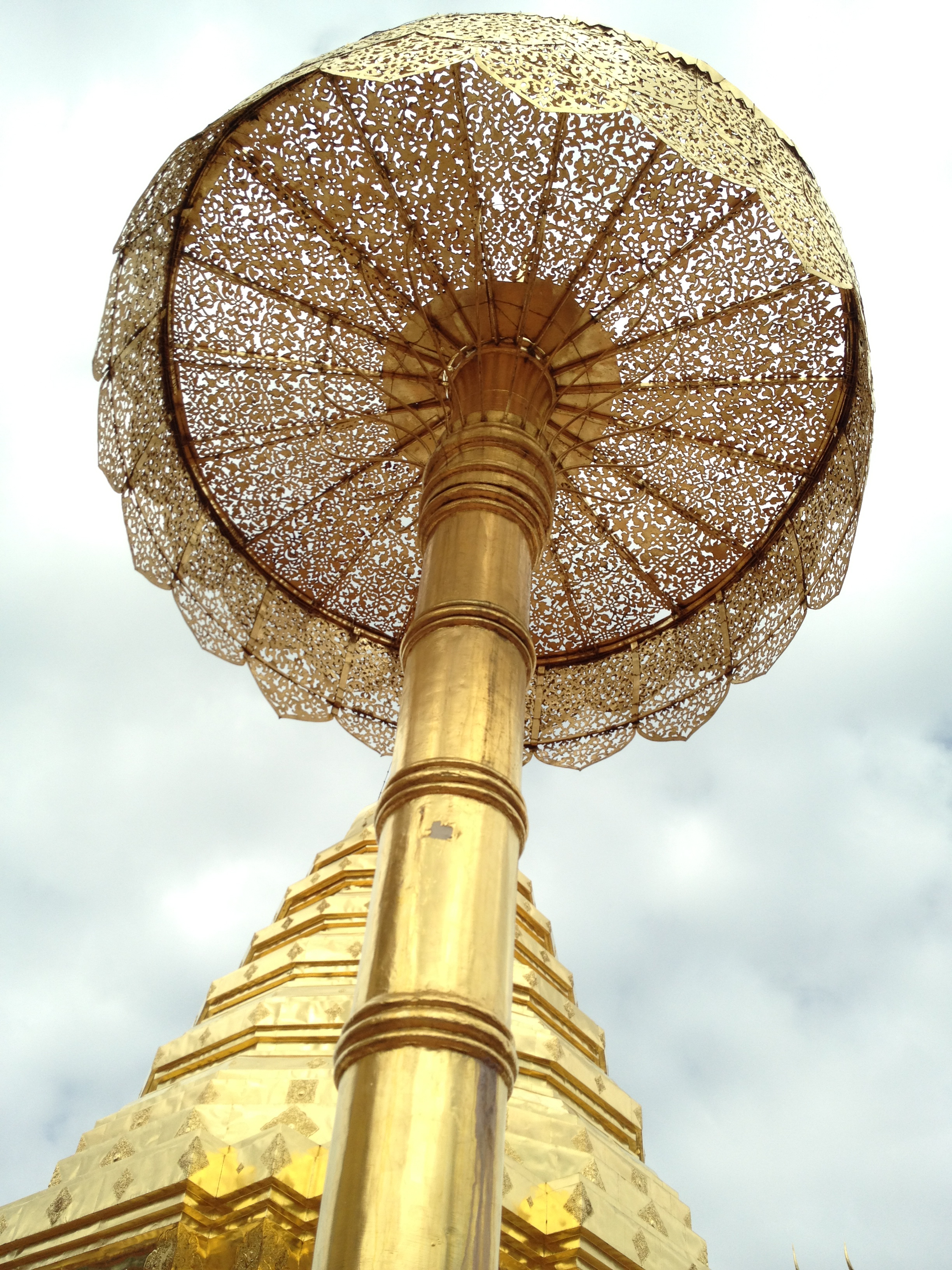
Golden umbrella with intricate lacework at Wat Doi Suthep, near Chiang Mai

Golden umbrella with intricate lacework at Wat Doi Suthep, near Chiang Mai

Photo ©Caron Dann, 2012

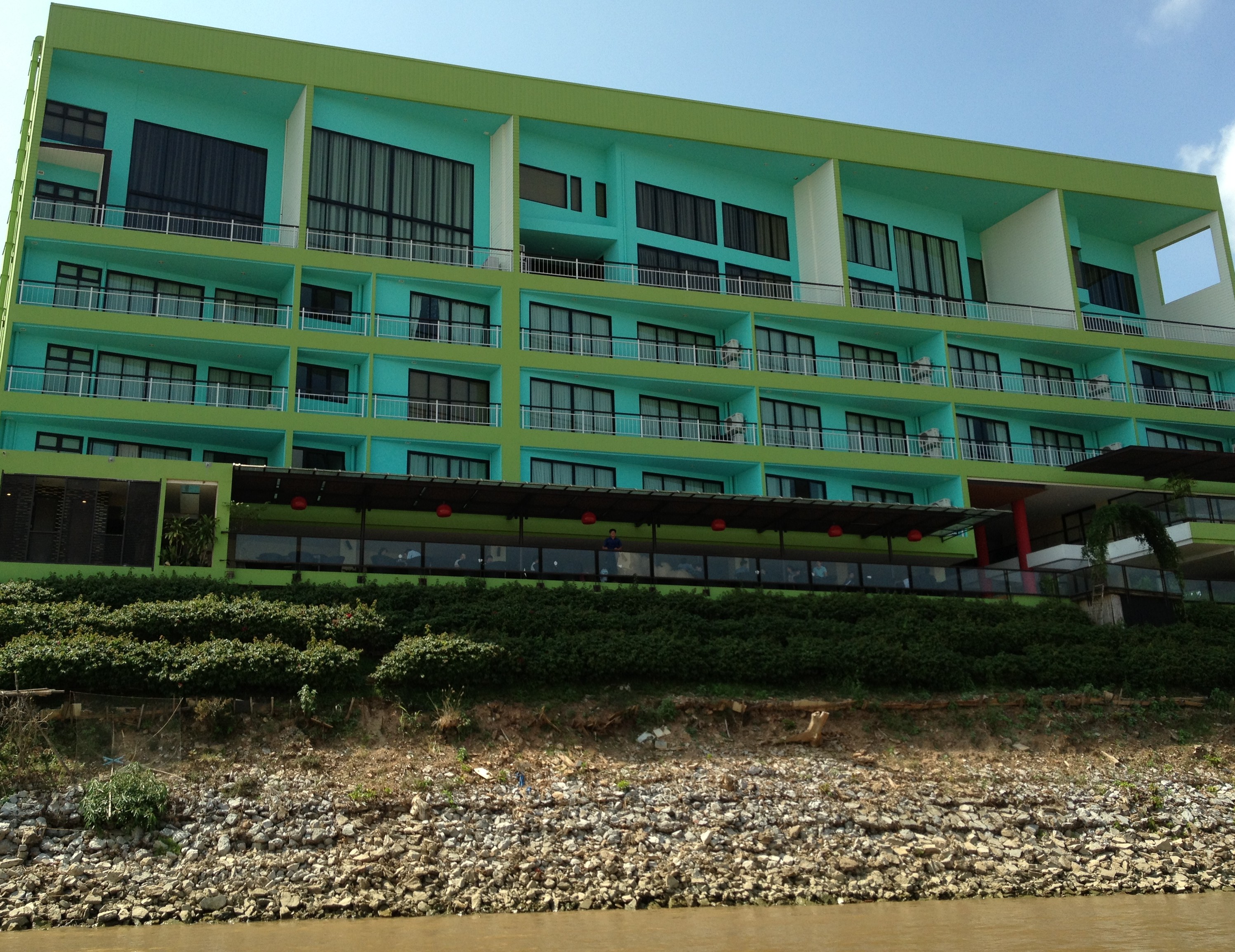
The Serene Hotel at the Golden Triangle, near Chiang Saen, with views across the river to Laos and Myanmar.

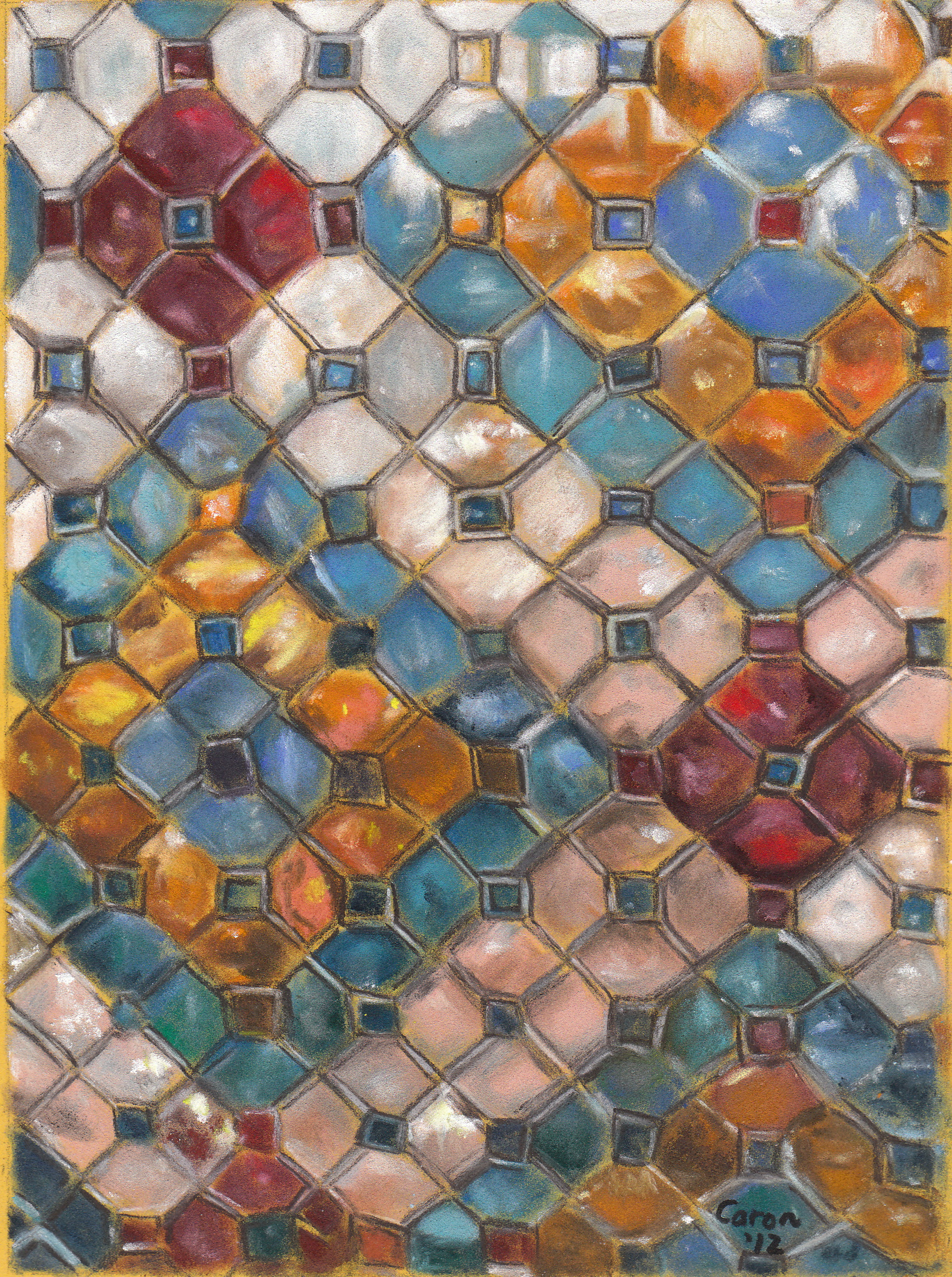
My painting of tile detail at the Grand Palace, Bangkok. Pastel on board.

My painting of tile detail at the Grand Palace, Bangkok. Pastel on board.

“Peace is Possible”


At Bloggers for Peace, the Monthly Peace Challenge: Mad Men is to create something that conveys the message of peace: an ad, a slogan, a short film, a poem, a song perhaps.

My modest contribution is this slogan, “Peace is Possible”. It might seem simplistic at first, but it has a powerful message, and that is, don’t give up hope and always think positively. Perhaps the slogan should be “Peace is Positively Possible”.

"Peace is Possible", by Caron Eastgate Dann:  I put together this makeshift peace sign out of bits and bobs—buttons, brooches, earrings (I always knew those buttons you get in tiny plastic packets when you buy something new would come in handy one day).

“Peace is Possible”, by Caron Eastgate Dann: I put together this makeshift peace sign out of bits and bobs—buttons, brooches, earrings (I always knew those buttons you get in tiny plastic packets when you buy something new would come in handy one day).

I was reminded how important hope is for achieving goals by my friend Bryan Patterson on his Faithworks blog this week.

Without hope, we may as well give up. With hope, there is still possibility.

Kozo at Bloggers for Peace has discussed (in the post linked above) the idea that in achieving a goal, it is important to affirm what you want, such as “Peace is Possible”, instead of making a negative statement, such as “No war”.

By envisioning what you want, you can work towards it. This reminded me of something that happened to me 10 years ago. I was working as the branch editor of a magazine, and was particularly unhappy with the way the job had progressed under a new supervisor. However, I felt trapped because I had a big mortgage and needed the regular income.

My friend, who is now a clinical psychologist, asked me what was wrong, and I explained. She said, “So, what do you want?”. I told her I wanted to become a freelance journalist and work for myself from home while continuing my PhD studies. She said that because I already knew what I wanted, I had won half the battle. “Now, you just have to work out how to get there,” she said.

I decided to sell my expensive house for a cheaper one in the same area, thereby halving my mortgage. I could now afford to become a freelance and casual journalist, and did so for about four years, until my PhD was complete and I became a university lecturer.

So, if we know what we want (peace), I reckon we have won half the battle. Now, if we could only work out how to get there…

Industrial Ballet

This post is written in response to A Word A Week Challenge: Industrial, which you can see more of here.

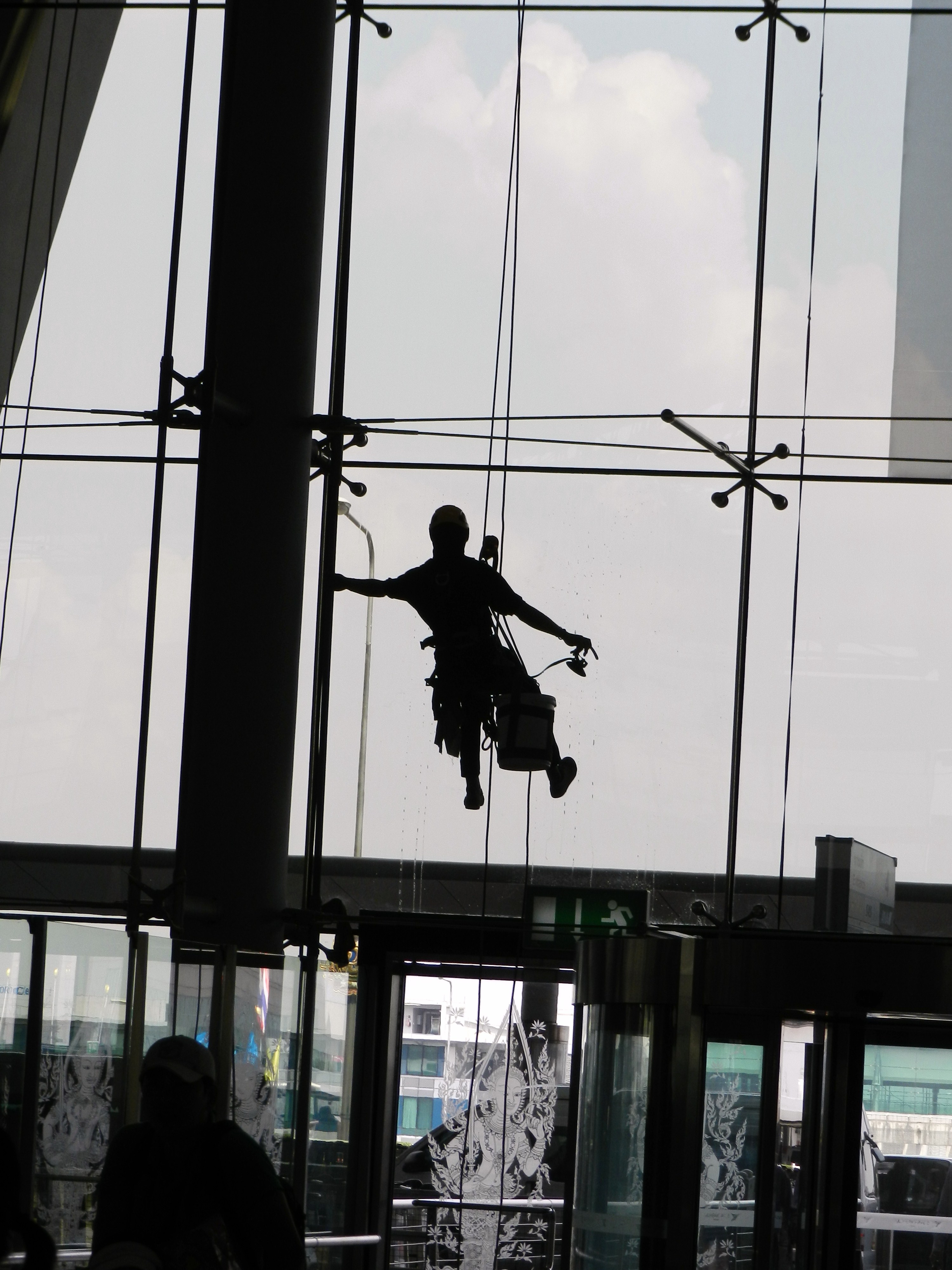
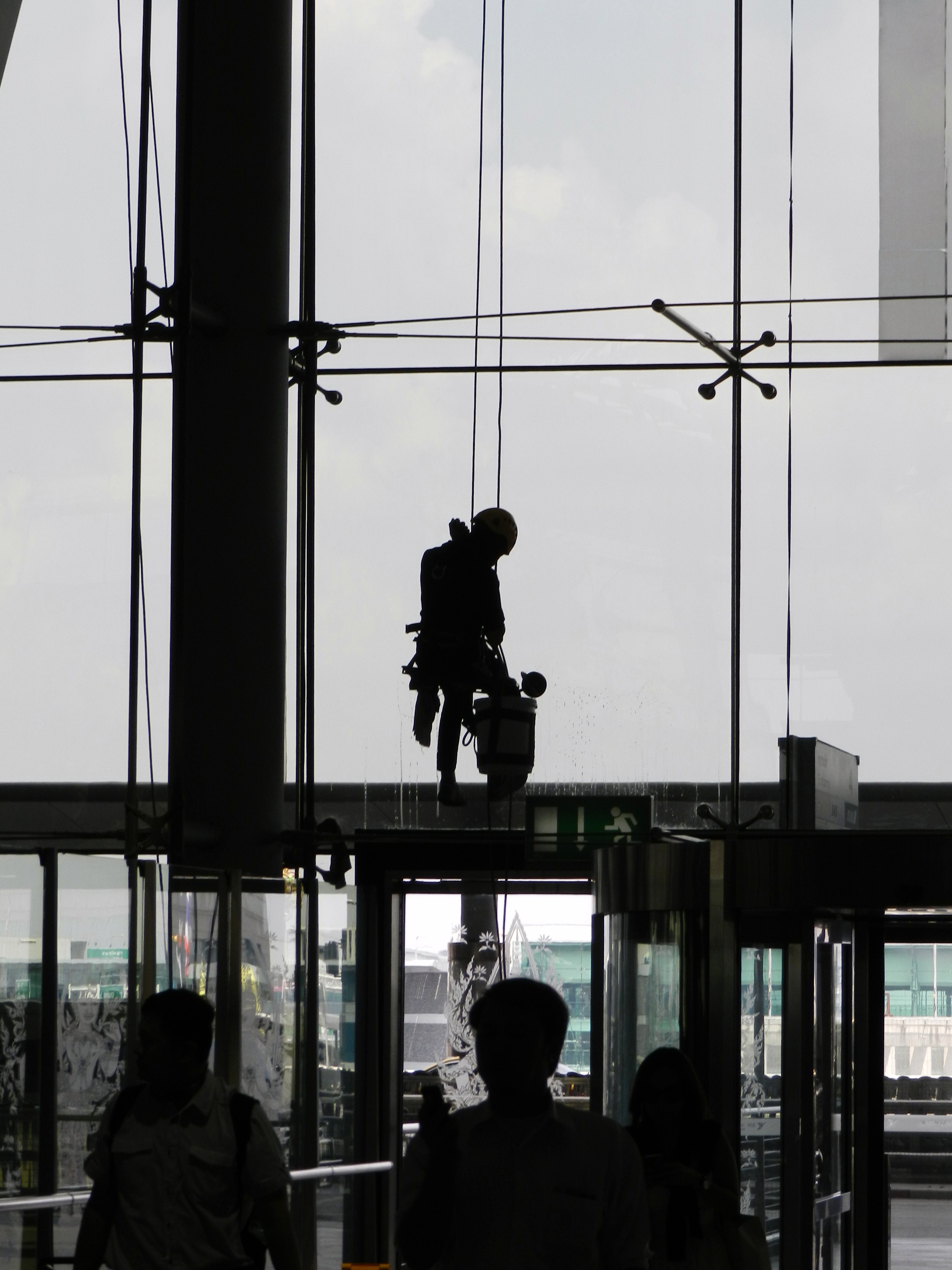
Suvarnabhumi AirportIn November, I visited Bangkok, where I used to live, for the first time in 11 years. Among the changes was the new airport, Suvarnabhumi (pronounced Su-wahn-na-poom), opened in 2006. I was impressed by the blend of structural engineering and architecture in the design, which its renowned Chicago architect, Helmut Jahn, describes as “archineering”. In 2012, the airport was the most popular location in the world for the taking of Instagram photos, according to the Bangkok Post (read more here).

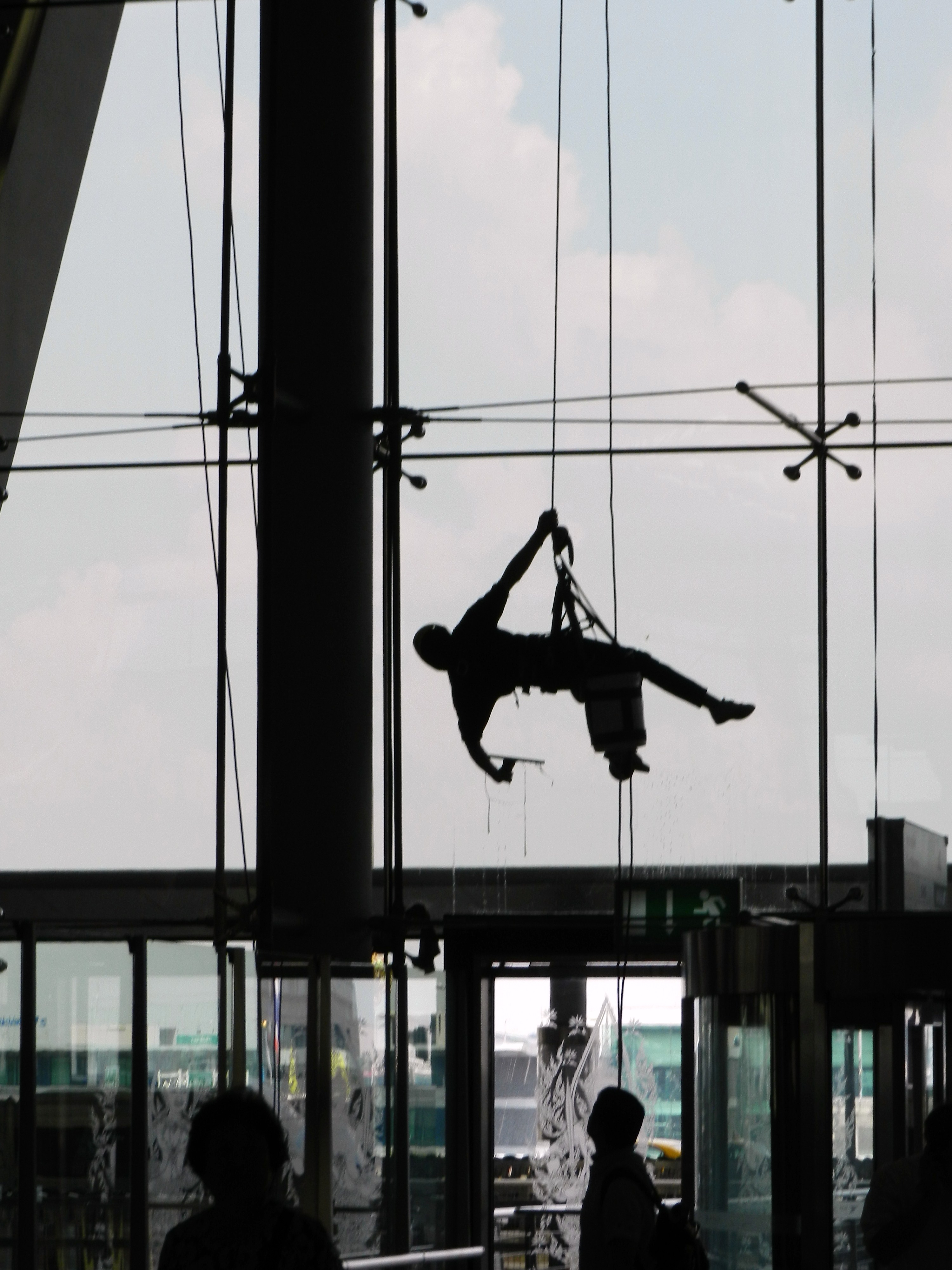
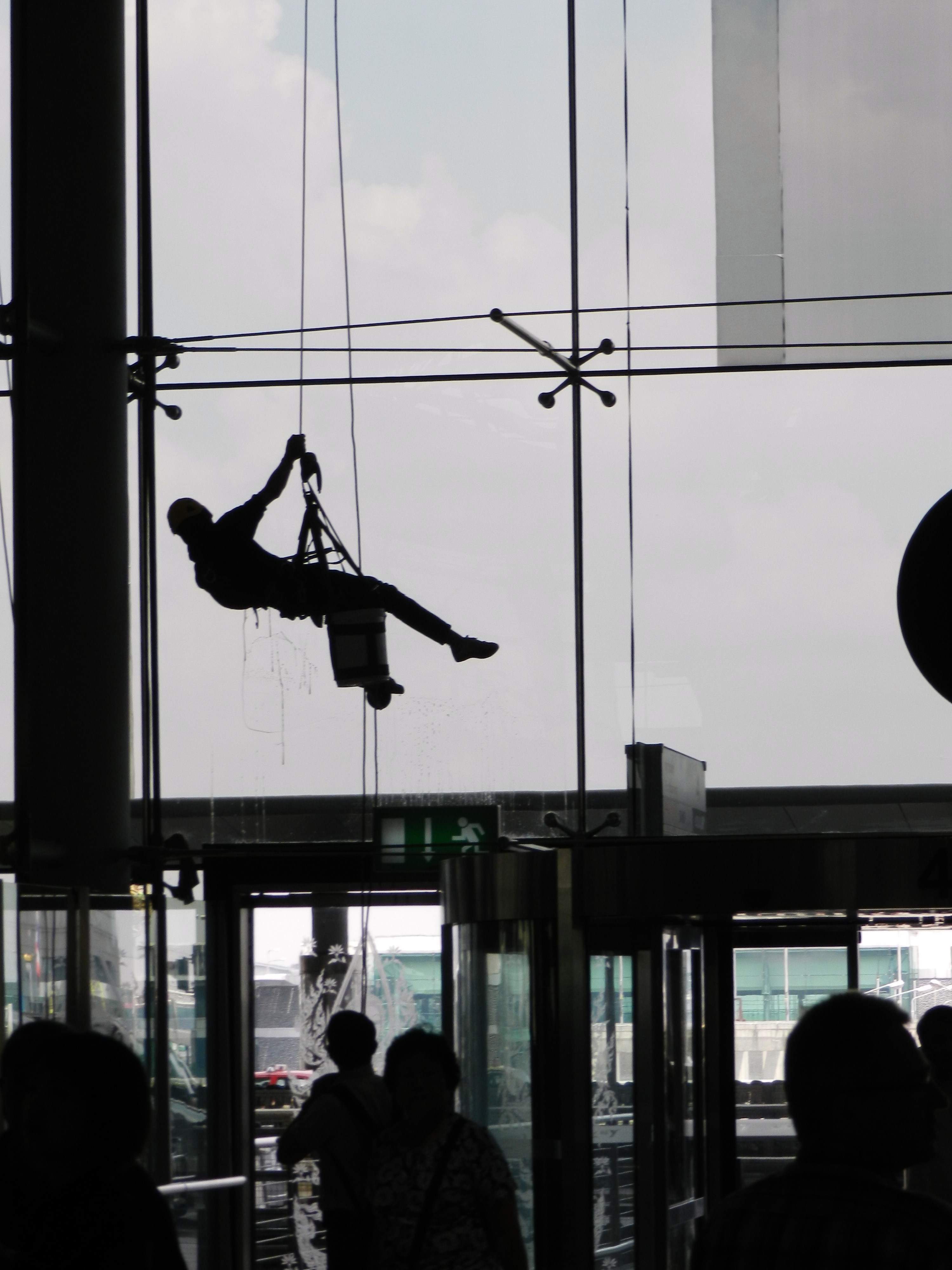
There is a lot of glass in the passenger terminal, but everything looks sparklingly clean. While I was there, I was fascinated to see this window-cleaner at work. The series of photos looks almost like an industrial ballet. I love the etched glass doors, too.

Suvarnabhumi Airport, copyright Caron Eastgate Dann 2012


Suvarnabhumi Airport, copyright Caron Eastgate Dann 2012

Thainikon 017

Suvarnabhumi Airport, copyright Caron Eastgate Dann 2012

Suvarnabhumi Airport, copyright Caron Eastgate Dann 2012

Through a glass, darkly: the strangest house in my suburb

Glasshouse4I’ve been watching with great interest as this house has risen out of a very small block in my Melbourne suburb of Northcote. All the other houses in the street are period styles, mostly Victorian and mostly renovated. I suspect most have a heritage overlay and have to keep their frontage in line with the original style.

Glasshouse 5

So this new glass house looks bizarre in the street. I actually quite like it—for a raised location with coastal or city or botanical garden or river views. But this street is in a dip. The only views are of the road and the neighbours’ houses. Also, the houses are all close together in this street: if you lived in the glass house, you would have to keep your blinds closed day and night, unless you wanted everyone to be able to look in on you. Then again, perhaps it will be a Big Brother-like experiment.

It’s surprising that the council approved the plans—usually people in streets of renovated Victorian houses seem to want everyone else to adhere to their style too and would have complained when given the opportunity.

On the other hand, shouldn’t you be able to build whatever you like on your own property? And what’s wrong with being a little (or a lot) different to others? It reminds me of this wonderful piece of needlework a friend made for me:

Yourself

I’d be interested in readers’ opinions. Do you think this house is exciting and innovative, or just wrong? You be the judge.