Travel Theme: Walls

In response to a theme suggested by Where’s my backpack?

I’m fascinated by walls. I like brick, stone, glass and wooden walls, and I especially like tiled walls. I like walls with wallpaper from the 1960s and 1970s, and from Victorian times. I like crumbling ancient temple walls and glittering Thai palace walls. I’ve taken lots of photos of walls, and I’ve begun to feature walls in my artwork inspired by these photos.

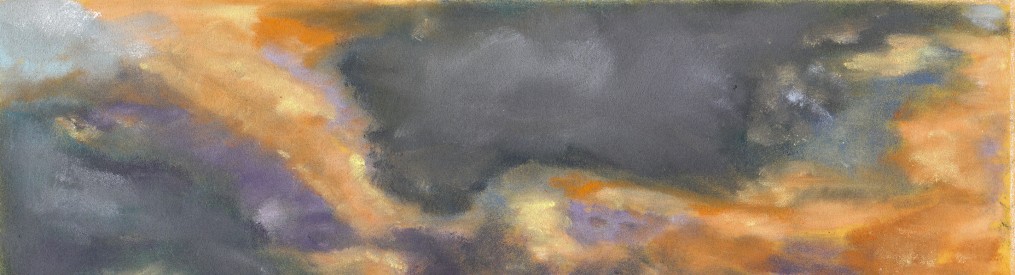
This one is of an ancient wall at the temple ruins of the old capital of Thailand, Ayutthaya (1350-1767). It’s a miniature, the size of a business card, and is part of a set of four I did of temple walls and windows in Thailand.

Ayutthaya-1

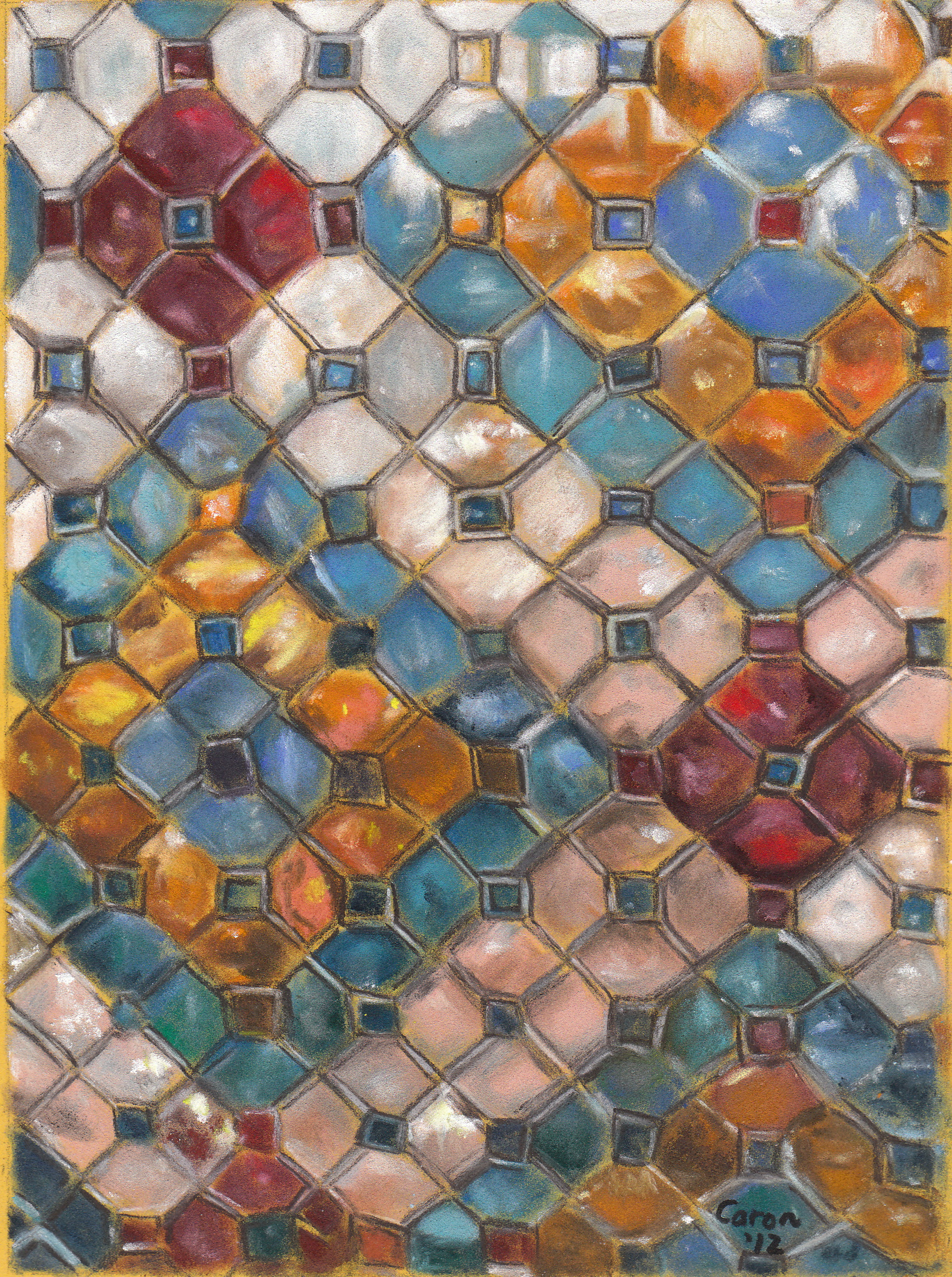
In November last year, I visited the Grand Palace in Bangkok for the first time in 11 years. This is a pastel painting I did depicting part of a tiled wall at a temple within the palace grounds.

GrandPalace


The physicality of walls as man-made structures pervades most cultures—so much so, that when there are no walls, or when walls are knocked down or fall down, it is something to be remarked upon. Walls can keep enemies out, imprison those within, or conceal secrets. Walls are the key to privacy in the modern era, in which access to personal privacy has become paramount.

In pondering the significance of the wall across various cultures, I came up with these lists:

Geographical locations

Great Wall, China

Berlin Wall, Germany

City walls to keep out invaders, eg Chiang Mai, York

Wall St, US

Hadrian’s Wall, UK

Maginot Line, France

Western Wall (Wailing Wall), Israel

Wall of Remembrance, Australian War Memorial, Canberra


Virtual Walls

Facebook wall

The Virtual Wall Vietnam Veterans Memorial

The Virtual Wall of Fame to celebrate Manny’s music shop in New York, the “original music superstore”, 1935-2009.

Remembering Our Fallen: The Virtual Wall of Remembrance for US service people in all conflicts

Woolworths Australia’s Virtual Walls for Christmas

US-Mexico virtual-wall border


English usage of the word “wall”

Interestingly, many languages differentiate between exterior walls and interior walls, but English does not.

“If these walls could talk…”

“The walls have ears”

Wallflower

Wall eye

Wall of fire

Wall of water

To drive someone up the wall

To hit the wall

Wall of sorrow

Wall of shame

Wall of fame

Wall of honour

To put up (psychological) walls

Wall-to-wall, as in carpet, but also TV coverage

Off the wall

To bang one’s head against the wall

To have one’s back to the wall

To take something (such as a business) to the wall

Climbing the walls

Hole-in-the-wall bar

Sea wall

Fly-on-the-wall

Stone-walled

Wall hanging

Wallpaper


Bambi, the dentist and the Mona Lisa

How lovely it was for me when last Sunday, while I was on vacation in Fremantle, Western Australia, a crown on one of my teeth fell out during breakfast.  For the rest of our time there, mostly spent seeing family on both sides, I had to be careful not to smile too widely, lest I look like a pirate.
We returned to Melbourne in the early hours of Thursday morning, and this morning (Friday) saw me at my excellent dentist, Dr L., his able assistant, Ms K., and friendly administrator Ms V. “You’ve presented me with a challenge,” Dr L. said cheerfully. I won’t go too deeply into what had to be done, save that  it involved a “slow drill” and something called a “para-post”.
It’s all completely painless, of course, thanks to local anaesthetic. I read a lot of historical novels and it’s the one thing that makes me glad I wasn’t born before the 20th century. Anyhow, although dentistry doesn’t hurt now, it’s not particularly pleasant. So, I close my eyes and try to divert my mind. I used to think about a beautiful beach—white sand, turquoise water, a yellow umbrella. Then I played too much of an iPhone app called Distant Shore, and got sick of the perfect beach.
So, what do I think of now? Bambi. That is because Bambi is the sweetest little thing in the history of fictional characters, and Disney captured perfectly this essence of sweet innocence in its portrayal of the fawn in the 1942 movie.

Bambi
I’ve been wanting to write a piece about Bambi for a while, because suddenly, everywhere I look, are images of him. The protagonist of one of the earliest anti-hunting pro-environmental novels seems to be making a comeback—if he ever went away, that is. My earliest memory of Bambi is probably the Little Golden book with the Disney animation characters, but the story was first published in German in 1923 as a novel,  Bambi: A Life in the Woods, by the Ausrian-Hungarian writer Felix Salten,  who sold the film rights for $1000 in 1933.

Bambi_book_cover
Just before Christmas, I saw a 1950s ceramic Bambi ornament for sale at a shop near me called Retro Active, which sells 20th-century memorabilia, jewellery and furniture. It was $30 but, it being Christmas and not my birthday, I thought it wasn’t good form to buy a present for myself. However, shortly after Christmas, it is my birthday, so when the shop opened after the break, I went back to buy Bambi. Guess what? Bambi was gone. I imagine that dear little deer sitting now on someone else’s mantelpiece. Since then, I have seen a Bambi lamp for a baby’s room, and a fantastic Bambi book sculpture, which you can see here.
So synonymous has the term “Bambi” become with innocence and goodness, that to say something is “like killing Bambi” is to brand it just about the worst thing possible. So I was horrified, while researching this piece, to come across a discussion thread on the internet which started with the question, “Is it illegal to shoot a baby deer?”

Perhaps Bambi is making a comeback because, in this commodified, mediatised world in which we westerners can have just about anything we want, limited only by the size of our wallets, Bambi represents what is seen as a simpler, more honest time in which the goodies and the baddies were clearly delineated.We tend to apply this sentimentality or faulty nostalgia for “a simpler time” to many long-gone eras:   I mean, it’s all very well, for example, to look back to the early 19th century through sumptuous TV mini-series of Jane Austen novels and envy the seemingly peaceful and uncomplicated rural lifestyles back then. What we don’t see are the realities of life without all we take for granted today: electricity, refrigeration, and modern medicine, for example; and anaesthetic for visits to the dentist. Before 1844, dental anaesthetic was unknown: routine, reliable local anaesthetic without too many nasty side effects was not introduced until as late as the 1940s. More about that here.

Lack of proper anaesthetic meant restorative dental work was extremely limited before the 20th century. So, if the heroine of  the 1813 novel Pride and Prejudice, Miss Elizabeth Bennet, had toothache, she would simply have had the tooth pulled out. As my late father, a dentist, told me: a real Elizabeth Bennet would have lost many of her teeth by her 20s, and those she still had would probably have been brown with rot. She would definitely not have had a mouth full of white, even teeth. I never could persuade him from his view that period dramas should present characters with teeth like they would really have had.
He was always convinced he knew the secret to the Mona Lisa’s smile. “It’s obvious,” he said of the early 16th-century painting. “It’s because all her teeth would have been rotten or missing, and she smiles that strange way because she has chronic toothache.”

Mona Lisa

In Bambi’s idealised world, all the goodies, of course, would have perfect teeth and would never need to go to the dentist. I hope this is my last dental visit until my usual six-monthly check-up is due. Fingers crossed.

Here’s to a peaceful New Year: make goals, not rules

Wat Buppharam, Chiang Mai. Pen & wash, by Caron Eastgate Dann.

Wat Buppharam, Chiang Mai. Pen & wash, by Caron Eastgate Dann.

Whenever I am in Thailand, I like to visit several temples. I enjoy wandering around the compounds, and though I no longer call myself a Buddhist, I find an enormous amount of peace within them. This illustration was inspired by a photo I took when I visited Wat Buppharam in Chiang Mai in November. Just looking at it now makes me feel peaceful.

I would like to wish everyone a happy new year—tonight for us here in the Southern Hemisphere and tomorrow for others. Instead of “resolutions”, I’m going to make a list of things I want to achieve this year. That way, I will have goals rather than rules. One of those goals, of course, will be to write one post a month for the Bloggers for Peace cause.

Everything you wanted to know about beginning art…but were afraid to ask (part two): “Old Gadgets”

This post discusses not the techniques of painting, but a reason to paint, other than simply wanting to be creative.

One of the reasons I took up painting was because I wanted to use art to preserve the past. Of course, photography can do this too, and I appreciate fully its importance in documenting our lives and times. But for me, painting a picture of something makes it more personal, almost as if I actually manufactured the subject myself.

I had the idea for my “Old Gadgets” series before I started painting—in fact, it was the catalyst that led to me picking up a paint brush, laden with colour, and gingerly directing it across a canvas.

I’ve completed two paintings so far in the Old Gadgets series, of my manual typewriter and my film-era camera. They have been framed and they will hang on a wall side by side. Here is the first:

Old Gadgets No. 1: my manual typewriter, bought in Bangkok, 1991. On the case is the German version of my novel, The Occidentals (Das Erbst Der Schwestern). I wrote the first draft of this novel many years before it was published, on this typewriter. Acrylics on board.

Old Gadgets No. 1: my manual typewriter, bought in Bangkok, 1991. On the case is the German version of my novel, The Occidentals (Das Erbe Der Schwestern). I wrote the first draft of this novel many years before it was published, on this typewriter. Acrylics on board.

As a young journalist, a manual typewriter and a camera were my tools of trade (as well as a shorthand notebook and a pen, of course). I started at a small newspaper in Waipukurau, New Zealand—the Central Hawke’s Bay Press—for which I was both photographer and reporter. Here’s a photo of me there as a teenage cadet in 1979:

Caron Eastgate as a cadet reporter, Central Hawke's Bay Press, 1979. Note the manual phone. The typewriter is pushed up like that to indicate that I've finished my story and will now work on another. I'm also balancing my cheque book. I had to leave home to come to this job, and when I went to the bank to enquire about a cheque account, they told me I wasn't old enough to have one. When I said I was a reporter, however, they made an exception.

Caron Eastgate as a cadet reporter, Central Hawke’s Bay Press, 1979. Note the manual phone. The typewriter is pushed up like that to indicate that I’ve finished my story and will now work on another. I’m also balancing my cheque book. I had to leave home to come to this job, and when I went to the bank to enquire about a cheque account, they told me I wasn’t old enough to have one. When I said I was a reporter, however, they made an exception.

Note the telephone: Waipukurau was the last  town in New Zealand to operate a manual exchange, which didn’t become automatic until 1980. You would turn the handle in the centre of the phone and tell the operator what number you wanted. Many people were on “party lines”, that is, several houses shared the same phone number, each with a different letter at the end. So, you might ask for “2645E”, for example. We were all convinced the operators listened in to juicy conversations, and they definitely knew what was going on in town. I remember one day asking to be put through to someone I wanted to interview, and the operator said, “I can try for you, but I’ve just seen him go past on his way to town”.

We were still using manual typewriters at metropolitan newspapers in Auckland when I moved to Australia—and computerisation—in 1988. After the move, I thought my days of writing on manual typewriters had gone. I was wrong. When I moved to Nonthaburi, near Bangkok, Thailand, in 1990, I decided to write a novel. I had an electric typewriter with a memory then (I got my first personal computer in 1992). The problem was, the electricity was unreliable and, particularly in the wet season, would frequently drop out, though usually only for half an hour or so. This disrupted my writing, and I decided I would have to buy a manual typewriter again to work efficiently.

I found a cute German model in a dusty little shop. I think it cost 2000 baht (about $AU100 in those days, but less now). I hadn’t used that typewriter since 1993, however, and it was gathering dust in the spare room. So I asked on Twitter what I should do with it, and a friend of mine who lives round the corner said she’d love to have it (she collects such things). But first, I decided to do a painting of it, so I would always have it, and as you can see above, I did. This picture took me a very long time to do, working on it most nights for a couple of months until it was right. Each key has about 10 coats of paint on it.

In the 1980s and 1990s, I loved photography and used to shoot about 20 rolls of film whenever I went on holiday. When I lived in Bangkok, it was a great hobby, because film processing and printing there were much cheaper than in Australia. I bought my first Canon Eos in 1990, and a new Eos—the subject of Old Gadgets No. 2 (above)—in 1999. I still have the latter camera in its case, with film and all the other things you see in the picture, but I haven’t used it since 2005. Here’s my old camera:

Old Gadgets No. 2: my film-era camera, 1999. Acrylics on board. The prints are from a trip I did to China in 2001. The slides are the only ones I ever took, on a trip to Vietnam in about 1996.

Old Gadgets No. 2: my film-era camera, 1999. Acrylics on board. The prints are from a trip I did to China in 2001. The slides are the only ones I ever took, on a trip to Vietnam in about 1996.

I stayed at my mother’s house for a few days this week, and in my room there is a large portable cassette player we bought in the US when we lived there in the early 1970s. I remember when my parents bought it, and it seemed the ultimate in modern sound equipment. I think it will become Old Gadgets No. 3.

Everything you wanted to know about beginning art…but were afraid to ask (part one)

If you’ve always wanted to take up a hobby such as art, but have been too nervous to try, here’s how to dive in. Most “how to” books, blogs and vlogs are by experts, but as a beginner, I wanted to speak directly to other beginning and would-be artists.

 As a child, I loved art. Mostly, I loved the look, feel and smell of the crayons, pencils in every colour, paper, watercolour paints and so on. When I was about 12, my parents gave me a set of oil paints in a beautiful wooden box. Mostly, I just looked at them. Actually doing an oil painting seemed too daunting.

In my teens in New Zealand, I did art for School Certificate, which was a national qualification in the third year of high school, then called Form 5 and now called Year 11 in NZ and Year 10 in Australia. I passed the subject, but only with a C grade. The teacher seemed not to be very interested in me, since I wasn’t deemed to be “good” at art. One of our assignments was to stick dried macaroni and beans on a board to fill in an abstract pattern. It seemed pointless and boring, and a world away from the gorgeous collages I see some of my artist friends producing today. Another project was to do a lino-cut design and make prints from it. Lino was dreadfully hard to cut with the blunt cutters we were given. Probably the most interesting assignment was to design a cup and saucer for NZ Railways. I remember mine as being minimalist but serviceable, and it ended up in my portfolio. I changed schools after that year and I never did bother to pick up the portfolio. It would have been interesting to see it now.

Decades went by, and I still always liked art and occasionally tried to paint something, but never was able to realise on paper the masterpiece I pictured in my mind.  Five or so years ago, I finally gave away all my art equipment to a young person who I thought would appreciate it more than I did.

At the beginning of last year though, something strange happened. I had a sudden strong urge to take up painting and drawing again. Now, I’m an all-in or all-out sort of person. So I bought canvases and sketch books, watercolour paper and boards, pencils and three different types of pastels, a set of oil paints in a wooden box (thanks to my brother), acrylics and water colour paints, brushes, pens and more. My husband bought me a desk-top easel and gave me a voucher for more paints.

I’ve been delighted by this new hobby, 22 months old now, and surprised that I have an aptitude for mixing and using colour, and that some of what I paint is not bad. I’m not saying I am the best painter in the world or that I would even paint well enough to exhibit. It’s not about that. But I can paint well enough to derive great pleasure from  my new interest. I didn’t go to formal art classes, and while I have about 20 magnificent how-to art books, I have used them sparingly. What I really wanted to do was to paint pictures, and to learn by trial and error as I went.

In the next few posts, I’d like to share with you my rediscovery of fine art and a few of my paintings—each one has a story behind it and forms a kind of visual diary of my life and loves.

Brave beginnings

The hardest thing to do in order to start painting was—well, to start. Just to get used to acrylic paints, which I had never used before, I did a couple of practice abstracts first. This was advised by an acrylic painting basics book that I intended to follow from start to finish (but ended up only dipping into for handy hints).

This is one of my efforts. I called it “Australia”, because it was mid-summer, very hot in Melbourne and it was bush-fire season. I still like this as an expression of the joy of colour.

"Australia", acrylics on canvas, 2011

“Australia”, acrylics on canvas, 2011

However, I quickly tired of exercises. I wanted to do a “real” painting. I grabbed a small canvas board (8×10 inches, or 20.3 x 25.4cm) and looked round the kitchen for something simple: three ripe tomatoes, a square white plate and a knife. This is what I painted:

CutMeFeb2011

“Cut Me”, acrylics on canvas board, 2011

The best thing about this painting was the reflection of the tomato in the knife. People asked me how I did it. My answer? I just painted it over and over until it looked right. It was a fluke!

Then I did a lemon and knife. This one was in pastels and was the first of my works that I got framed: it was actually only meant to be a quick sketch I did to try out my new PanPastels on some cheap pastel paper. It took me less than 30 minutes, which is unusual, since I usually spend a long time—weeks and up to a couple of months—on my paintings.

PanPastels on pastel paper. 2011.

“Lemon and Knife”, PanPastels on pastel paper, 2011.

THE LESSON: Just keep painting and eventually, it will look right. If you’re using acrylics, buy a tub of gesso, a thick white paint you can use to paint out mistakes and do the section over again. Try some simple still-life paintings first. Try not to put the focal point of your painting in the dead centre (an artist friend told me this).

 Be ambitious

About this time, I joined the online art community at idrawandpaint.com. This is a great way to get some confidence, although when first I looked at it, I was so impressed with the paintings exhibited that I felt intimidated, and didn’t want to post my own. Anyway, then I decided to do it anyway, and the result was lots of helpful discussion and kind words about my art.

I got an old wooden wine box from a store up the road that recycles them. This is perfect for setting up my still-life subjects (and sometimes, the box appears in my paintings, too). I decided I would do paintings that told a story. They were complicated and very ambitious, given that I was a beginner. I had to learn to paint glass, both opaque and coloured, and fabric patterns, for example. I didn’t worry too much about perspective at this stage, and as you’ll see, I’m sometimes wildly out. But my artist friend says I can call it a “naïve” style. Another writer friend, who has worked as an art critic, says the flattening of perspective in some of the paintings is reminiscent of Cézanne. I’ll take that one!

"Only On His Day Off". Acrylics on canvas board. This one was painted for my husband, Gordon Dann, who works evening shift as a journalist. LESSONS: lines go wiggly when under glass; to paint difficult items, such as crackers, really look at them and paint what you see.

“Only On His Day Off”, acrylics on canvas board, 2011. I painted this for my husband, Gordon, who works evening shift as a journalist. LESSONS: lines go wiggly when under glass; to paint difficult items, such as crackers, really look at them and paint what you see.

ThaiTonight-scan

“Waiting for Thai Tonight”, acrylics on canvas board, 2011. This features my Thai crockery and cutlery bought in the 1990s, and the condiments I would put on the plates before serving a Thai meal. The place mat was inspired by a Thai silk scarf given to me many years ago by my aunt and uncle, who visited me when I was living in Nonthaburi, Thailand.

Voices From Home

“Voices from Home”, acrylics on canvas board, 2012. This is a recent painting and shows my development as an artist (albeit a beginner). It features possessions of mine from my homeland, New Zealand. There is a kete (woven flax bag), books by authors I admire, a small painting I bought at Coromandel, a greenstone pendant, a paua ring, and a vintage rugby book given to me by a friend and including information about my great-grandfather, Bunny Abbott, who played in the 1905 All Blacks rugby union team known as The Originals.

THE LESSON: Don’t worry too much about technicalities such as perspective at this stage. You can learn these later—and anyway, it’s not a photograph. It’s your own interpretation. Also, try to find an audience, perhaps by joining an online art community.

Try different media

I’ve tried several different types of media, and I’ll look at these in subsequent posts. PanPastels are an unusual media in that they come in small flat pots, like a powder compact, and you brush them on with sponges in a painterly manner. Here’s more about PanPastels. I love them—in fact, they’re becoming my favourite medium. They have a great ability to provide sparkle and life to a painting. Here’s one of my favourite still lifes, a simple painting of three perfumes I have in my bathroom. The green satin is a piece of material I bought from a silk market in Shanghai, China, when I visited 10 years ago (it also features in the “Voices from Home” painting above).

"Chanel, Siren & Precious" PanPastels on Pastel Mat paper, 2012.

“Chanel, Siren & Fragile”, PanPastels on Pastel Mat paper, 2012.

THE LESSON:  when you begin, try a number of different media; you might surprise yourself with something you hadn’t thought of before.

To be continued…